Surf’s up. But where did it come from? (Image: Robert Beck/Getty)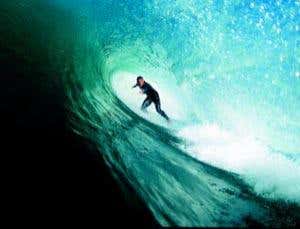
Walter Munk was never much of a surfer, but that hasn’t kept him from becoming a legend in the sport. An oceanographer by training, Munk has spent 67 years studying how waves form, how they travel and how they break when they hit the beach. In the second world war, he saved countless lives by helping the Allied military determine when troops could make amphibious landings without being swamped by big surf hundreds of metres from a hostile shore. After the war, Munk’s methods helped surfers find the biggest waves. Today, anyone who checks out a surf forecast on the internet is drawing on his pioneering research.
IN THE summer of 1942, Walter Munk went to the beach. It wasn’t a holiday; Munk worked for the Pentagon and he was there to watch American troops practise for an amphibious landing in north-west Africa. The Allies were losing the war, and the invasion would be their attempt to retake the initiative.
The troops were using boats called LCVPs (Landing Craft, Vehicle, Personnel) – smaller versions of the drop-bow boats that would later storm beaches from Normandy to Iwo Jima. They were not the most seaworthy of vessels. “When the waves exceeded five feet, the LCVPs would swamp,” recalls Munk, now emeritus professor at the Scripps Institution of Oceanography in La Jolla, California. “They would call it a day, and wait for another that was a little calmer.”
Munk was concerned. “I went back and learned about waves at the landing beaches in north-west Africa. In the winter they exceeded six feet most of the time. I thought…