Still grounded (Image: Boeing)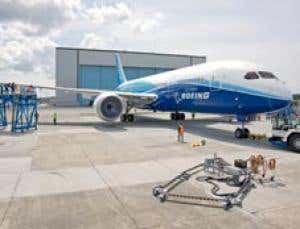
IF YOU want to know why carbon-fibre planes such as the Boeing 787 are still on the tarmac, it’s worth rewinding to the 1950s.
That’s when the UK’s chances of dominating the post-war aviation market were dashed by fatal in-flight failures of the de Havilland Comet, the first airliner to sport a pressurised aluminium fuselage. Metal fatigue induced by repeated pressurisation cycles created cracks that started around the plane’s window frames. “Although much was known about metal fatigue, not enough was known about it by anyone, anywhere,” lamented Geoffrey de Havilland in his autobiography.
Such are…