Does he need a helping hand? (Image: Victor Fraile/Getty)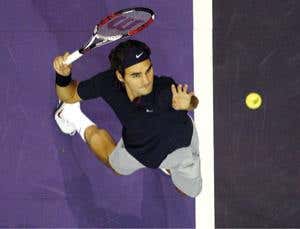
A TENNIS player’s first serve can make or break their title chances, but identifying the nuances in arm, shoulder and wrist motion that make the difference between an ace and a fault is tricky. Wearable motion sensors could help.
While it is possible to analyse high-speed video of a player’s serve, this is expensive and labour intensive. So Amin Ahmadi and colleagues at Griffith University in Brisbane, Australia, have developed a cheap, wearable system that gives instant feedback on a court-side laptop.
Three matchbox-sized gyroscopic sensors are taped to the chest,…