Picking up the pieces – the IceCube facility at the South Pole (Image: Forest Banks/NSF)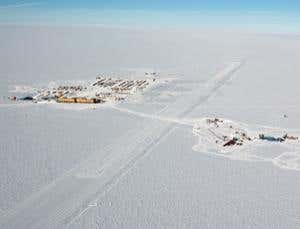
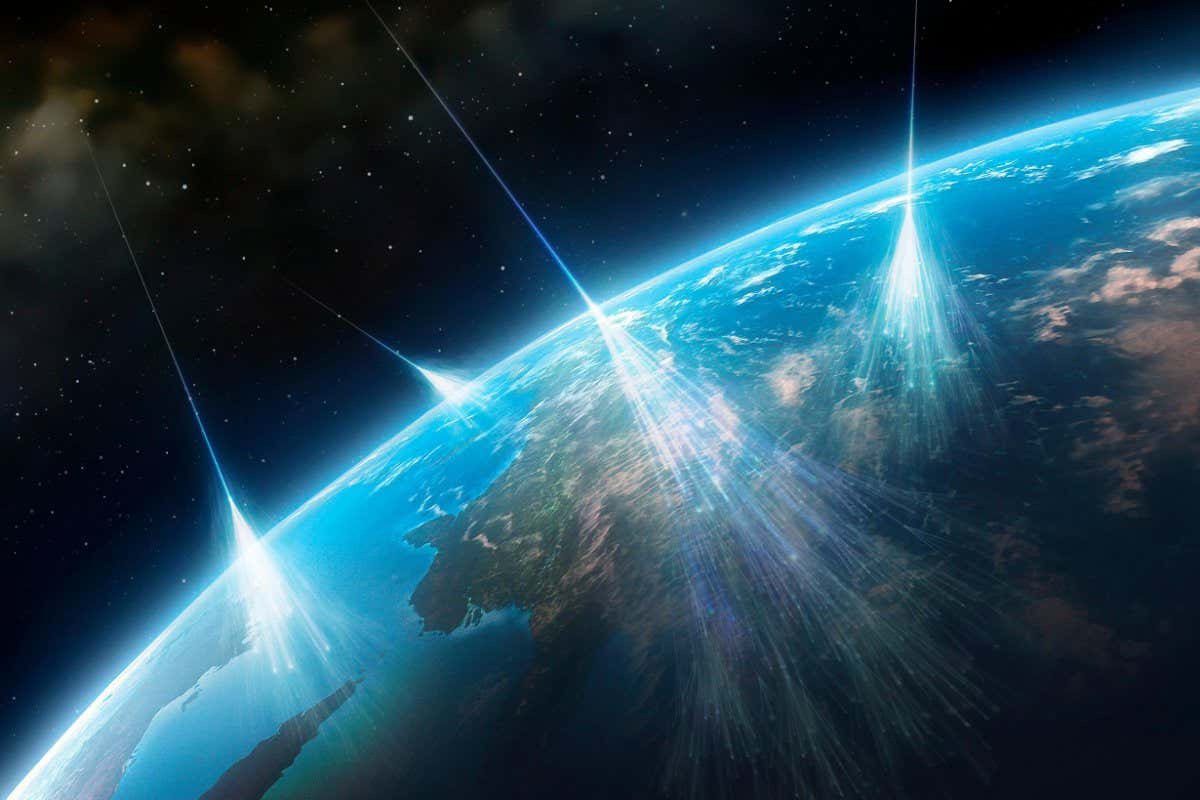
AN EXCESS of high-energy particles hitting Earth may be shrapnel from a stellar explosion 800 light years away.
In the 1930s, it was suggested that supernovae can accelerate galactic cosmic rays. The shock waves from such stellar explosions, or the magnetic fields of the superdense neutron stars left behind, were thought to be able to boost particles from the explosion and surrounding region to very high energies. “But there’s been absolutely no evidence for it whatsoever,” says Francis Halzen of the University of Wisconsin in…