For want of a protein the jaw was lost (Image: Trevor Williams/University of Colorado, Denver, et al)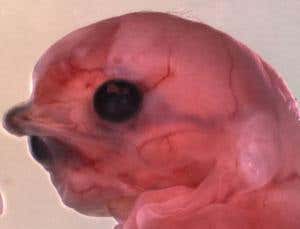
MICE with a beak-like nose have been engineered to help explain how the human face might form in the womb. The hope is that this could lead to the development of therapies for babies born with facial defects, and adult facial reconstruction.
Trevor Williams at the University of Colorado Denver in Aurora and colleagues genetically modified mouse embryos to boost or inhibit the activity of a gene that produces a protein called beta-catenin in the outermost cell layer, or ectoderm, of the…


