Peppered moths are the poster boys of evolution caused by humans (Image: Alex Hyde/Barcroft Media)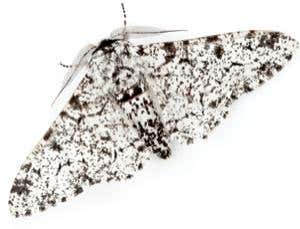
Read more: “Unnatural selection: How humans are driving evolution“
Between 1947 and 1976, two factories released half a billion kilograms of chemicals called polychlorinated biphenyls (PCBs) into the Hudson river, in the north-east US. The effects on wildlife weren’t studied at the time, but today some species seem to be thriving despite levels of PCBs, many of which are toxic, remaining high.
At least one species, the Atlantic tomcod – an ordinary-looking fish about 10 centimetres long – has evolved resistance. “We could blast them with PCBs and dioxins with no effect,” says Isaac Wirgin of New York University School of Medicine.
Many of the ill effects of PCBs and dioxins are caused by them binding to a protein called the hydrocarbon receptor (Science, vol 331, p 1322). The Hudson tomcod all have a mutation in the receptor that stops PCBs binding to it, Wirgin and colleagues reported earlier this year. The mutation is present in other tomcod populations too, Wirgin says, but at low levels.
The most famous example of evolution in action was a response to pollution: as the industrial revolution got under way, cream-coloured peppered moths in northern Britain turned black to stay hidden on trees stained by soot. As the tomcod shows, though, most evolutionary changes in response to pollution are invisible.
The spoil heaps of many old mines, for instance, are covered in plants that appear normal, but are in fact growing in soil containing high levels of metals such as copper, zinc, lead and arsenic that would be toxic to…