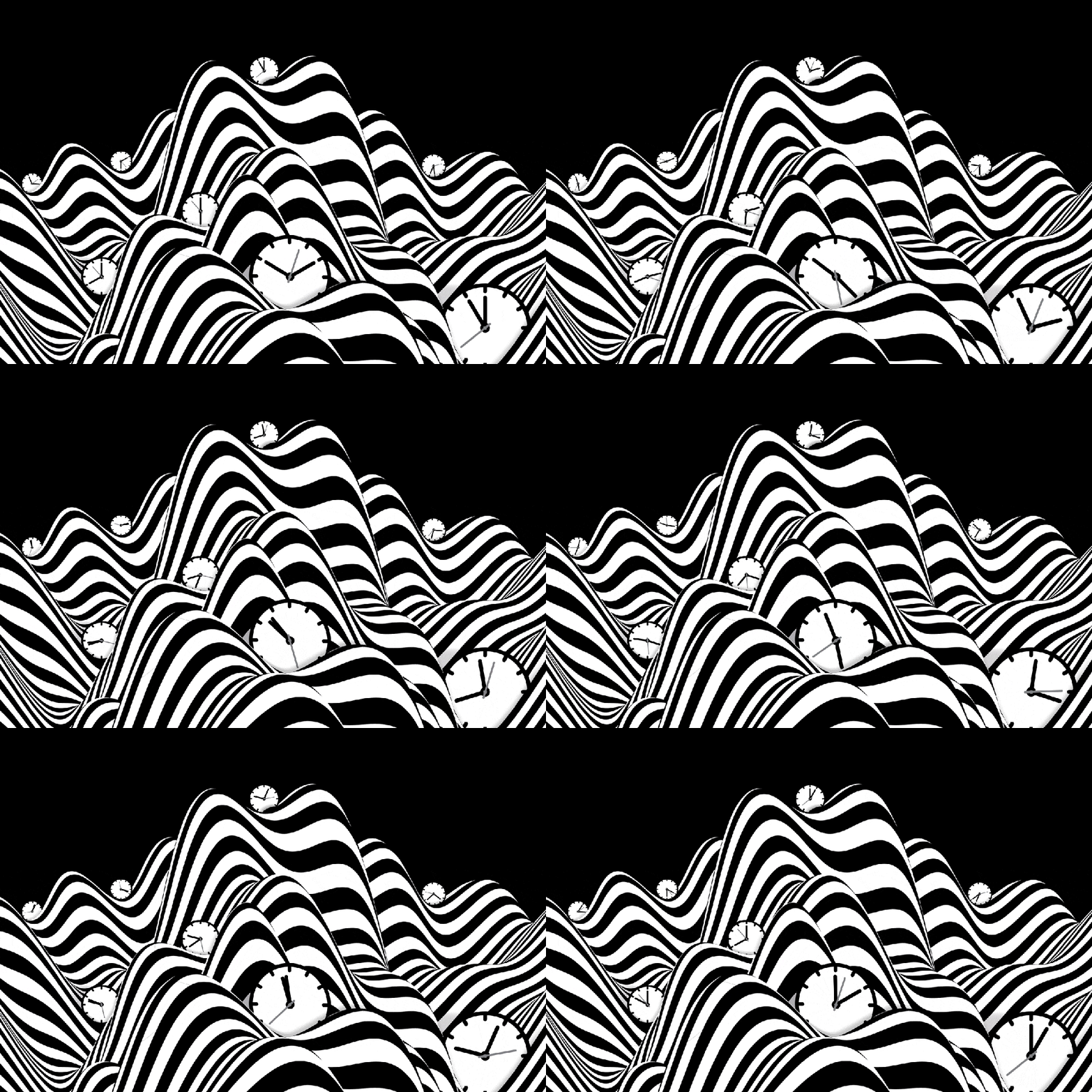
Making waves (Image: Steve Kelley/Getty)
THE moon not only tugs at Earth’s oceans, it roils the atmosphere too.
Four decades ago, theorists predicted that the moon’s shadow during an eclipse creates a dense pocket of cold gas that plows through the atmosphere like a boat, creating V-shaped waves. Attempts to measure them had failed – until now.
In July 2009, during the longest eclipse calculated to occur in the coming century, Jann-Yenq Liu of the National Central University in Taiwan turned on a network of 1400 GPS receivers across Taiwan and Japan. Signals from GPS satellites ricochet off ripples in…