Water vapour is a powerful greenhouse gas (Image: Ocean/Corbis)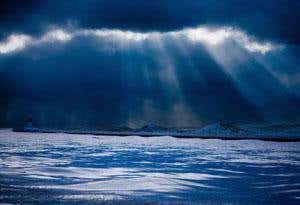
Read more: “Climate change: What we do – and don’t – know“
Doubling atmospheric CO2 on a planet with no water or life would warm it by about 1.2 °C. Even without the complicating effects of aerosols, things aren’t that simple on Earth.
Take water. Water vapour is a powerful greenhouse gas. When an atmosphere warms, it holds more of the stuff. As soon as more CO2 enters a watery planet’s atmosphere, its warming effect is rapidly amplified.
This is not the only such “positive feedback” effect. Any warming also leads to the rapid loss of snow cover and sea ice, both of which reflect sunlight back into space. The result is that more heat is absorbed and warming escalates. Longer timescales bring changes in vegetation that also affect heat absorption, and the possibility that land and oceans begin to release CO2 rather than absorb it. Over hundreds or thousands of years, vast ice sheets can melt away, further decreasing the planet’s reflectivity. Barring some unexpected catastrophe such as a megavolcano eruption, then, the planet is going to warm considerably. But by how much?
Previous article: “Climate unknown: How great our cooling effects are“
Next article: “Climate unknown: Just how much hotter things will“