Made me what I am (Image: Martin Parr/Magnum Photos)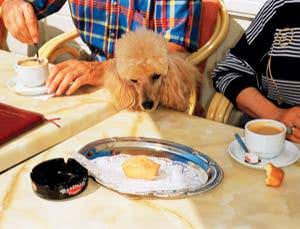
DOGS famously love a bone, but a taste for starch may have helped to turn their ancestors from wolves into pooches.
The first comparison of the full genomes of wolves and dogs has found 36 segments that clearly differ. Besides differences in genes linked to brain development, Erik Axelsson of Uppsala University in Sweden and colleagues found three genes in dogs that are vital for digestion and extend their ancestral carnivorous diet to include starch (Nature, DOI: 10.1038/nature11837).
A gene for the enzyme that splits starch into simpler sugars has replicated itself in the dog genome, and become more efficient – a sure sign that it is in demand.
Advertisement
Although the team has yet to date the emergence of these genes, Axelsson suggests one possibility is that it coincided with the dawn of agriculture, as settlements filled with heaps of starchy waste. “Wolves were probably attracted, but only the ones that evolved the ability to digest the starch waste kept coming back,” he says.
Topics: