Attracted to wounds (Image: Kessel & Kardon/Tissues & Organs/Getty)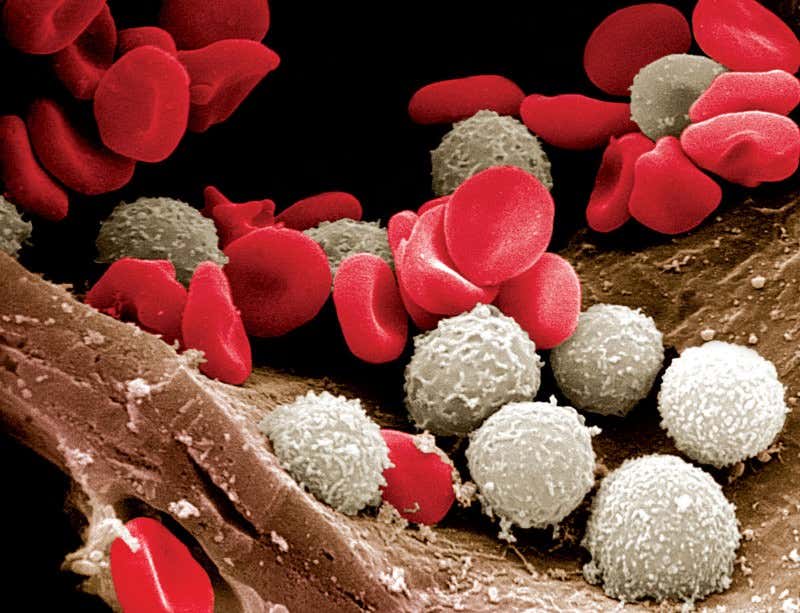
CELLS can’t see or hear, but some of them have a sense we lack: they can detect the electric fields generated by a wound. Identifying how they do this could help efforts to boost wound healing.
The flow of ions across a cell membrane creates tiny electric fields. Tissue damage changes that field, and cells involved in tissue repair seem to sense this change.
To work out what might cause these cells to respond to electric fields, Min Zhao and Alex Mogilner at Stanford University in California and their team looked at fish skin cells, which are often used to study cell motion. When placed in an electric field to mimic the field formed around a wound, whole cells moved towards the positive electrode, as if moving towards an injury. Curiously, though, smaller fragments of cellular material in the fish skin cell sample headed in the opposite direction.
Advertisement
The cells and fragments have one thing in common – both possess bundles of proteins that help them move. The team realised that these proteins act as tiny electromagnetic compasses: they propel cells towards a wound, but send cell fragments away (Current Biology, DOI: 10.1016/j.cub.2013.02.026).
Inducing electric currents at sites of injury could improve wound healing therapies, says Zhao.
This article appeared in print under the headline “Internal compass points to injury”
Topics: