Video: Watch a coke-fired furnace make lava
Hot enough for ya? (Image: G. Brad Lewis/Aurora)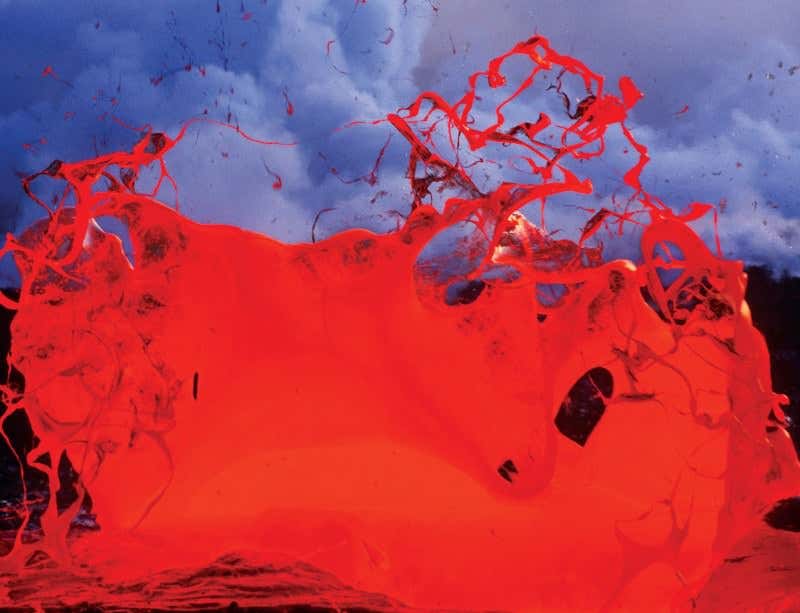
See more in our gallery: “Cooling it: How molten rock takes on strange new forms“
ON 5 February 252 AD, a violent volcanic eruption of Mount Etna in Sicily sent a wave of lava towards the city of Catania. According to one tale, desperate citizens opened the tomb of Saint Agatha and removed her red veil, which they held aloft in front of the flow. Miraculously the lava halted, sparing the city from destruction.
“In 252 AD, citizens of the Sicilian city of Catania opened the tomb of Saint Agatha and held aloft her red veil to stop the flow of lava. Miraculously it halted”
Unfortunately, things didn’t go so well when they tried it again after an eruption in 1669: this time their holy relic let them down and the city’s harbour was badly damaged.
Yet one out of two isn’t such a bad record, considering that modern science has little to offer against this implacable force of nature. After all, how do you stop a river of molten rock? Engineers have tried erecting dams, spraying lava flows with seawater, and even blasting the stuff with aerial bombs, but more often than not these attempts have failed. Nor can volcanologists shed much light on the problem, since streams of lava are so difficult and dangerous to study in the first place.
Now a fiery experiment in upstate New York could help. At the Syracuse University Lava Project, geologist Jeffrey Karson and sculptor Robert Wysocki have teamed up to make what they hope will…


