How do you predict colossal waves like this one? John Lund/Getty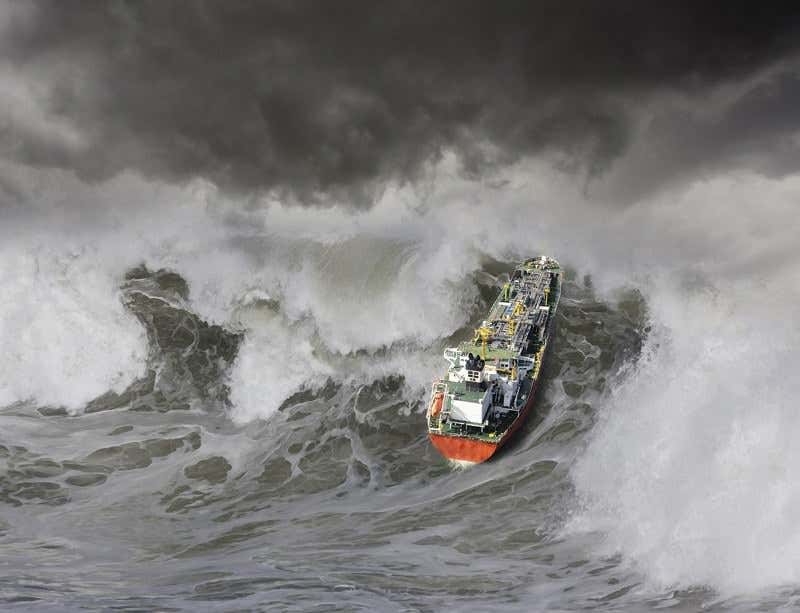
WHEN the cruise ship Louis Majesty left Barcelona in eastern Spain for Genoa in northern Italy, it was for the leisurely final leg of a hopscotching tour around the Mediterranean. But the Mediterranean had other ideas.
Storm clouds were gathering as the boat ventured eastwards out of the port at around 1 pm on 3 March 2010. The sea swell steadily increased during the first hours of the voyage, enough to test those with less-experienced sea legs, but still nothing out of the ordinary.
At 4.20 pm, the ship ran without warning into a wall of water 8 metres or more in height. As far as events can be reconstructed, the boat’s pitch as it descended the wave’s lee tilted it into a second, and possibly a third, monster wave immediately behind. Water smashed through the windows of a lounge on deck 5, almost 17 metres above the ship’s water line. Two passengers were killed instantly and 14 more injured. Then, as suddenly as the waves had appeared, they were gone. The boat turned and limped back to Barcelona.
“Descending the first monster wave, the boat was pitched into a second and possibly a third behind”
A few decades ago, rogue waves of the sort that hit the Louis Majesty were the stuff of salty sea dogs’ legend. No more. Real-world observations, backed up by improved theory and lab experiments, leave no doubt any more that monster waves happen – and not infrequently. The question has become: can we predict when and where they will occur?
Science has been slow…