(Image: Antony Dubber/BAS)
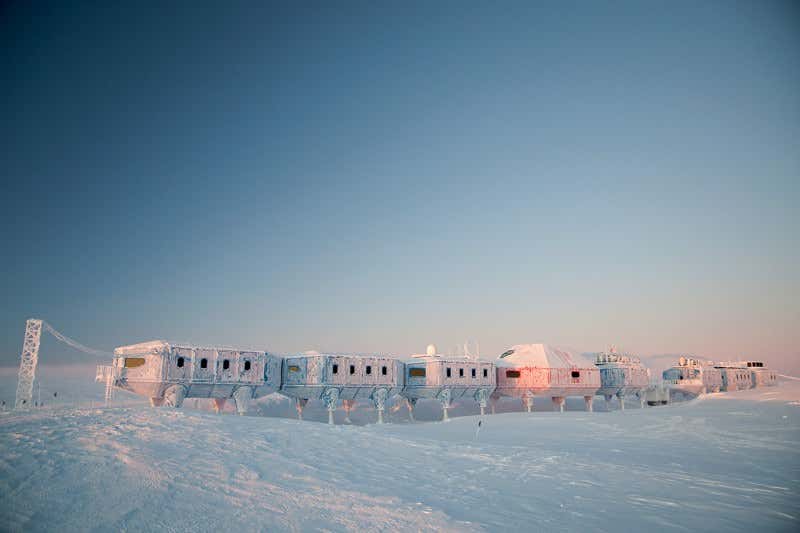
CONSTANT darkness, bone-chilling temperatures and cut off from the rest of the world. Living in Antarctica isn’t for the faint-hearted – and I should know, I overwintered there a while back. But at least I lived in a base built on rock; it’s quite another matter when your home sits on top of a floating ice shelf. This is Halley VI, the Antarctic’s most futuristic construction so far.
It needs to be to escape the fate of four of its predecessors, which were crushed beneath the accumulating snow. This is why it stands on long jackable legs. But the most unusual feature of this award-winning British Antarctic Survey base is that it can be towed to a new location thanks to huge skis – a good idea as the ice shelf it sits on moves seawards at a rate of 700 metres a year before eventually calving off into icebergs.
Advertisement
(Image: BAS)
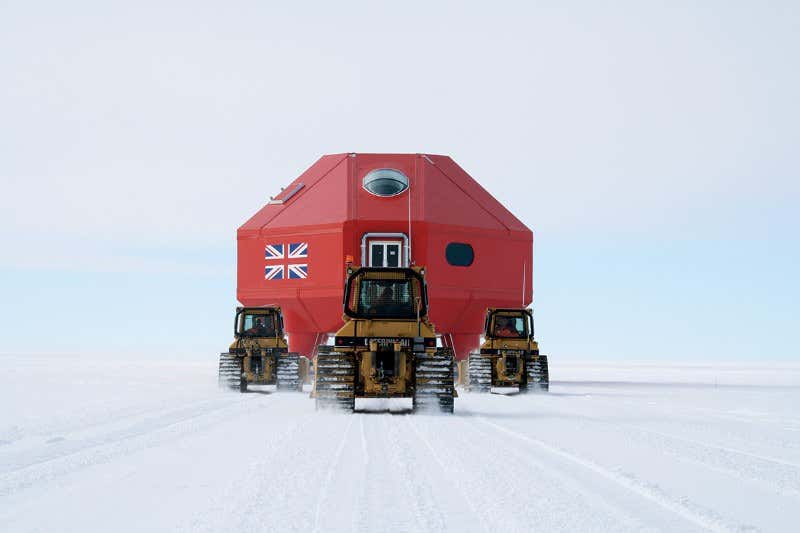
Halley VI is the first movable research station, built out of eight independent but linked modules containing dormitories, generators and labs. The image below shows Halley VI’s large central module – containing the base’s social space – being towed by three tractors.
Few people will ever visit so Ice Station, in which these photos appear, tells its story. The 13 people now living there have just celebrated midwinter. It will be another month before they see the sun again but at least they have space-age surroundings to while away the darkness.
This article appeared in print under the headline “Have skis, will travel”
Topics: