Caroline Cartwright/The Trustees of the British Museum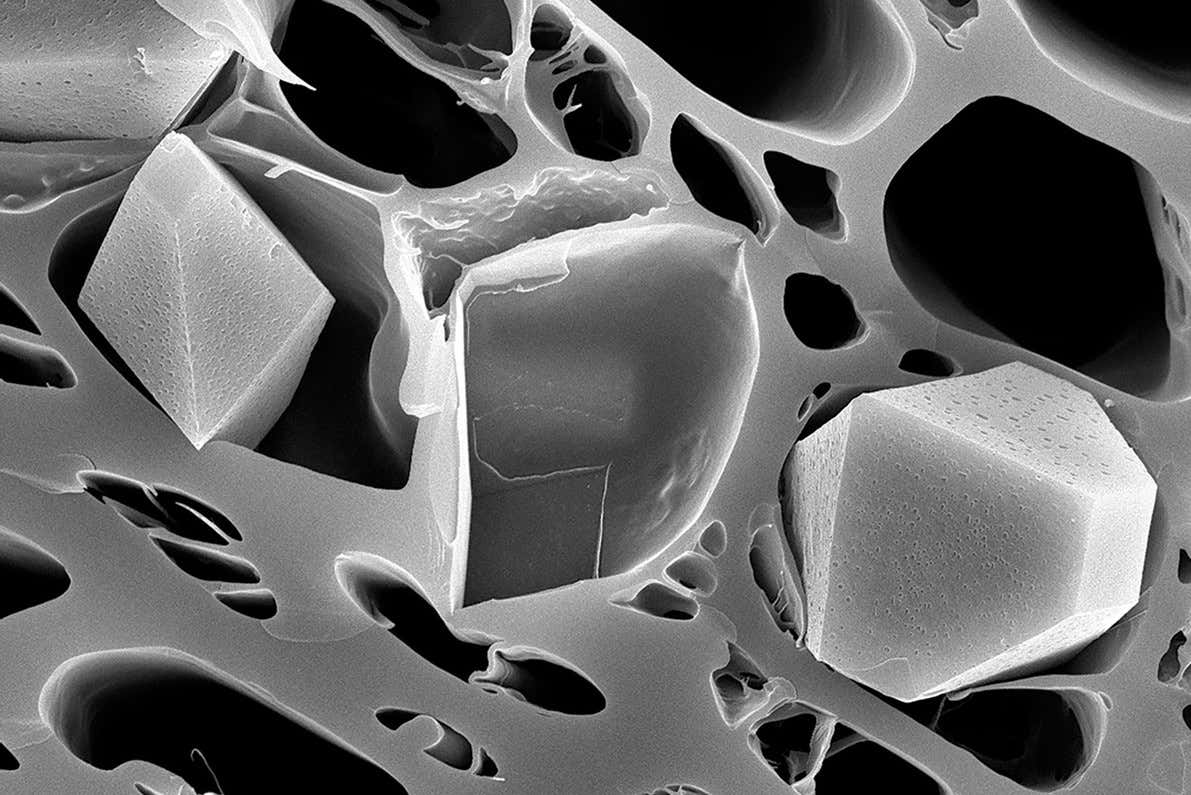
NO, IT isn’t Swiss cheese, but a fuel source that warms many impoverished homes. This is charcoal, magnified 4000 times under a scanning electron microscope. Nestling within its cavities are crystals of calcium oxalate, a sign that the tree it was made from grew in calcium-rich soil.
In such conditions, trees take up calcium but cannot use it all, so store it in these crystals. “It’s a beautiful decorative addition but it’s no use to the plant,” says Caroline Cartwright of the British Museum in London.
As part of the British Museum’s Tropical Fuelwoods project – a collaboration with the Royal Botanic Gardens in London and Brazil’s North-east Plants Association – Cartwright has been using electron microscopy to see which trees make the best charcoal. The specimen pictured was made from mimosa trees from Pernambuco in north-eastern Brazil, a poor region where charcoal is often used as a domestic fuel.
Advertisement
Cartwright has been making charcoal from different trees at a range of temperatures to see how the wood’s cellular structure stands up to heat. The better it keeps its structure, the longer the charcoal can warm a family home.
Caroline Cartwright/The Trustees of the British Museum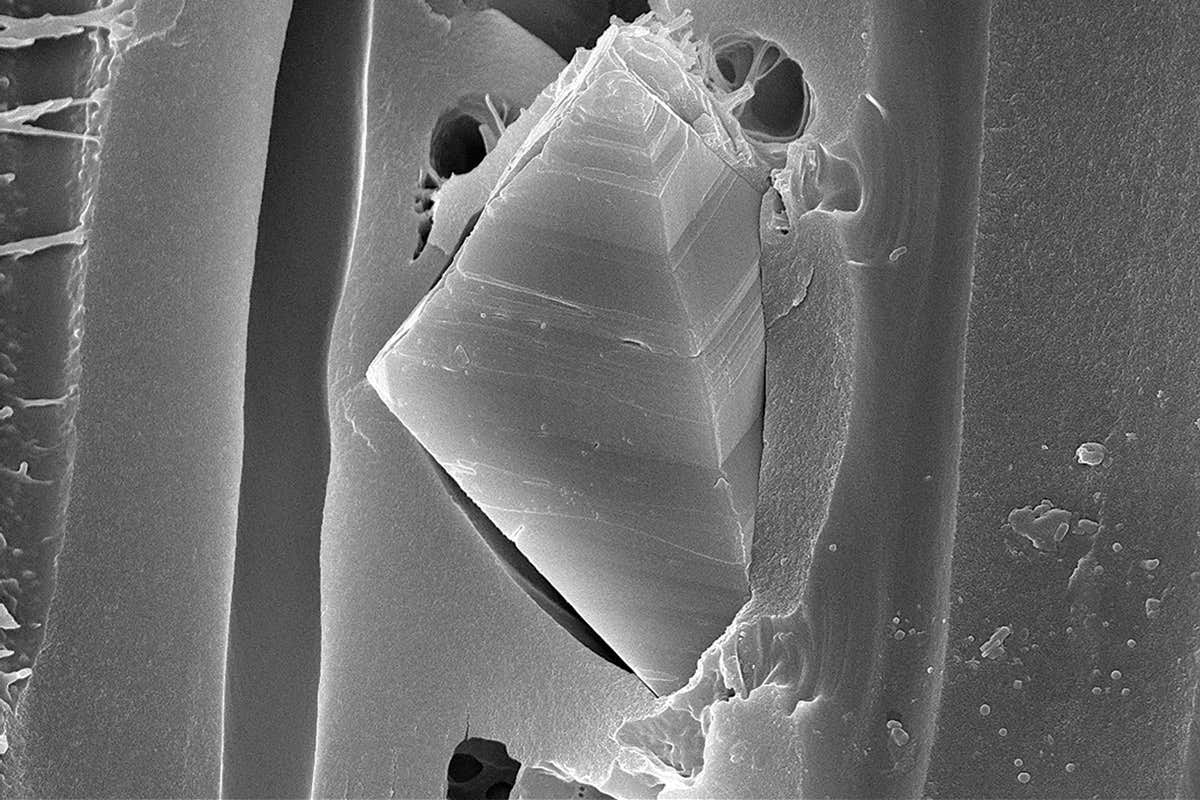
This article appeared in print under the headline “Ripe for burning”
Topics: