H. Armstrong Roberts/ClassicStock/Getty Images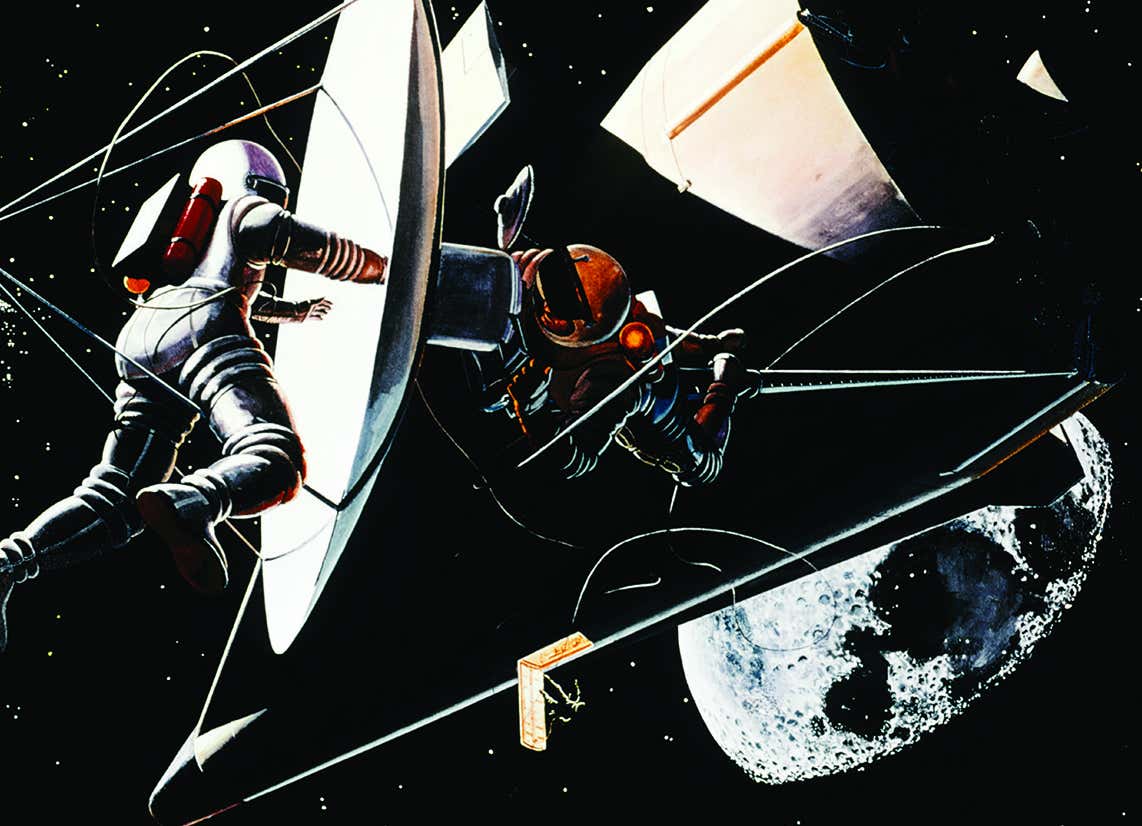
COMMUNICATION is key. Indeed, that’s why New Scientist exists: to communicate science to the world. And possibly beyond… In our 14 June 1962 issue we were concerned that, once humans had made their way to the moon, disparate groups of lunar explorers might be unable to communicate with each other, let alone Earth. Radio waves, we opined, would not be constrained by an atmosphere and would therefore travel in straight lines out into space. The solution, it seemed, was to scatter “metallic needles” into orbit that were “capable of reflecting radio waves of given frequency”, so creating an artificial…
![Small dome in the Compton-Belkovich region (61.33 ?N, 99.68 ?E). Evidence indicates a volcanic origin for this and other intriguing features in the region. Incidence angle is 64?, Sun is from the SSW, image is ~510 m across. NAC image number M139238146L [NASA/GSFC/Arizona State University].](https://images.newscientistbeta.com/wp-content/uploads/2023/07/07172644/SEI_163208069.jpg)