Humans first reached the surface of the moon half a century ago NASA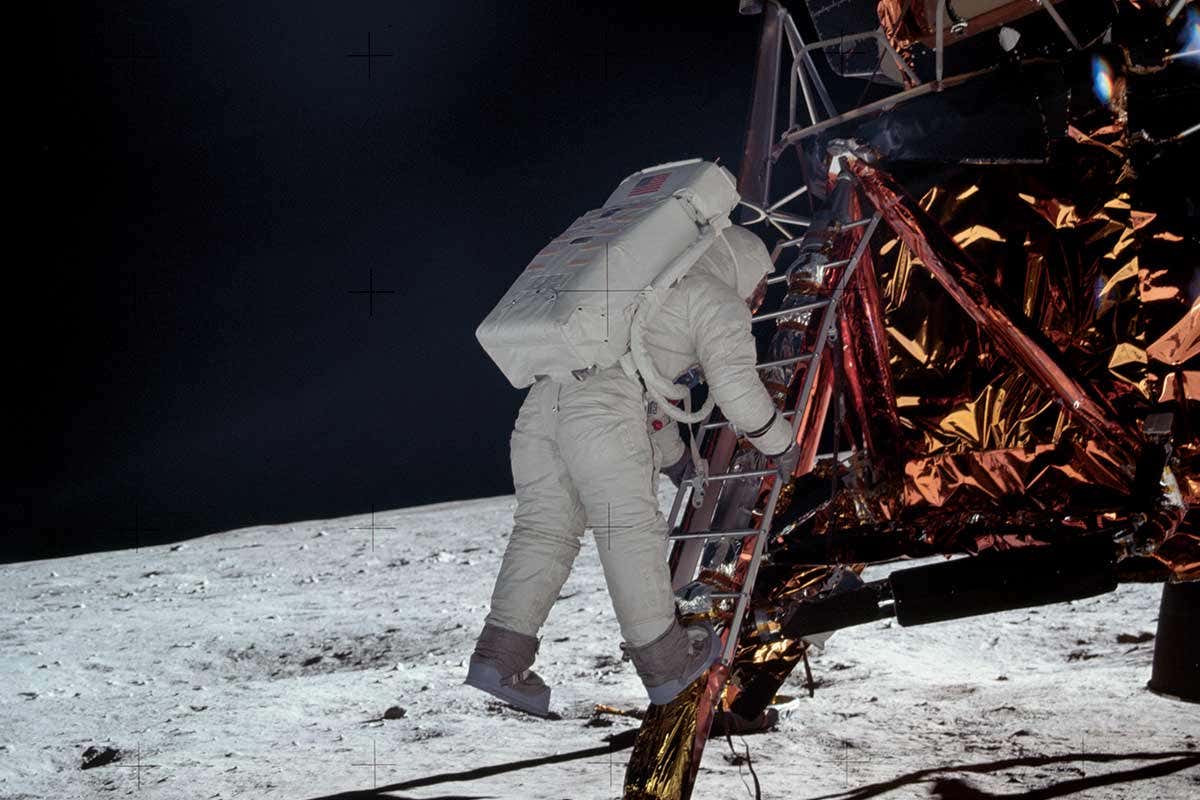
WHEN the Soviet Union put the first satellite, Sputnik 1, into orbit in 1957, Lyndon Johnson, then a US senator, stoked the idea that it was an affront to American prestige. “Control of space means control of the world,” he said. In 1961, President John F. Kennedy agreed with the sentiment and committed to putting a man on the moon that decade.
The subsequent success of the Apollo programme was one of the most extraordinary achievements in human history, and our special issue this week explores its…

![Small dome in the Compton-Belkovich region (61.33 ?N, 99.68 ?E). Evidence indicates a volcanic origin for this and other intriguing features in the region. Incidence angle is 64?, Sun is from the SSW, image is ~510 m across. NAC image number M139238146L [NASA/GSFC/Arizona State University].](https://images.newscientistbeta.com/wp-content/uploads/2023/07/07172644/SEI_163208069.jpg)