Subscribe now

Comment and Humans

Same-sex attraction isn't an evolutionary paradox - here's why

Our explanations for how same-sex attraction evolved are wrong – it's the spectrum of sexuality that is important, says Andrew Barron

By Andrew Barron

5 February 2020

New Scientist. Science news and long reads from expert journalists, covering developments in science, technology, health and the environment on the website and the magazine.

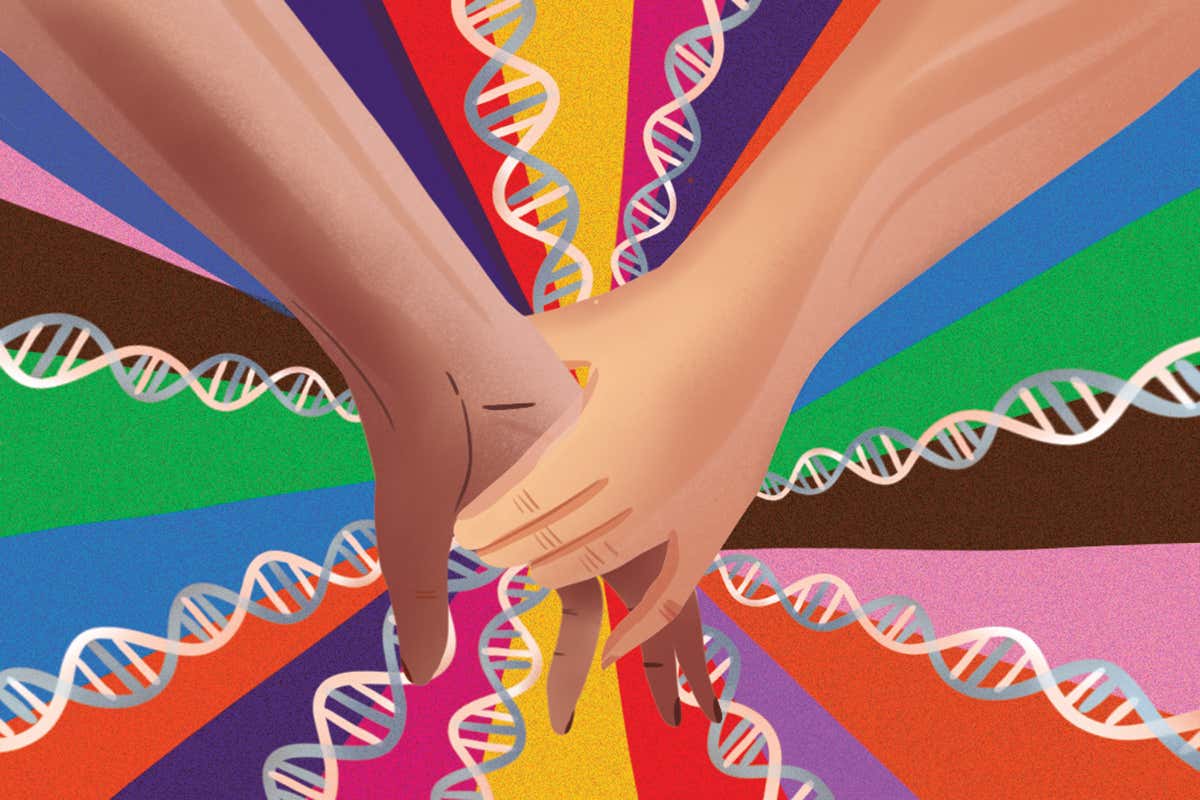
Josie Ford

HOW did human same-sex attraction come to be? At first glance it seems to be an evolutionary paradox. For a trait to evolve, it has to be passed on to children to whom it confers some sort of advantage. But as gay sex, of itself, cannot yield offspring, we should expect
same-sex attraction to go extinct.

Evolutionary biologists have long struggled with this paradox, but my colleagues and I believe that if you come to the puzzle from a different angle, the apparent contradiction disappears. The trick is to recognise the complexity of human sexual activity and sexuality.

Firstly, same-sex…
Sign up to our weekly newsletter

Receive a weekly dose of discovery in your inbox. We'll also keep you up to date with New Scientist events and special offers.

Sign up

To continue reading, subscribe today with our introductory offers

Popular articles

Trending New Scientist articles

Piano Exit Overlay Banner Mobile Piano Exit Overlay Banner Desktop