Sydney Hanson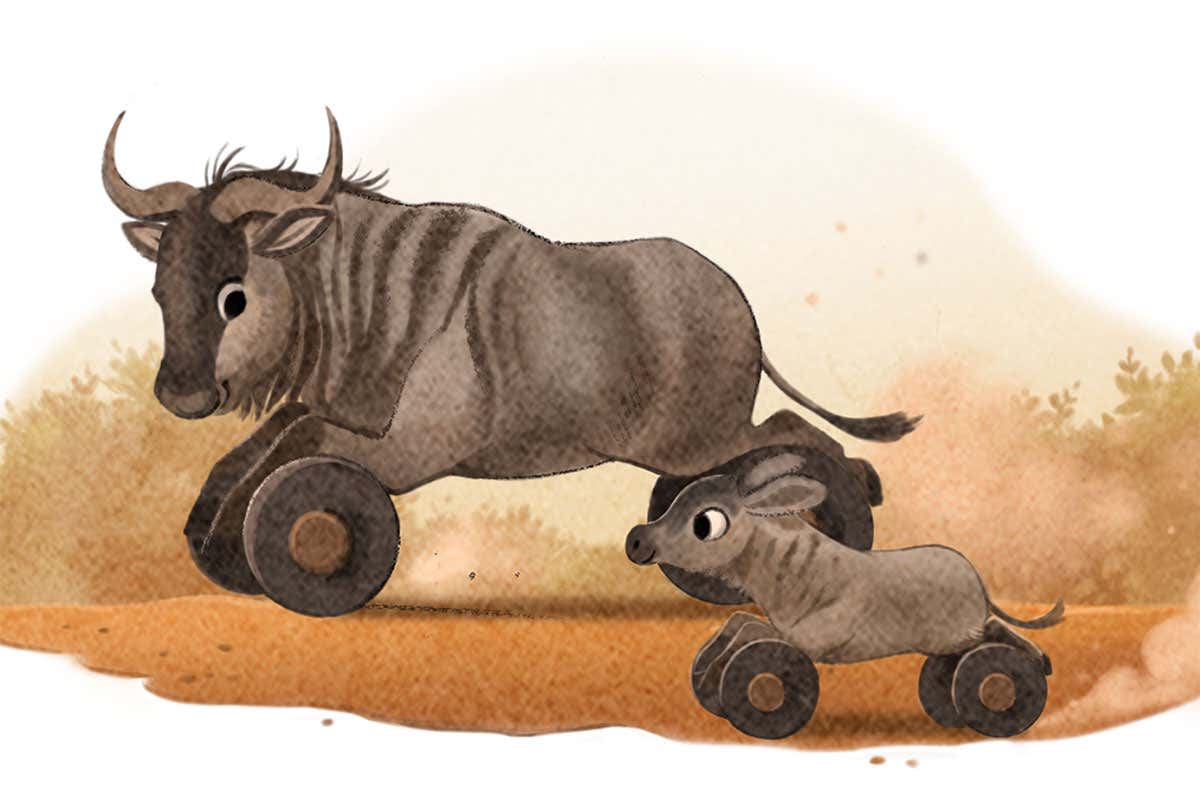
“From so simple a beginning endless forms most beautiful and most wonderful have been, and are being, evolved.” That was how Charles Darwin described the incredible diversity of life forms generated by evolution. But he never addressed the big question: if evolution is infinitely innovative, why hasn’t it produced animals with wheels? Are there limits to evolution’s creativity that mean some things can never evolve? And if not, why haven’t things like flying plants arisen or anything resembling a semi-automatic rifle?
Evolution exists because living things vary: each member of a species is subtly different to every other one. Those that are better suited to their environments are more likely to breed and pass on their genes, and so their favourable traits become more common in the population. Given enough time, this slow process can create wonders like gigantic blue whales, cooperative honeybees and towering sequoias. Evolution has produced animals that live more than 10 kilometres under the sea and bacteria that can handle doses of radiation that would kill a person many times over.
Yet some things just don’t seem to turn up. Wheeled animals are a classic example – the evolutionary biologist Stephen Jay Gould discussed them in his 1983 book Hen’s Teeth and Horse’s Toes – but there are many others. In a 2015 paper, Geerat Vermeij at the University of California, Davis, identified 32 combinations of traits that evolution has seemingly never produced. For instance, there are no rigid structures like coral reefs in fresh water, no plant-eating snakes and no flying plants.
It is tempting to invent reasons why these can’t exist, but Vermeij is reluctant to…


