Tony Wu/naturepl.com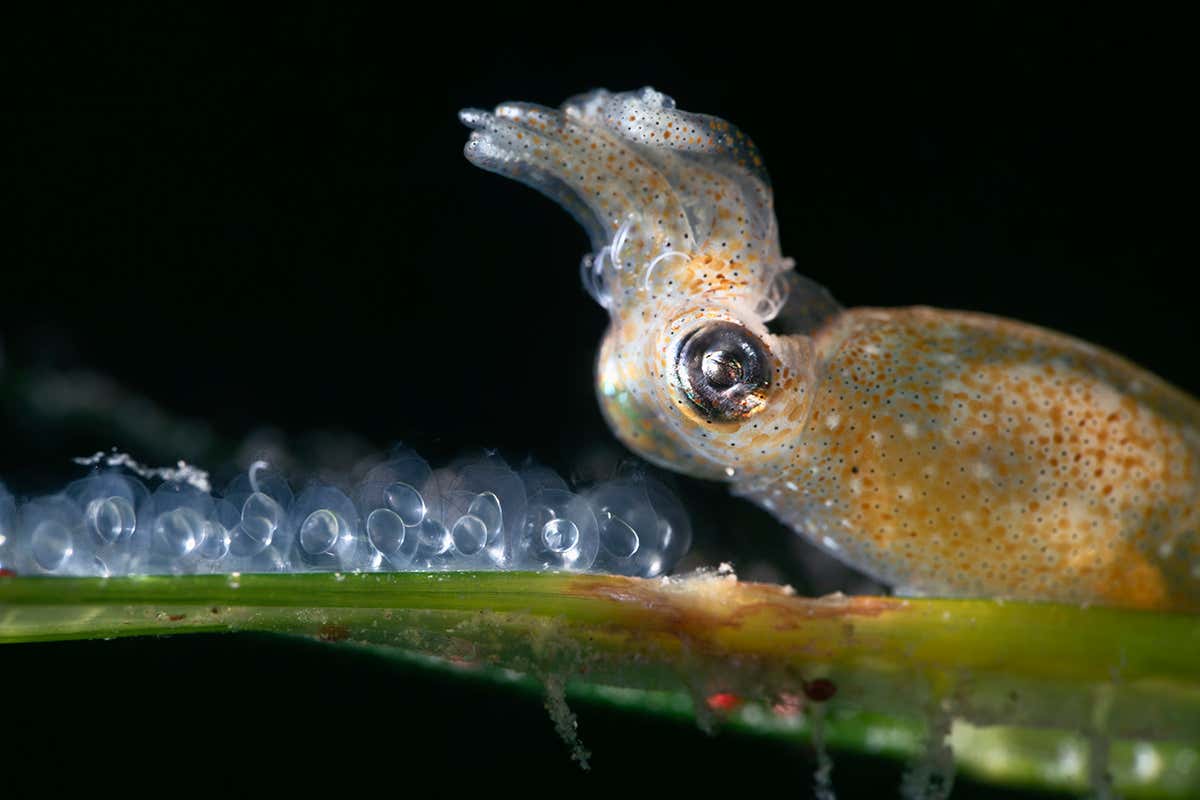
Photographer Tony Wu
Agency Naturepl.com
THIS dramatic image of a female northern pygmy squid (Idiosepius paradoxus) may make it look like a formidable ocean dweller, but it is in fact a close-up of the world’s smallest cephalopod, a minuscule member of a class of molluscs that includes octopuses and cuttlefish.
Advertisement
Measuring between just 5 and 20 millimetres across, these squid are so tiny they can fit on a human thumbnail. This female, seen off the coast of Yamaguchi prefecture in southern Japan, is laying her eggs, a process that can take anywhere between a few minutes and an hour, says photographer Tony Wu.
The eggs, however, get fertilised in a rather unusual way. Instead of reproducing by copulation, male pygmy squid attach bundles of sperm called spermatophores onto the bodies of females. The sperm then makes its way to a receptacle in the female’s mouth when she is ready to inseminate her eggs, allowing her to inject a small amount of this through a hole she bites in each egg.
Here, the pygmy squid can be seen delicately preparing to lay another egg on a blade of eelgrass before she starts the process of insemination.
Topics: