
![Nature Astronomy, doi:10.1038/s41550-022-01634-x Fig. 4 | SCExAO/CHARIS images of AB Aur at different wavelengths and observing modes. Left: polarized intensity wavelength-collapsed image obtained one day later. A pure scattered-light disk feature would have been detected at the position of AB Aur b (green circle). Instead this region shows no concentrated emission, indicating that AB Aur b is not detected. Right: emission at the approximate position of AB Aur b from VAMPIRES H? data using RDI/KLIP for PSF subtraction. From left to right, the intensity scaling is [0, 0.0925] mJy, [0, 0.055] mJy and [?0.007, 0.007] mJy, normalized to the source?s apparent FWHM. The x and y axes are in units of arcseconds east (along the x axis) and north (along the y axis).](https://images.newscientistbeta.com/wp-content/uploads/2022/04/04144318/SEI_97110504.jpg)
Space
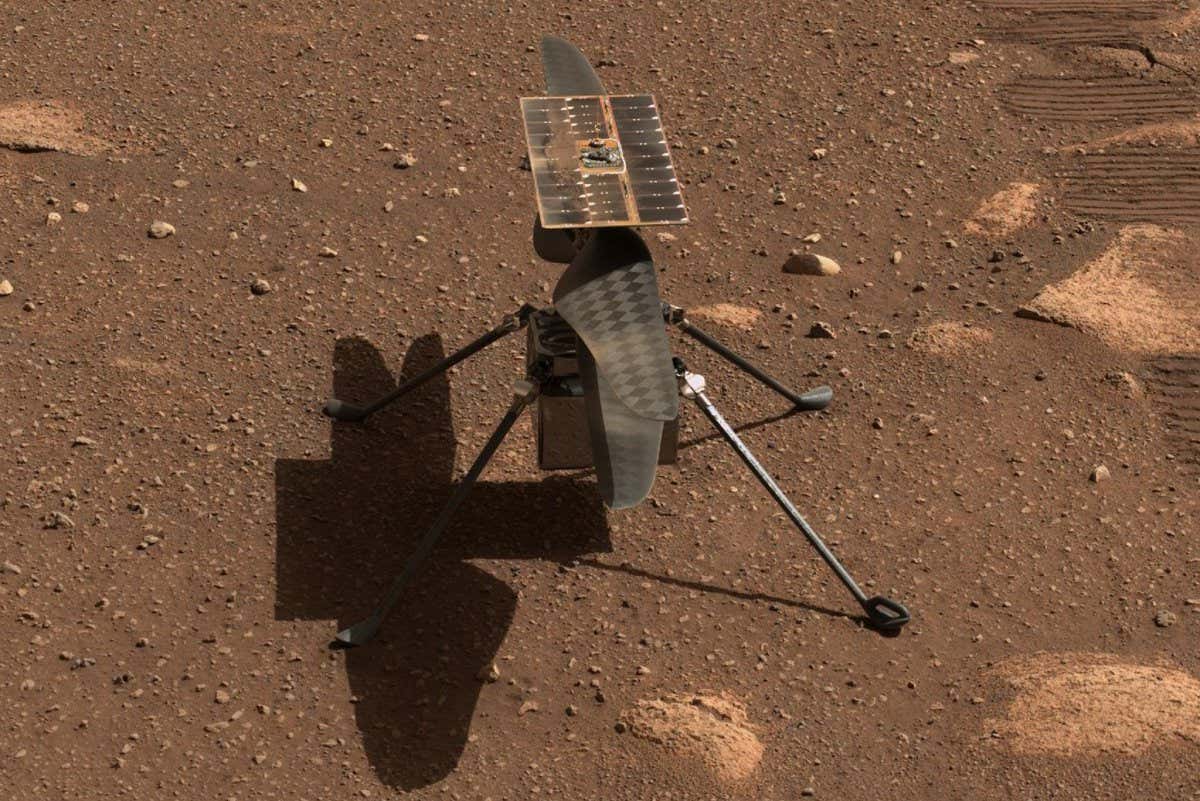
Exoplanet sighting shows how gas giants can form far from their stars
News
Chen Ly is a news reporter who writes about the latest across science and technology, including health, physics, life and the environment. She holds a BSc in physics from the University of Bath and an MSc in climate change: environment, science and policy from King's College London, and is currently pursuing a PhD in environmental policy at Imperial College London. She was previously New Scientist’s social media manager. You can contact her at chen.ly@newscientist.com.
Explore the latest news, articles and features
News

News
News

News

News
News
News
News
News

News

Culture
News
