Brain light / Alamy
This article was last updated on 13 October 2021.
The basic reproduction number, also known as the R or R0, is the average number of people one person with an infectious disease will likely infect in the future.
For example, an R of 3.5 would mean 100 people with the new coronavirus would likely go on to infect 350 people. Those 350 would in turn transmit it to 1225 people. When the R is above 1, the virus will grow exponentially in a population with no immunity. At 1 it stays steady. Below 1, the virus will gradually infect fewer people, until the epidemic dries up.
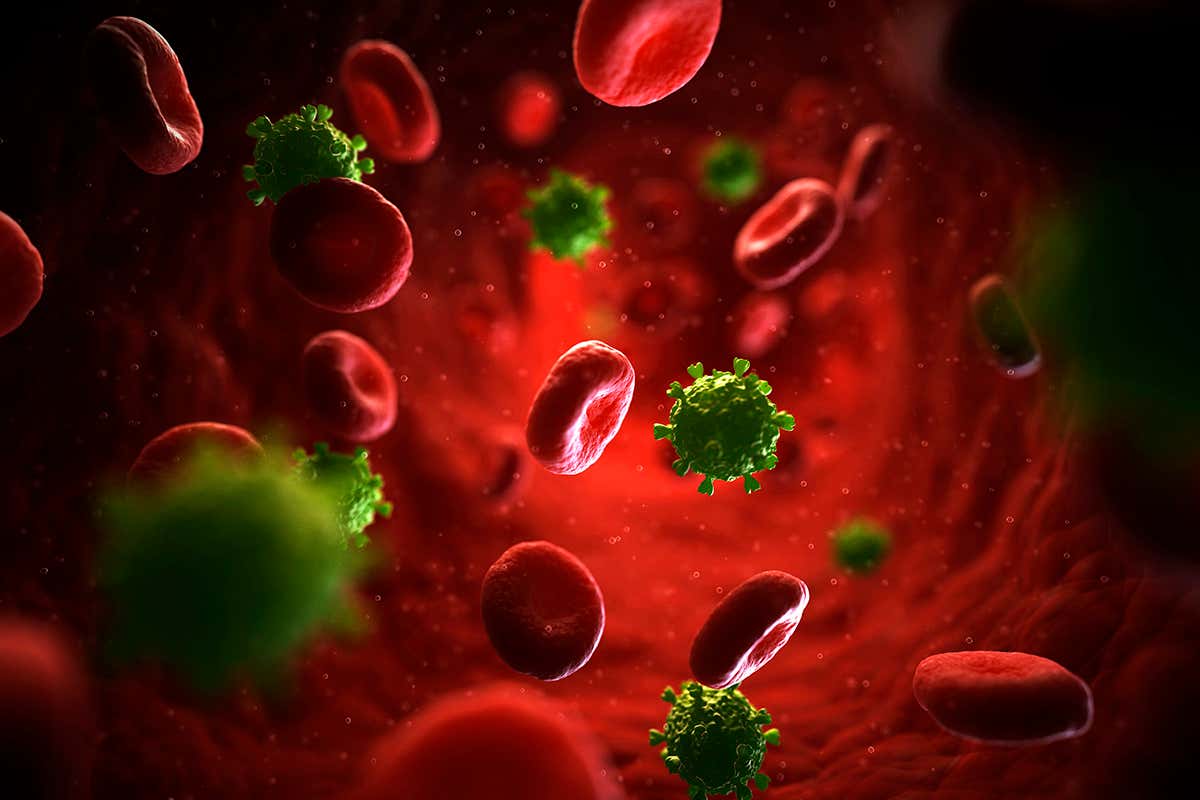
The R of the original variant of SARS-CoV-2, the coronavirus that causes covid-19, is estimated at around 2.5, compared to about 15 for measles, based on a population that has had no exposure to it. Newer variants have different R numbers – the delta variant, which is more infectious, appears to be around 6.
But new variants aren’t the only way that an infection’s R number can change. Population factors, such as immunity from infection or vaccination, and mitigation measures like quarantining and mask-wearing, can also bring down an epidemic’s R number.