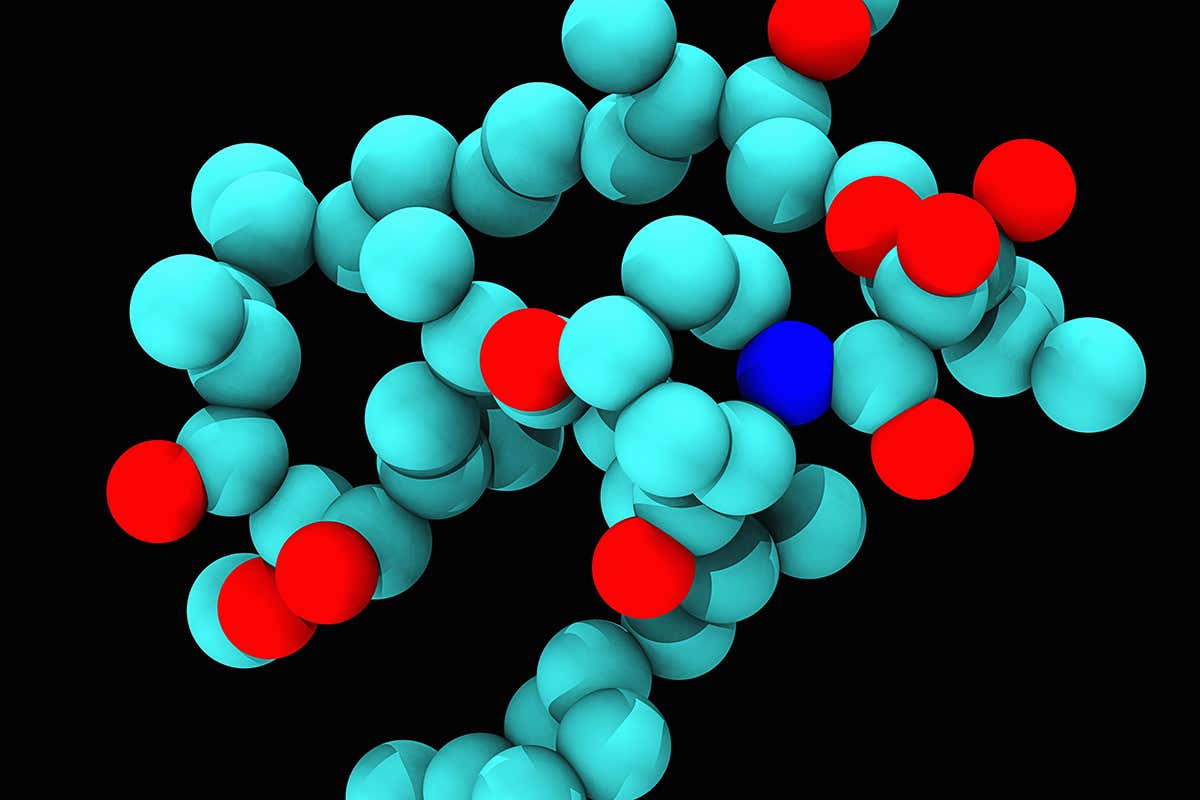
Rapamycin
Shutterstock/Image Source Trading Ltd
If you like the idea of living as long as possible, rapamycin may be the drug for you. Originally developed as an immunosuppressant for organ transplant patients, it has found a new lease on life as a potential anti-ageing drug. Rapamycin has not been approved for that use in humans but many gerontologists see it – or similar drugs – as the best hope we have for pharmacologically slowing down the ageing process.
Rapamycin was isolated in 1972 from a bacterium found on Easter Island, aka Rapa Nui – hence the name. For many years it was an obscure transplant drug but in the early 2000s was found to significantly extend the lifespan of worms, yeast, flies and mice. In one experiment, researchers gave rapamycin to a group of 20-month-old mice, equivalent to retirement-aged humans. They fed the mice small doses for three months, then took them off the drug and waited for them to die. Mice usually die aged around 30 months but the drugged ones lived an extra 2 months on average. The final survivor died more than two years after the start of the experiment, at the ripe old age of 3 years and 8 months – the equivalent of around 140 in human years.
Rapamycin has not been tested in this way in humans but, given the similarities between mouse and human biology, there is a good chance it will also extend our lifespans. By how much is not known.
Rapamycin is thought to exert its life-extending properties by mimicking the effect of caloric restriction, one of the most reliable ways to extend lifespan in non-human animals. It targets a signalling molecule called mTOR (an acronym for mechanistic target of rapamycin) which is an important node in our nutrient-sensing pathways. Lack of food switches mTOR off and activates emergency systems that enable us to survive periods of starvation.
These pathways include autophagy, the process by which cells scavenge dysfunctional organelles and molecules for energy. This reduces the accumulation of the detritus that normally clog up our tissues as we get older, and hence slows or even reverses the ageing process.
Doing a clinical trial of rapamycin’s effects on longevity in humans is considered almost impossible – it would take decades to detect any effects. But a trial is underway in pet dogs, which suffer similar age-related decline as humans but live much shorter lives. The results won’t be published until at least 2027, however.
There have been human clinical trials of rapamycin and drugs with a similar mode of action – called rapalogs – to test whether they have any impact on age-related diseases. A recent review found a positive effect on the cardiovascular and immune systems and the skin, but no impact on the endocrine system, muscles or brain. Possible effects on the respiratory, digestive, renal and reproductive systems have yet to be tested. Studies done on healthy volunteers found no serious side effects but those with pre-existing age-related diseases saw more infections and increased levels of cholesterol and other blood lipids.