The spacecraft’s latest flyby provides the first clear pictures of a third of the planet, revealing long bright streaks of material across the surface
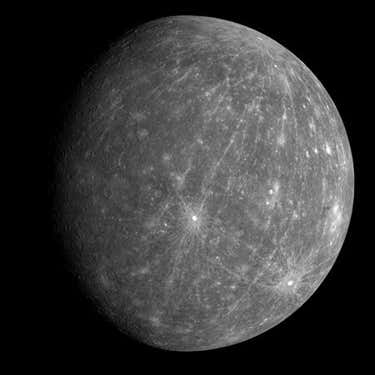
Much of the image to the right of the Kuiper crater (in the centre here) had never been imaged by a spacecraft before. Researchers were surprised to see long rays that extend thousands of kilometers from a crater at the planet’s north pole (Image: NASA/JHU APL/CIW)
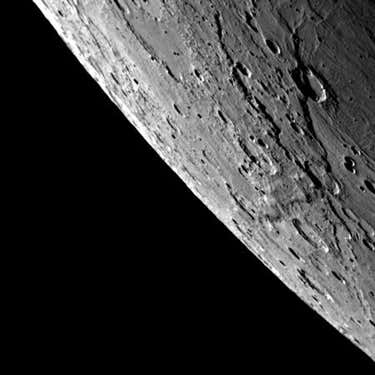
Two very long scarps, or cliffs, are visible in the right side of an image. Scarps may signal places where the surface has buckled as Mercury shrinks (Image: NASA/JHU APL/CIW)
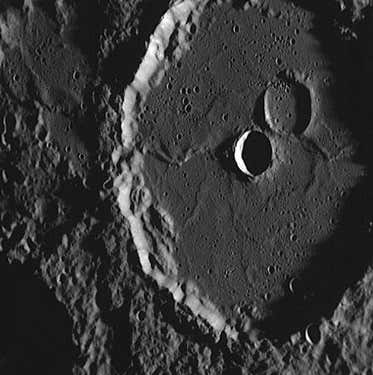
Messenger caught this relief view of Mercury’s Machaut crater, first photographed under direct sun by Mariner 10 in the 1970s. The largest crater in Machaut appears to have been inundated by lava flows (Image: NASA/JHU APL/CIW)


