Conservation biologists often go to extreme lengths to prevent species from being wiped off the planet. As a tribute to their efforts, we’ve collated our favourite examples of the measures that have been used rescue a species, from reverse vasectomy on an endangered horse to the cloning of an animal from beyond the grave. See the associated feature
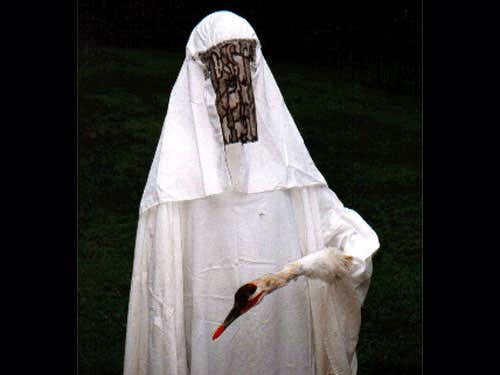
At the USGS Patuxent Wildlife Research Center in Maryland, carers wearing crane costumes breed endangered whooping cranes from the moment they can see.
The poncho-like body costume prevents the birds from mistaking humans for parents. The hood has camouflage netting so that carers can see without being seen.
The puppet head acts as a “parent” to chicks, sleeping with them and teaching them how to eat.
Image: Carlyn Williamson, USGS Patuxent Wildlife Research Center
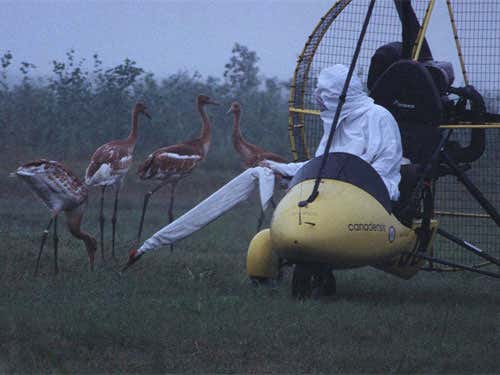
Puppet-reared whooping cranes are taught to migrate They are guided on their outward journey to Florida by a disguised person piloting an ultralight.
Image: Whooping Crane Eastern Partnership
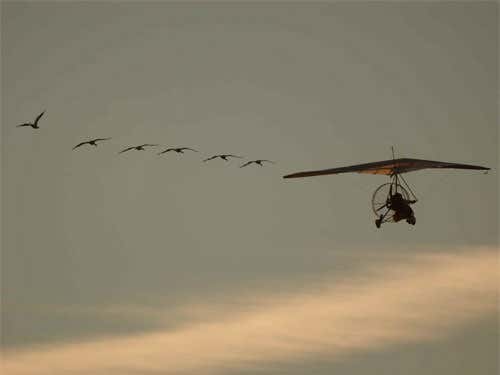
A flock of puppet-reared whooping cranes follows its leaders down to Florida. They learn the journey on the way out and can make the return journey on their own the following spring.
Image: Whooping Crane Eastern Partnership
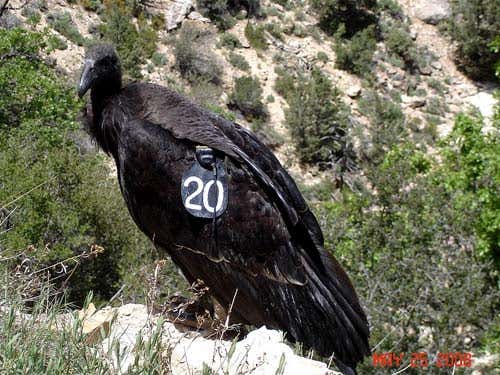
In 1987, the last remaining 22 condors were brought into captivity in an attempt to save the subspecies and bred at the San Diego Wild Animal Park and the Los Angeles Zoo.
Programmes to release them back into the wild began in 1992. All released animals are given number tags and radio-transmitters.
Image: Wikimedia, Docku
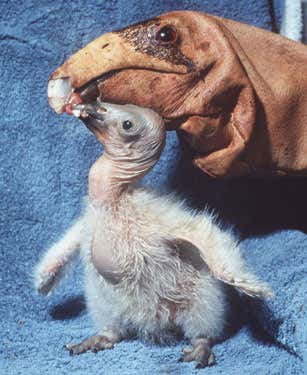
Like the whooping cranes, young human-reared California condors interact with disguised carers. Here, a puppet teaches a chick to feed.
Image: US Fish and Wildlife Service
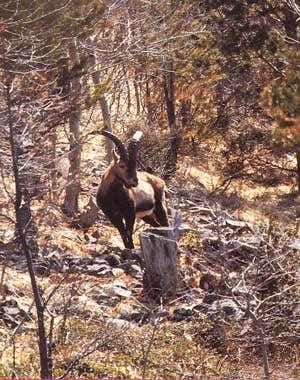
The Pyrenean Ibex (Capra pyrenaica pyrenaica), a subspecies of mountain goat, went extinct in 2000 when the last surviving individual, a 13-year-old female named Celia, was found dead.
In February 2009, researchers announced that they had successfully cloned Celia from frozen skin cells collected before she died. The clone only survived two days.
Image: Courtesy of Jose Folch
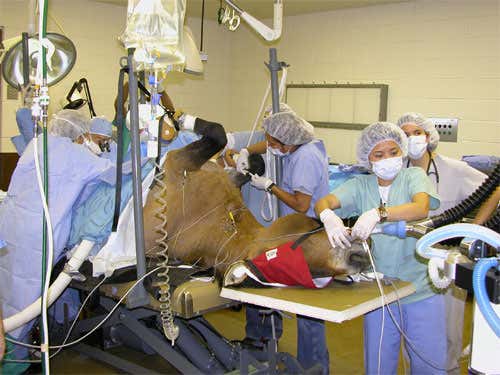
In June 2008, veterinarians at the Smithsonian National Zoological Park in Washington, DC, performed the first successful reverse vasectomy on an endangered horse.
Minnesota is a Przewalski’s horse, a species native to China and Mongolia that was declared extinct in the wild in 1970. He was vasectomised in 1999 so that he could be kept with female horses without reproducing, but biologists later realised that his genes would be extremely valuable to the genetic diversity of the Przewalski’s horse population, which descends from just 14 wild animals.
Image: Smithsonian Institution