A camera that uses an infrared and ultraviolet flash to illuminate scenes takes sharp images without the distracting and dazzling effects of a standard flash
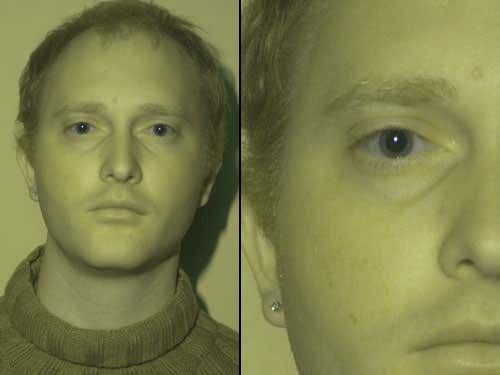
Dark flash image
Dilip Krishnan and Rob Fergus at New York University have bult a “dark flash” camera which floods a scene with infrared and ultraviolet light that is invisible to the human eye. The image is crisp, but the colours are strange.
Image: Dilip Krishnan, Rob Fergus

No-flash image
To fix the colours it is necessary to have the camera take two images in quick succession: one with and one without the dark flash. The second, unlit image, looks like this. The image is grainy, but the colours are correct.
Image: Dilip Krishnan, Rob Fergus

Combined image
The researchers’ software combines the sharp detail from the “dark flash” image with the colour information from the “no-flash” image to create a final result that is crisp and correctly coloured.
Image: Dilip Krishnan, Rob Fergus

Long-exposure image
The results are similar to those achieved by using a long exposure without a flash, like this image. But a long exposure shot requires those in the image to remain still for a few seconds to avoid creating motion blurs. The dark flash technique uses short exposure times that prevent those problems.
Image: Dilip Krishnan, Rob Fergus


