In the southern reaches of San Francisco Bay, ponds created to produce salt by evaporation take on other-wordly colours, thanks to blooms of salt-tolerant microbes. Using kite aerial photography, Charles “Cris” Benton has documented this altered ecology.
Read more: “Beauty of devastated Californian land seen from a kite“

This levee separates two salt ponds, the left at about 8 per cent salinity, the right at about 12 per cent. Each pond carries the colour of the microorganisms dominant at its particular salinity.
(Image: Cris Benton)
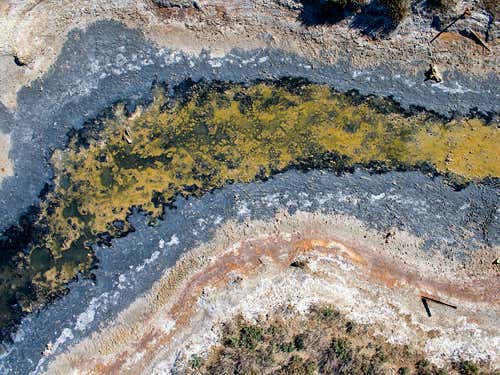
This abstract image is formed from an old marsh channel isolated by the salt pond levees.
(Image: Cris Benton)

Here a dead bush stands sentry at the edge of a salt pond.
(Image: Cris Benton)

Levees divide three salt ponds, each with a different colour reflecting the microorganisms present.
(Image: Cris Benton)

Here the pink colour is caused by extremely salt-tolerant microbes, probably a species of the archaeon Halobacterium.
(Image: Cris Benton)

In this view a pond has been largely drained, revealing the drainage channels that once allowed the tide to flow in and out the original salt marsh.
(Image: Cris Benton)