Bottom trawlers often destroy marine habitats by flattening corals and pinnacles – but much of the ocean floor is covered in sand and mud. Animals living here exploit ephemeral features such as sand kicked up by crabs for protection. Now, along the continental shelf off south-central California, The Nature Conservancy is working to find out if trawlers provide such animals with new habitat. Here are some shots the team brought back from the depths of their study area.
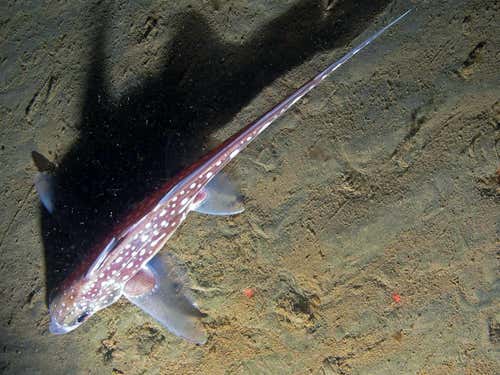
Rats of the sea
Though often caught in trawl nets, ratfish (Hydrolagus colliei) are too spiny and cartilaginous to be edible, so fishers throw them back. This waste of fish and effort can be minimised by trawling during the day, when ratfish aren’t out scouring the sea floor in search of food. The red dots in the picture are 10 centimetres apart.
(Image: iFame/TNC/MARE)
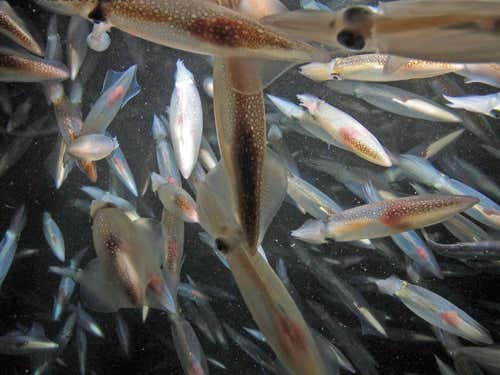
Squid and ROV: The love affair
Though muddy seabed often lacks the diversity found in coral reefs, the nutrient-rich waters at the edge of the Pacific continental shelf attract schools of squid, anchovies and krill. Here, squid have pooled around a remotely operated vehicle to get a closer look at its alluring red laser eyes.
(Image: iFame/TNC/MARE)
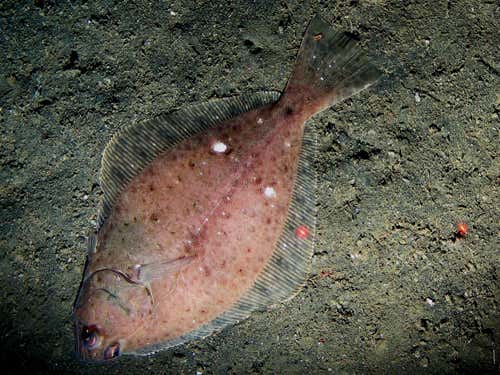
Flatfish fillet
Flatfish, such as this petrale sole, make for an easy, tasty fillet. Due to decades of over-trawling, they are now in decline in the north-western US, although they seem to be faring better in the south. But trawling for flatfish is likely to continue: thanks to their small mouths and habit of sinking into the seabed, long-line fishers rarely snag one.
(Image: iFame/TNC/MARE)
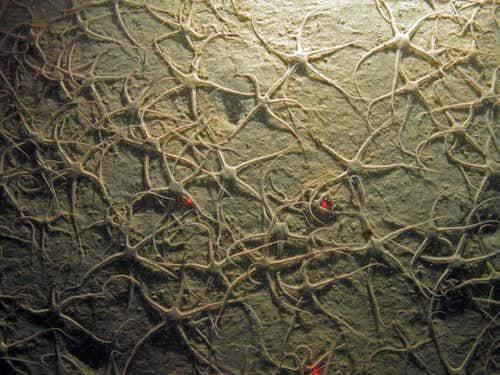
Holding hands down under
At the edge of the Pacific continental shelf, deeper, nutrient-rich waters rise to the ocean’s surface. Marine organisms abound here under normal conditions, but following an intensive trawl this year, researchers saw more brittle stars than ever before. Perhaps they would have come out anyway, says Mary Gleason, a biologist with The Nature Conservancy, or perhaps trawling somehow upped their attraction to the region.
(Image: iFame/TNC/MARE)
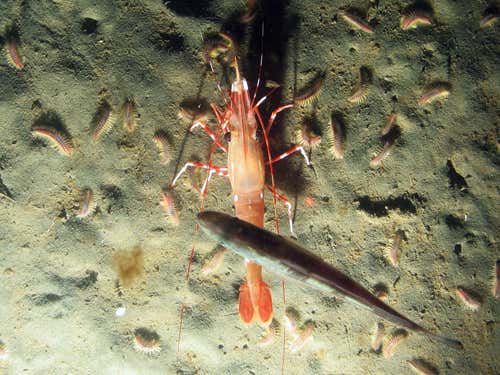
Big shrimp
Spot prawns, such as this one, are caught with traps, not trawls. This one has been surrounded by polychaetes, and a hake is swimming over it.
(Image: iFame/TNC/MARE)
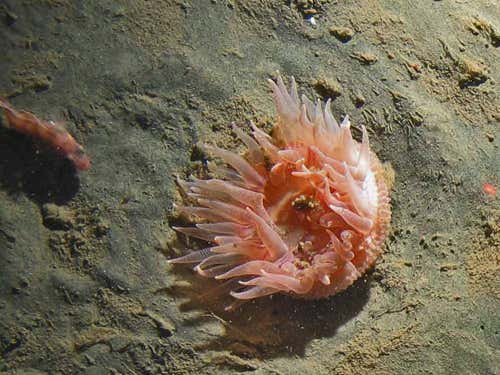
Going it alone
Anemones are solitary beings, though spot prawns and other marine organisms, such as the rockfish in the picture, gravitate toward them for habitat.
(Image: iFame/TNC/MARE)
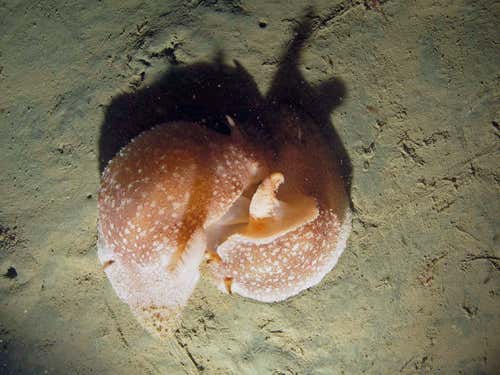
Snogging sea slugs
Sea slugs (Pleurobranchaea) don’t normally travel in pairs, but researchers saw several duos following October’s trawl. Gleason was hesitant to speculate on the unusual pairing: she says that sea slug mating habits are not fully understood.
(Image: iFame/TNC/MARE)
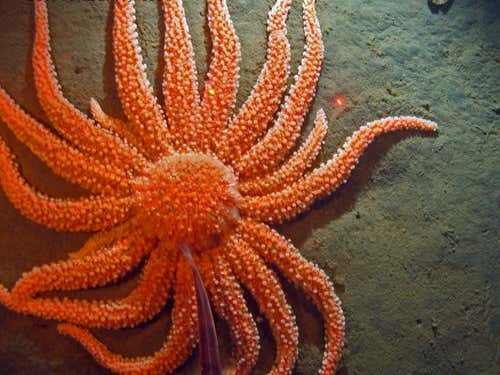
Big and beautiful
After October’s trawl, researchers stumbled across several photogenic sun stars (Rathbunaster californicus). They may look pretty, but friendly they are not. The researchers have video footage of a sun star chomping on an anchovy.
(Image: iFame/TNC/MARE)