See thermal images of warm- and cold-blooded animals, and find out why warm-bloodedness evolved

These thermal images of a dog show which are the hottest areas of its skin, and by extension which areas are losing most heat to the surroundings.
(Image: Linda Hermans-Killam / outreach@ipac.caltech.edu. Images taken at America’s Teaching Zoo (Moorpark College), The Santa Barbara Zoo, Animal House (The Oaks), and the Tierra Rejada Family Farm)
Read more: What’s the point of being warm-blooded?
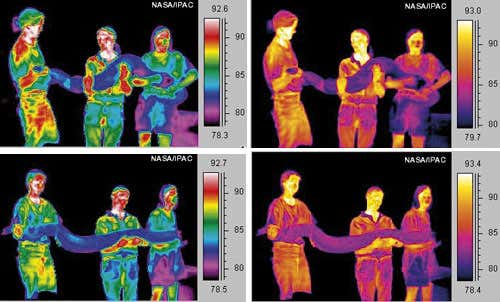
Compared to the dog in the previous images, this python has a low body temperature and releases little into the environment.
(Image: Linda Hermans-Killam / outreach@ipac.caltech.edu. Images taken at America’s Teaching Zoo (Moorpark College), The Santa Barbara Zoo, Animal House (The Oaks), and the Tierra Rejada Family Farm)
Read more: What’s the point of being warm-blooded?
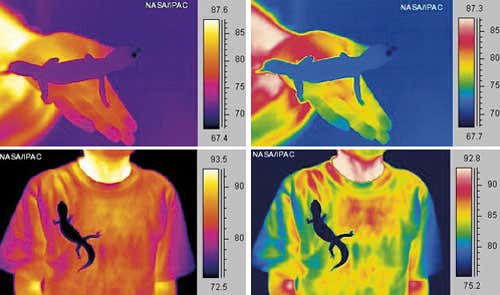
Cold-blooded creatures, like this gecko, do not have to eat as much or as often as warm-blooded creatures, giving them a key advantage in the struggle for survival.
(Image: Linda Hermans-Killam / outreach@ipac.caltech.edu. Images taken at America’s Teaching Zoo (Moorpark College), The Santa Barbara Zoo, Animal House (The Oaks), and the Tierra Rejada Family Farm)
Read more: What’s the point of being warm-blooded?
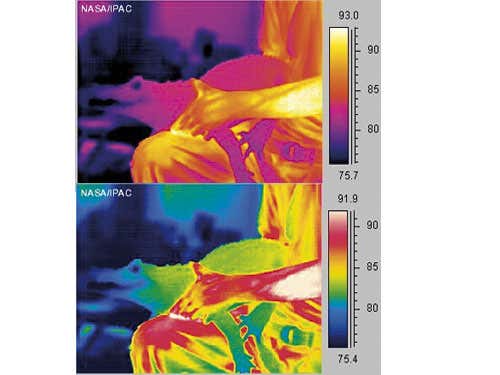
This alligator is visibly cooler than the human holding him. What advantage could the human take from wasting so much heat?.
(Image: Linda Hermans-Killam / outreach@ipac.caltech.edu. Images taken at America’s Teaching Zoo (Moorpark College), The Santa Barbara Zoo, Animal House (The Oaks), and the Tierra Rejada Family Farm)
Read more: What’s the point of being warm-blooded?
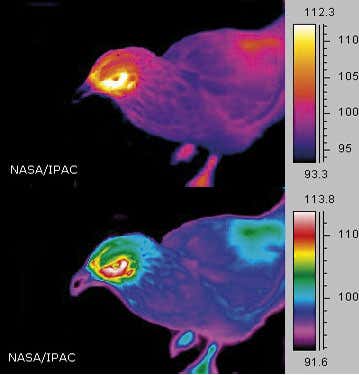
One possible reason why animals like this chicken would bother to be warm-blooded lies in the nutritional needs of herbivores. Such animals struggle to get enough nitrogen in their diet.
(Image: Linda Hermans-Killam / outreach@ipac.caltech.edu. Images taken at America’s Teaching Zoo (Moorpark College), The Santa Barbara Zoo, Animal House (The Oaks), and the Tierra Rejada Family Farm)
Read more: What’s the point of being warm-blooded?
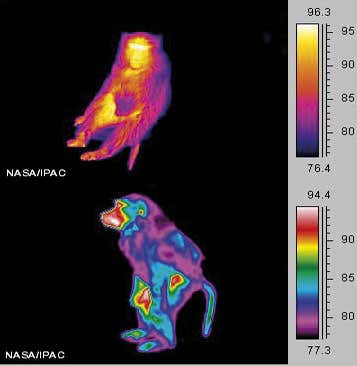
A simple solution to lack of nitrogen is to eat lots of food that contains very little nitrogen, and burn off the resulting excess of carbon as heat.
(Image: Linda Hermans-Killam / outreach@ipac.caltech.edu. Images taken at America’s Teaching Zoo (Moorpark College), The Santa Barbara Zoo, Animal House (The Oaks), and the Tierra Rejada Family Farm)
Read more: What’s the point of being warm-blooded?


