Ares I has been beset by technical problems – see the rockets that had been considered fringe alternatives but could now be chosen instead
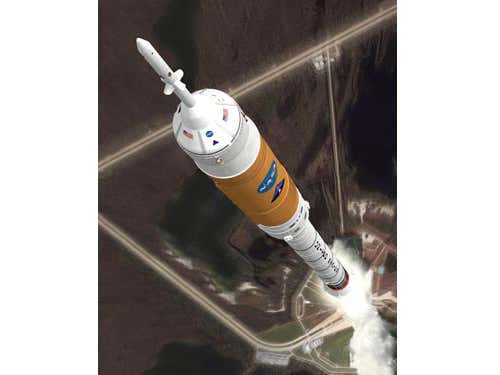
Ares I
, NASA
NASA’s own design, this rocket uses modified versions of space shuttle and Saturn V components. The in-line, two-stage rocket will be topped by the Orion crew vehicle and its launch abort system and will be used to take astronauts to low-Earth orbit (LEO).
Lift capacity: 25 tonnes to LEO
Cost per flight: Estimated at <$130 million
Pro: Shared hardware with larger Ares V rocket that could go to the moon saves development costs
Con: Prone to violent vibrations, straining to reach desired lift capacity
(Image: NASA/MSFC)
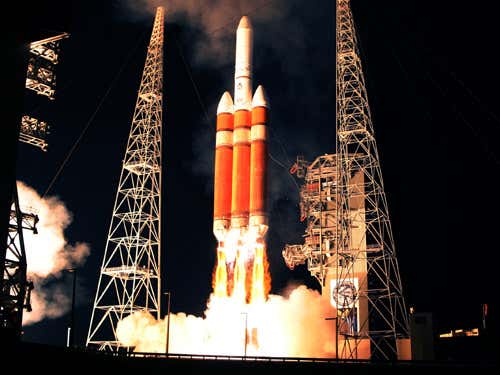
Delta IV
, United Launch Alliance
This satellite launcher was developed by Boeing with US military funds. The figures below are for the “heavy” version of the launcher, which uses two strap-on liquid rocket boosters to give it extra thrust.
Lift capacity: 23 tonnes to LEO
Cost per flight: $300 million
Pro: Cheap to develop since the cargo version is already flying
Con: It could take up to 7 years to make safety upgrades for crewed flights
(Image: Carleton Bailie/United Launch Alliance)
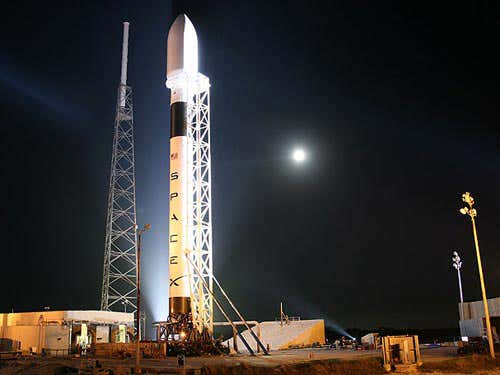
Falcon 9
, SpaceX
Falcon 9 is a two-stage launcher designed by the start-up firm SpaceX. It uses the same engines and general design as the company’s smaller Falcon 1 rocket, which made its first successful launch into Earth orbit in September 2008.
Lift capacity: 10.5 tonnes to LEO
Cost per flight: <$140 million
Pro: SpaceX claims it could start flying astronauts in 2 years
Con: Newcomer status leaves some sceptical it will be ready so soon
(Image: SpaceX)
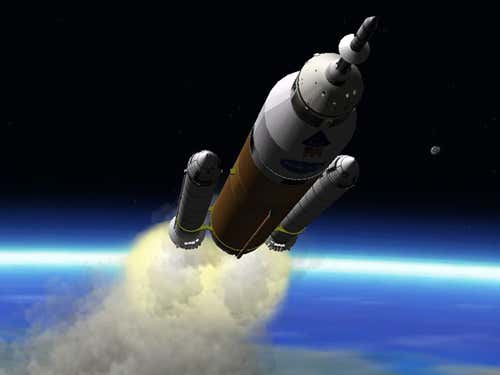
Jupiter group
, DIRECT project
A splinter group of anonymous NASA engineers have designed a new family of Jupiter rockets as an alternative to Ares I.
Lift capacity: 39 to 96 tonnes to LEO
Cost per flight: $100 million (39-tonne version)
Pro: Shared hardware with the space shuttle simplifies development; heavy version can carry out moon missions
Con: Even the heavy version is less powerful than NASA’s planned Ares V, requiring more manoeuvring and assembly in space for moon missions
(Illustration: DirectLauncher.com)
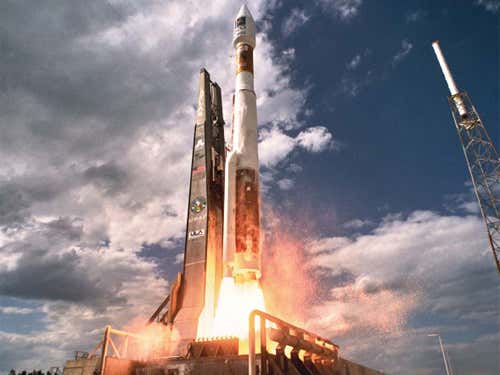
Atlas V
, United Launch Alliance
This satellite launcher was developed by Lockheed Martin with US military funds. The figures below are for the version of the rocket called “431”.
Lift capacity: 13.6 tonnes to LEO
Cost per flight: $130 million
Pro: Cheap to develop since the cargo version is already flying
Con: The rocket engine is built outside the US, complicating the safety certification process
(Image: United Launch Alliance)
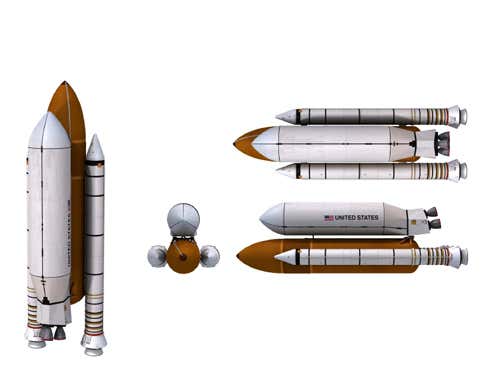
Heavy Lift Vehicle
, NASA
This launcher uses space shuttle rockets, but the shuttle orbiter is replaced by a lighter Apollo-like crew capsule.
Lift capacity: 72 tonnes to LEO
Cost per flight: Not given
Pro: Since it uses off-the-shelf space shuttle components, it would be quick to build
Con: It may be difficult to eject the crew capsule in an emergency
(Illustration: NASA)


