Steve Williams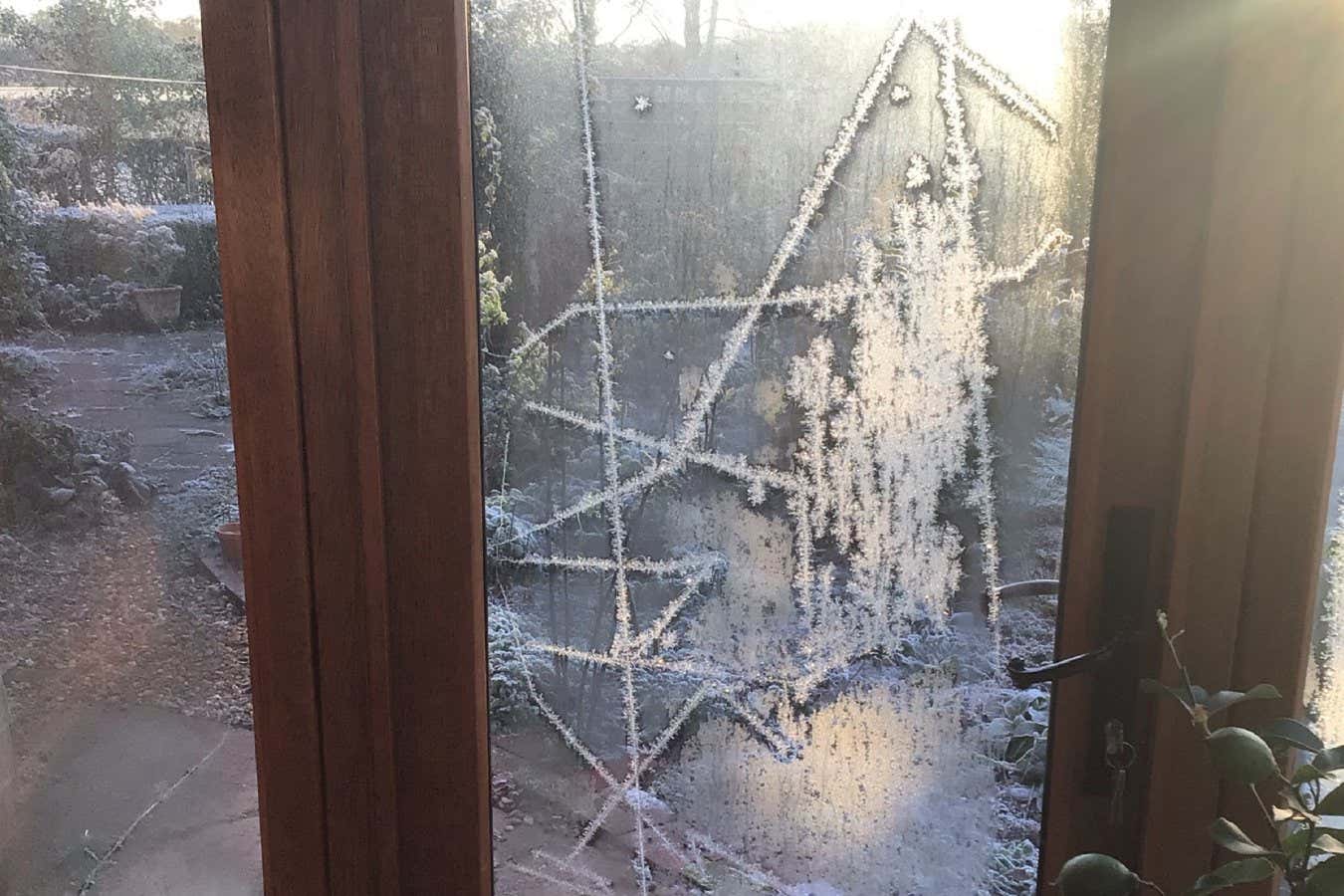
David Muir
Edinburgh, UK
If you observe a glass of fizzy drink, you will see that streams of bubbles originate from definite points called nucleation sites. These are microscopic aberrations on the glass surface that facilitate the liberation of dissolved carbon dioxide gas from the liquid.
The formation of ice crystals is also promoted by nucleation sites. This is demonstrated by water being supercooled to well below its freezing point, but with no ice formation if the vessel holding it is highly smooth, with no nucleation sites.
The ice patterns in the picture have crystallised at nucleation sites on the glass door, which,…


