SamBarnes/Alamy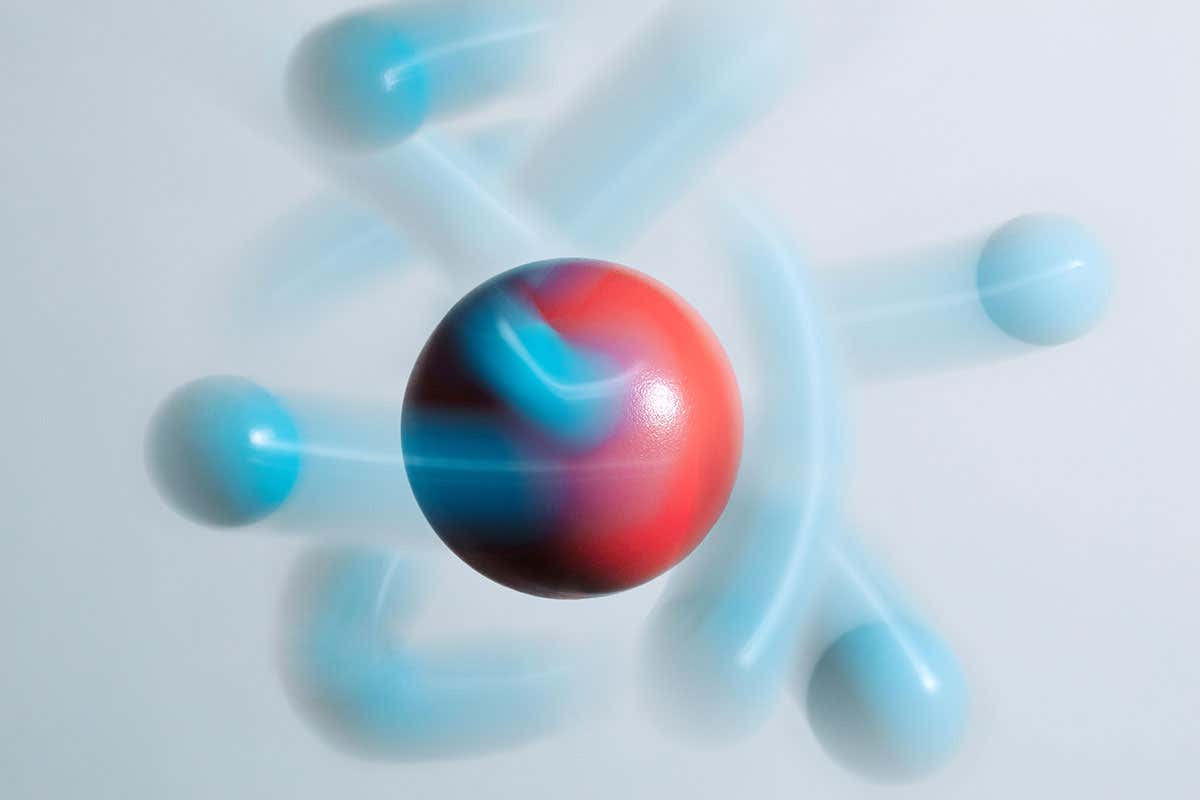
A hydrogen atom consists of a proton with an electron whizzing around it. What is in the space between them, and what happens to the space when the atom loses its electron?
Richard Swifte, Darmstadt, Germany
Thinking of an atom as a nucleus with electrons circling it and empty space in between, like a mini solar system, is a useful analogy, but it isn’t a true picture. Humans sense material objects in terms of solid particles or waves, so we apply this same imagery to the microworld of atoms. This solar system viewpoint has been replaced by quantum descriptions…


