Subscribe now

Deep-sea hydrothermal vents team with life. How are they colonised?

Hydrothermal vents are oases of different life forms in the midst of a dark, seemingly lifeless ocean. So how do these organisms get to a new vent?

16 September 2020

New Scientist. Science news and long reads from expert journalists, covering developments in science, technology, health and the environment on the website and the magazine.

Ralph White/Getty Images
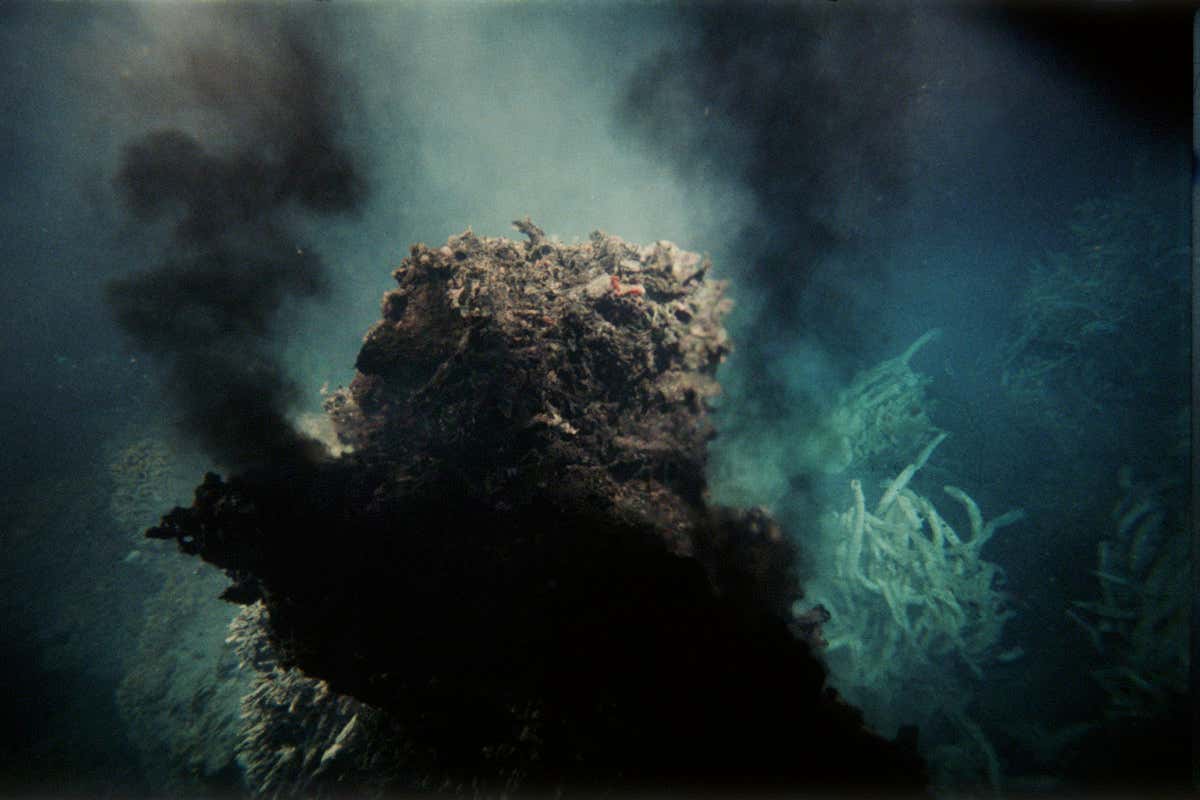
Hydrothermal vents teem with life on a lifeless seabed. How are they colonised?

Mike Follows, Sutton Coldfield, West Midlands, UK

Hydrothermal vents occur at hotspots on the ocean floor, often at mid-ocean ridges where two oceanic plates are moving apart.

Vents in the deep ocean are beyond the reach of sunlight yet support a diverse ecosystem and appear like oases in a desert. Creatures living in this environment obtain their energy via chemosynthesis from the chemicals dissolved in the vents instead of the photosynthesis that is essential to life on Earth’s surface. The discovery that ecosystems can be hosted by…
Sign up to our weekly newsletter

Receive a weekly dose of discovery in your inbox. We'll also keep you up to date with New Scientist events and special offers.

Sign up

To continue reading, subscribe today with our introductory offers

Piano Exit Overlay Banner Mobile Piano Exit Overlay Banner Desktop