Jodie Calvert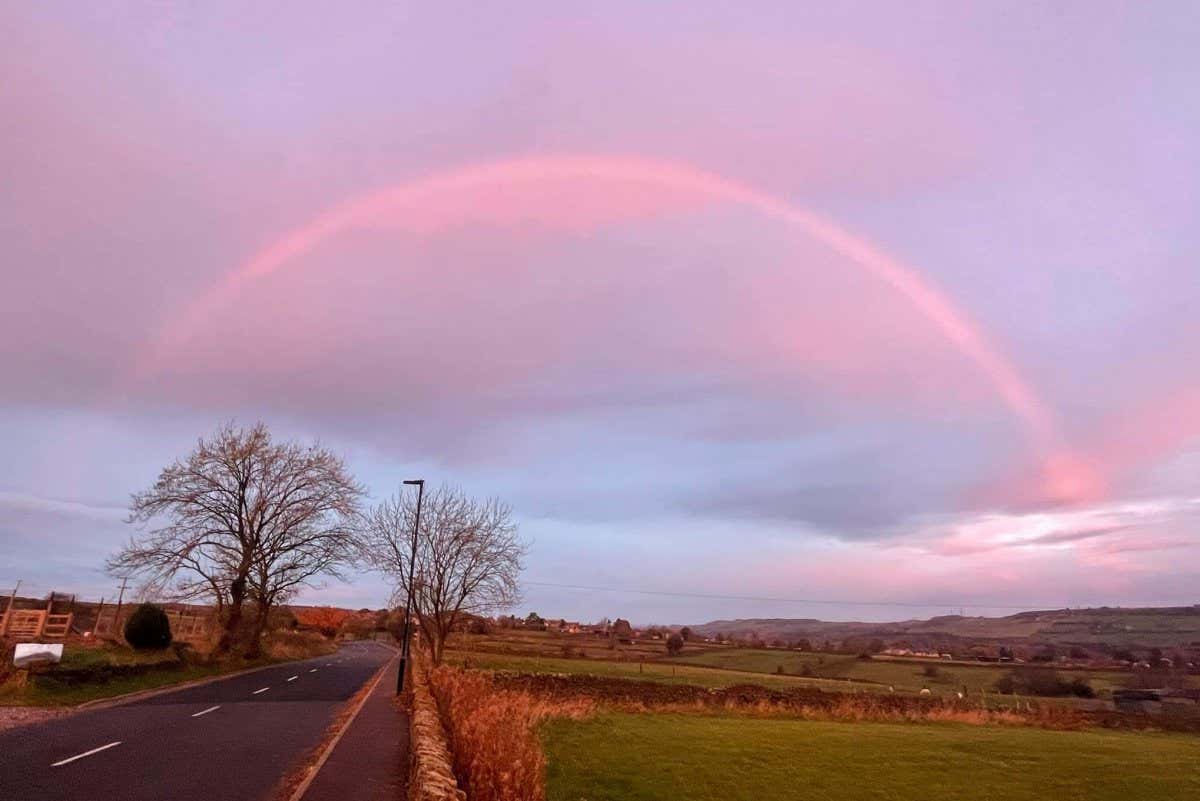
Natalie Roberts
Watford, Hertfordshire, UK
As a member of the Cloud Appreciation Society, I would like to point out that it is something of a misconception that rain is required to form a rainbow.
Advertisement
They also form in water spray such as from waterfalls or even that produced by hosepipes and pressure washers. You can get bows in fog or other low clouds, although the small, regular size of the water particles usually renders such fog or cloudbows pure white.
High in the sky (or low in exceptionally cold conditions, where tiny crystals form as “diamond dust”), ice crystals in the frigid atmosphere produce a wide range of rainbow forms, typically much brighter than water bows, such as sun dogs or circumzenithal arcs.
To answer this question – or ask a new one – email lastword@newscientist.com.
Questions should be scientific enquiries about everyday phenomena, and both questions and answers should be concise. We reserve the right to edit items for clarity and style. Please include a postal address, daytime telephone number and email address.
New Scientist Ltd retains total editorial control over the published content and reserves all rights to reuse question and answer material that has been submitted by readers in any medium or in any format.