Subscribe now

If humans colonised Mars, how would they calculate time?

Humans would have to adjust to the slightly longer Martian day, say our readers, who also point out that time is a human construct, anyway

21 June 2023

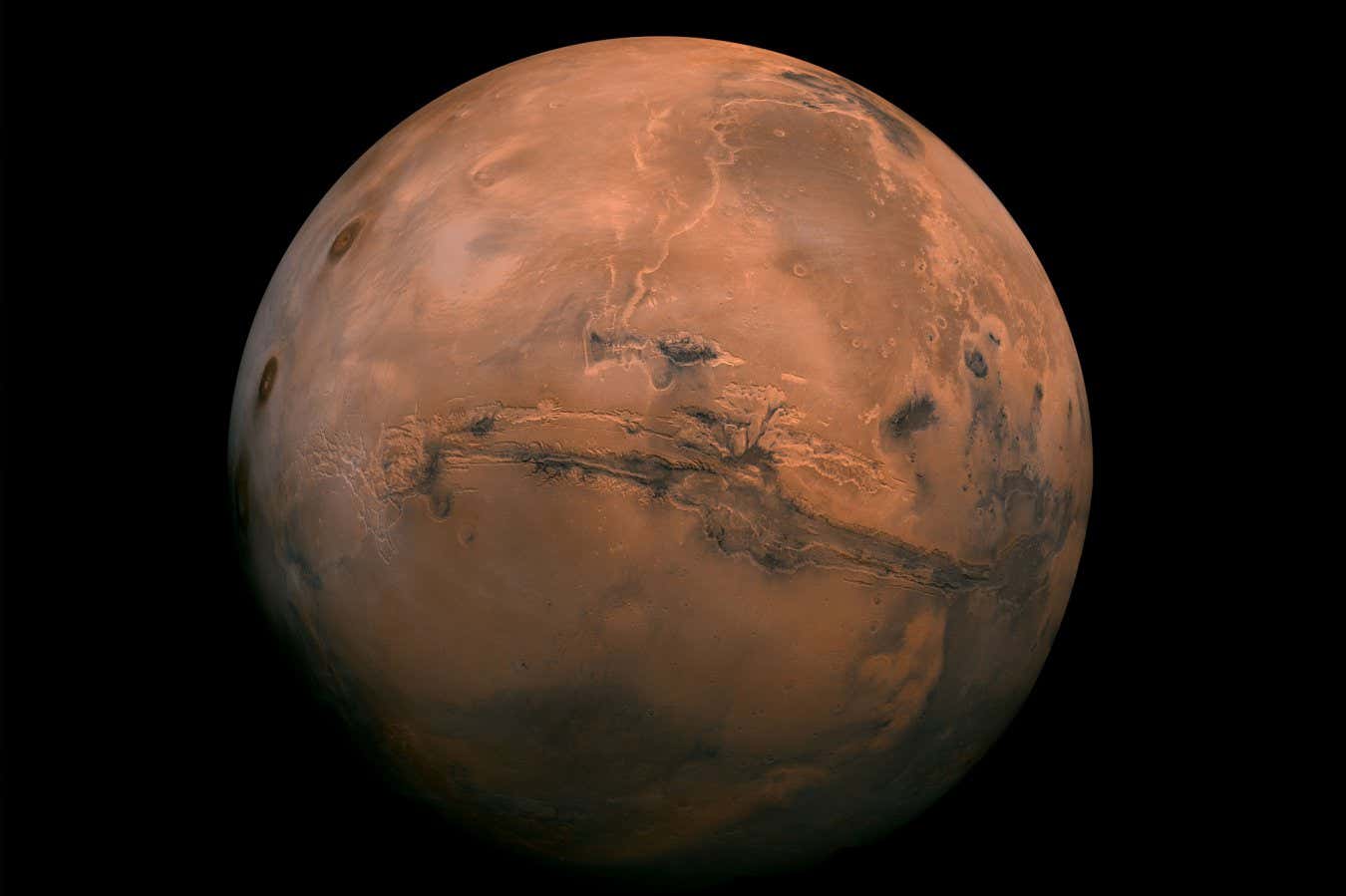
This mosaic of Mars is a compilation of images captured by the Viking Orbiter 1. The center of the scene shows the entire Valles Marineris canyon system, more than 2,000 miles (3,000 kilometers) long, 370 miles (600 kilometers) wide and 5 miles (8 kilometers) deep, extending from Noctis Labyrinthus, the arcuate system of graben to the west, to the chaotic terrain to the east.

NASA/JPL-Caltech

If humans colonised Mars, how would they calculate time, as a Martian day is longer than one on Earth?

Bob McCrossin
Cooroy, Queensland, Australia

It is more complicated than you might think, if you don’t have a clock.

There are three kinds of day to consider. The sidereal day is the planet’s rotation period to come back to the same position compared to the fixed stars. The solar day is the period for the sun to come back to the same spot in the sky. It is a bit longer than the sidereal day because the planet has advanced in…


Sign up to our weekly newsletter

Receive a weekly dose of discovery in your inbox. We'll also keep you up to date with New Scientist events and special offers.

Sign up

To continue reading, subscribe today with our introductory offers

Popular articles

Trending New Scientist articles

Piano Exit Overlay Banner Mobile Piano Exit Overlay Banner Desktop