Subscribe now

If humans colonised Mars, how would they calculate time? (Part 2)

Our readers point out that history shows it is best to stick to one measure of time to avoid confusion – but add that it may not be humans who get to decide how time is calculated on Mars

12 July 2023

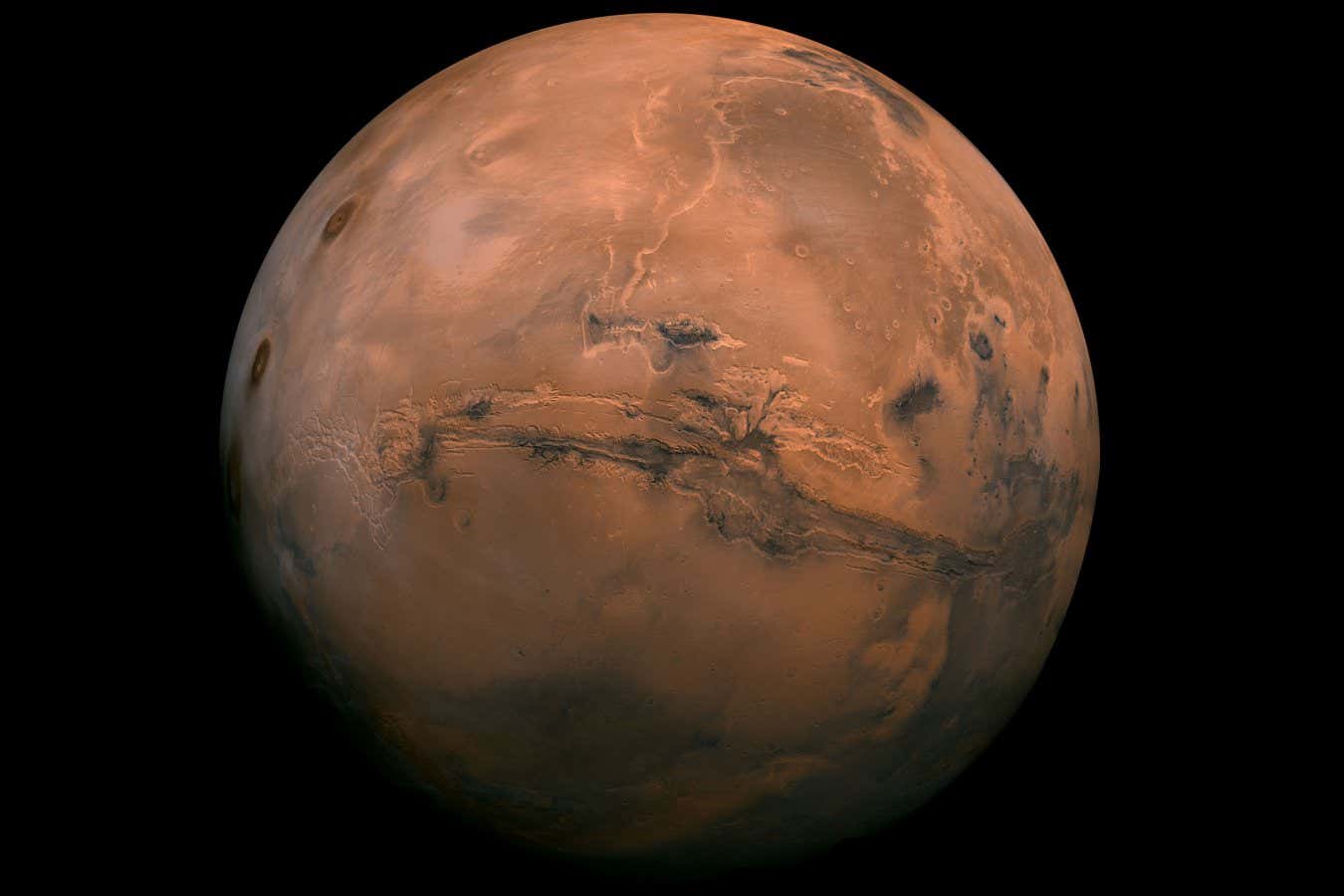
This mosaic of Mars is a compilation of images captured by the Viking Orbiter 1. The center of the scene shows the entire Valles Marineris canyon system, more than 2,000 miles (3,000 kilometers) long, 370 miles (600 kilometers) wide and 5 miles (8 kilometers) deep, extending from Noctis Labyrinthus, the arcuate system of graben to the west, to the chaotic terrain to the east.

NASA/JPL-Caltech

If humans colonised Mars, how would they calculate time, as a Martian day is longer than one on Earth? (continued)

Simon Dales
Oxford, UK

The Martian day is only about 40 minutes longer than the terrestrial one, so astronauts’ body clocks should be happy, but their watches would drift from the local day.

History tells us that they should always use one measure, lest they get confused. In the UK, we used to have Bristol time and London time. That was fine until we wanted railway timetables.

Pope Gregory XIII’s astronomers invented a better calendar to replace the Roman Julian…

Sign up to our weekly newsletter

Receive a weekly dose of discovery in your inbox. We'll also keep you up to date with New Scientist events and special offers.

Sign up

To continue reading, subscribe today with our introductory offers

Piano Exit Overlay Banner Mobile Piano Exit Overlay Banner Desktop

