Subscribe now

Letters archive

Join the conversation in New Scientist's Letters section, where readers can share their thoughts and opinions on articles and see responses from experts and enthusiasts across a range of science topics. To submit a letter, please see our terms and email letters@newscientist.com


14 September 2011

Human hotpot?

From Christine Kowal Post

So Stellan Welin, a bioethicist, thinks the ethical questions posed by eating meat from rare and unusual species can be "sidestepped" with meat grown from stem cells (3 September, p 8) . There still seems something unpleasant about shifting our view of these animals towards a source of food rather than as companions on the …
14 September 2011

War and weather

From Duncan Cameron

You report Solomon Hsiang's research on links between El Niño years and conflict around the globe as the "first study to link global climate patterns to the onset of civil conflict" (27 August, p 9) , with the rider that "Hsiang cannot yet explain what is causing the link". I would recommend the book Late …

14 September 2011

Keep a lid on it

From Douglas Schuler

While scientists may react positively to the endorsement of research without limits in your editorial "Let Prometheus be unbound" (20 August, p 3) , the truth is that they, like all of us, face constraints from the systems that orient our societies. In the US, for example, the main determinant of research seems to be …

14 September 2011

Warning: harmful

From Melanie Spelman

Taking the nocebo effect in "Heal thyself" (27 August, p 32) further; if believing a drug is harmful or has side effects can cause a person to suffer those side effects, then is it likely to be the case that the warnings and graphic pictures on cigarette packets will also have a nocebo effect? While …

14 September 2011

Cool mining

From Derek Morris

I was surprised that in the article on cooling the London Underground transport system (6 August, p 38) , there was no reference to overheating found in deep mines around the world. I have visited the Selebi-Phikwe copper and nickel mine in north-east Botswana where ore is extracted from 1 kilometre down. Drilling a new …

14 September 2011

Einstein's roots

From Carrie Osborne

There is another answer to Debora MacKenzie's question to Naledi Pandor: "Will the next Einstein come from Africa?" (16 July, p 25) . If we could look at the genealogy of Einstein's Y-chromosome, we would find that the first one did.

14 September 2011

Better together

From K. T. van Santen

I'm not sure to which Old Testament Bill Hyde's letter refers (27 August, p 31) , but it's not the one with which I and millions of Christian, Jewish and Muslim believers are familiar. The science-versus-religion conflict is a false dichotomy, maintained and reinforced by typecasting new atheists as genius liberators and theists as mindless …

14 September 2011

Life imitates art

From Vijay Kumar

How many readers of your review of Falling to Earth: An Apollo 15 astronaut's journey to the moon (30 July, p 48) noticed the uncanny resemblance of Al Worden's story to Robert Heinlein's 1950 sci-fi novella The Man Who Sold the Moon , in which the main character plans to sell stamps postmarked on the …

14 September 2011

First words

From Peter Weinrich

One thing missing from your article on the evolution of language (16 July, p 30) is the story of Psammetichus I, king of Egypt (664-610 BC). He is best known for his attempt to resolve an argument about the antiquity of language, an account recorded by the Greek historian Herodotus. Psammetichus ordered two young children …

14 September 2011

Repetitive diet

From Alison Tottenham

You report that the first attempts at farming would have resulted in a lack of diversity in diet and disadvantages compared with foraging (30 July, p 26) . I would suggest a second period of restriction in food diversity coinciding with the growth of communities. In early societies, once a certain population density was reached …

14 September 2011

Cetacean contagion

From Simon Birnstingl

You reported on efforts to communicate with dolphins by deciphering their clicks and whistles (7 May, p 23) . I wonder if the researchers have thought about the possible consequences. Humans are very susceptible to memes – cultural ideas or behaviour which can take hold and spread, such as the concept of private property. Could …

14 September 2011

Bee or not to bee?

From Iain Petrie

Your recent cover line "Inside Animal Minds: How other creatures see our world" (20 August) would have been better put as "Inside Animals' Brains: Some speculation as to what it might or might not be like to be another creature". The writer of the article suggests a bee sees through the "pixellated window of mosaic …

14 September 2011

Heavy water

From Sami Franssila

David Hambling describes the first human-made fusion, "above the Pacific atoll of Enewetak" (13 August, p 36) . The device detonated on Eniwetok (as it was then called) was firmly on the ground. It weighed 60 to 70 tonnes, according to various sources. This was because it used liquid deuterium, and the cryogenics required added …

14 September 2011

For the record

• The graphic in the deep ocean exploration feature (3 September, p 38) should have stated the Virgin Oceanic submersible is built to withstand the pressure of 1100 atmospheres at the bottom of the Mariana trench.

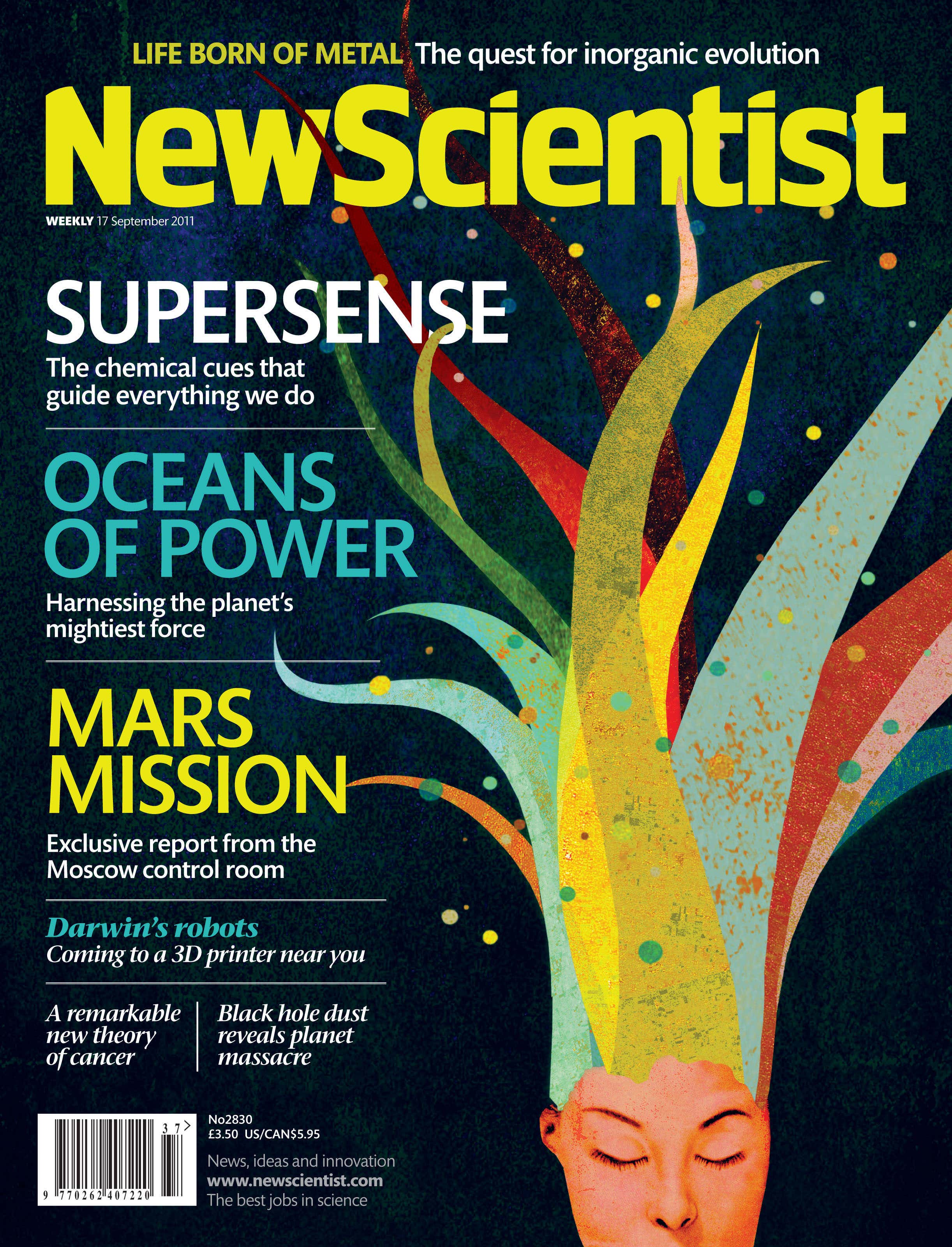
Issue no. 2830 published 17 September 2011

Sign up to our weekly newsletter

Receive a weekly dose of discovery in your inbox. We'll also keep you up to date with New Scientist events and special offers.

Sign up
Piano Exit Overlay Banner Mobile Piano Exit Overlay Banner Desktop