Subscribe now

Letters archive

Join the conversation in New Scientist's Letters section, where readers can share their thoughts and opinions on articles and see responses from experts and enthusiasts across a range of science topics. To submit a letter, please see our terms and email letters@newscientist.com


2 November 2011

Original spin

From John McKenzie

Anil Ananthaswamy's feature on the possibility of a spinning cosmos (15 October, p 44) had me reaching for a copy of Austrian logician Kurt Gödel's paper on rotating universes, written to mark Albert Einstein's 70th birthday in 1949. Gödel shows the "absurdity" that results from a rotating universe, namely the ability to travel into any …

2 November 2011

Navigation nostrums

From Roger Kynaston

One reason for the slow uptake of electronic navigation on ships (22 October, p 26) is the lack of adoption of open standards by the major chart agencies around the world. For example, the UK Hydrographic Office (UKHO) offers chart services that will work in Electronic Chart Display and Information Systems (ECDISs); but in a …

2 November 2011

Information input

From John Bailey

Max Tegmark has two suggestions for what will happen to the information in an expanding universe: either information is created, meaning we can no longer make predictions; or the quantum "grain size" of the universe – the effective "Planck length" – increases, leading to a breakdown of nuclear physics that Tegmark calls the "big snap" …

2 November 2011

Facts on the ground

From Noah Greenwald, Center for Biological Diversity

In your story on the lawsuit against TransCanada's Keystone XL Pipeline in North America, the statement that our legal challenge is about "nothing more than mowing tall grass" is not accurate (15 October, p 4) . We believe it is a violation of law for TransCanada to begin any work on the proposed pipeline before …

2 November 2011

Forest not so fine

From Glen Reynolds, Royal Society SE Asia Rainforest Research Programme (SEARRP)

Your article on the study of habitat fragmentation in Borneo carried out in co-operation with loggers states that 75,000 hectares of primary forest in Sabah is being cleared to develop oil-palm plantations (22 October, p 7) . This is not the case. The plantations are being developed on areas of highly degraded, effectively second-growth forests …
2 November 2011

Consistent we are

From Hans Proebsting

Your story "I'm autistic, I don't care what you think" was interesting (15 October, p 19) . I have autism, and I think researcher Keise Izuma got it right. We are more likely than neurotypicals to be consistent in our behaviour, regardless of whether we are observed or not. Incidentally, terminology has moved on. "Is …

2 November 2011

Baby nose best

From Chris and Jo James

The importance of the smell of the nipple for breastfeeding (8 October, p 12) is beautifully illustrated by a tale told to us by a midwife friend. A mother had been feeding her baby for eight days when, one morning, the baby suddenly refused to feed. It turned out the mother had washed with her …

2 November 2011

Sticks and pyramids

From Phil Cutmore

With reference to the controversy over Tutankhamun's club foot (8 October, p 10) , Zahi Hawass, while Egypt's antiquities minister, gave an apparently convincing argument in support of the boy king having had such a condition. An extraordinary number of ceremonially anointed walking stick-shaped "batons" were found in the treasure chamber, annex and antechamber of …

2 November 2011

Wise old bird

From Stuart Henderson

The speculation, in an article on the evolution of our brains, that a dinosaur or bird could have evolved considerable intelligence instead of us was engaging (24 September, p 40) . I suggest another candidate: the dinosaurs' other flying cousins, pterosaurs, which had a high brain-to-body-size ratio compared with dinosaurs. Birds that colonise isolated islands …

2 November 2011

Blade runner

From Eric Roberts

You describe a wind turbine with extendable blades (22 October, p 26) . Why would they be better than blades that vary their pitch – their angle to the breeze – which are a well-understood feature of most propeller-driven aircraft?

2 November 2011

Copernican caveat

From David Walsh

Further to your review of Dava Sobel's book on the heliocentric theory of Copernicus (24 September, p 61) , the Polish astronomer was not alone in overturning long-entrenched beliefs. In the same era, Christopher Columbus's voyage to the New World eventually banished notions of the globe having a dark underside, academic and clerical opposition notwithstanding. …

2 November 2011

Ripe economics

From Alain Head

Feedback is right to welcome the removal of the wasteful "sell-by" date from food packaging (15 October, p 64) but misses a more ironic effect. Many cheeses improve with age and are just approaching their prime at the "sell by" date, but supermarkets then reduce the price to clear their shelves. The result is that …

2 November 2011

For the record

• In the Spaceport America story (22 October, p 12) we mistakenly said that Richard Branson is Virgin Galactic's CEO – he's the founder.

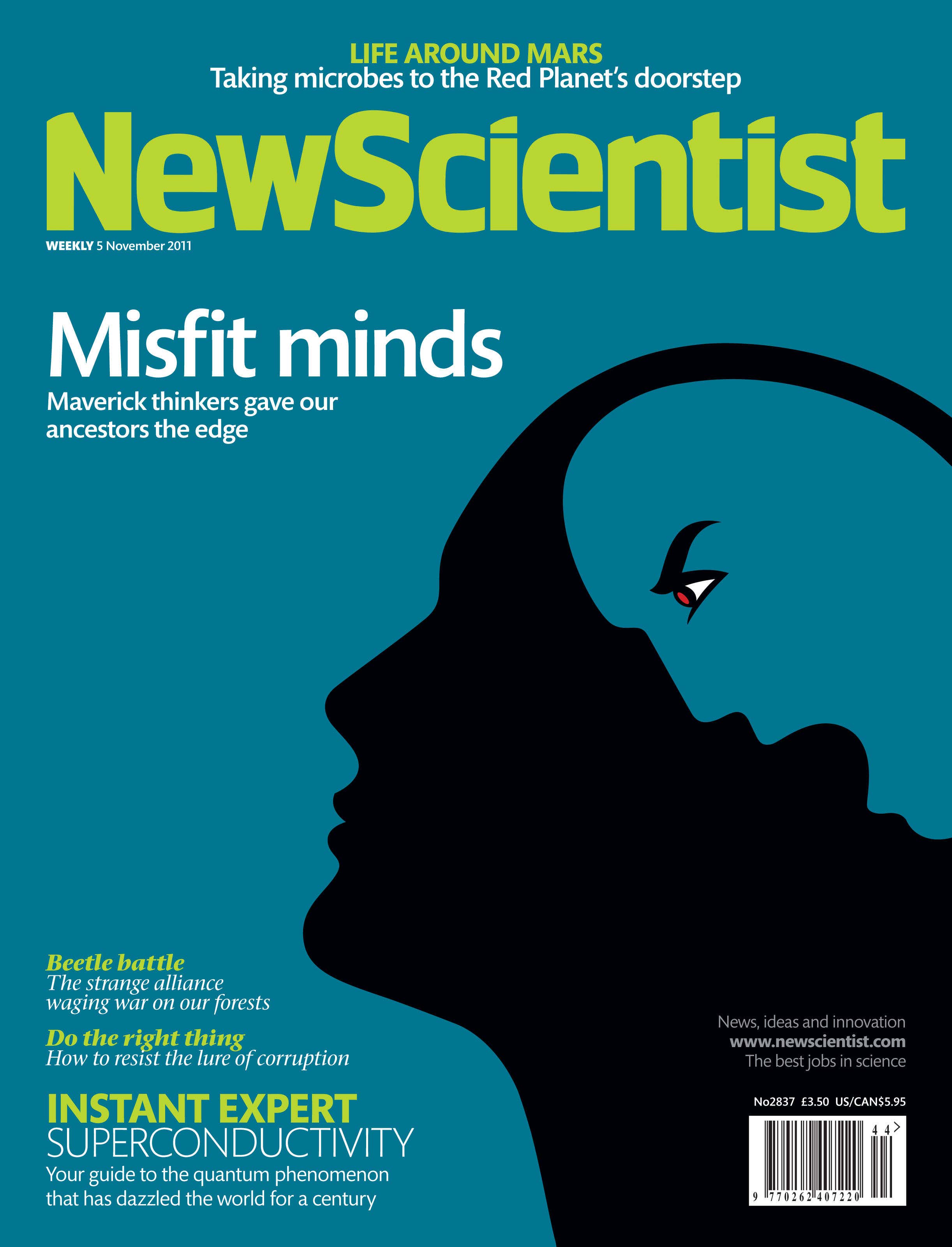
Issue no. 2837 published 5 November 2011

Sign up to our weekly newsletter

Receive a weekly dose of discovery in your inbox. We'll also keep you up to date with New Scientist events and special offers.

Sign up
Piano Exit Overlay Banner Mobile Piano Exit Overlay Banner Desktop