Subscribe now

Letters archive

Join the conversation in New Scientist's Letters section, where readers can share their thoughts and opinions on articles and see responses from experts and enthusiasts across a range of science topics. To submit a letter, please see our terms and email letters@newscientist.com


15 February 2012

Fracking fears

From Derek Bolton

While I appreciate that Peter Aldhous's article was primarily concerned with the immediate health questions raised by the process of fracking, or cracking rock to extract natural gas from shale beds (28 January, p 8) , its effects on climate change cannot be ignored since that, too, is likely to be bad for our health. …
15 February 2012

Science of sleep

From Nich Woolf

Having been on call or rotating shifts for almost 40 years, I was interested in your Instant Expert on sleep, particularly the section on sleep cycles, to see how my coping mechanisms match current thinking (4 February) . I learned a long time ago that if you cannot have a whole night's sleep, then having …

15 February 2012

3D protection

From Eric Billett

You report that file-sharing site The Pirate Bay has started to offer "physibles" – digital objects that can be realised on 3D printers (4 February, p 22) . The article says that while copyright and patents can protect music and inventions, there is very little protection for solid objects. This is not the case in …

15 February 2012

Holy rights

From Annette Thompson

I read with interest the interview with Isak Gerson, leader of the world's newest religion "Kopimism", which believes the act of copying information is holy, (14 January, p 25) . Does this mean students can now plagiarise others in their essays under the protection of their religious belief?

15 February 2012

Predator vs alien

From Patrick Wilson

I find it disturbing that a scientist would suggest introducing elephants to Australia to eat fire-prone, invasive African grasses (11 February, p 29) . Elephants are a disruptive force in any ecosystem they inhabit, and the numbers required for any real impact on invasive grasses would be huge. Getting such a project up and running …

15 February 2012

Future worries

From Michael Leonard

I am only part way through your 4 February issue and already worried. First, you report the possibility of drones in civilian air space (p 20) . I dread a future blighted by them, advertising myriad things I don't want while possibly also videoing me. Then there is the story on the FBI plan to …

15 February 2012

Musical notes

From Bob Masta

Computer-generated art and music may reveal much about ourselves, as your feature suggested (14 January, p 42) . Music arises from the interplay between two fundamental brain mechanisms – pattern recognition and novelty detection. Since our brains can detect patterns and novelty on many levels, music can include patterns within patterns within patterns. Consider a …

15 February 2012

Doom and gloom

From Ron Gibson

Limits to Growth co-author Dennis Meadows, stated in his letter (21 January, p 28) : "Humanity's use of energy and materials is now so far above the globe's long-term, sustainable capacity that collapse of some sort is inevitable." This reminded me of a conversation I had with American geophysicist M. King Hubbert, of the Hubbert …

15 February 2012

Cleaning up

From Jorge Hernández, Linnaeus University

Your story on antibiotic-resistant bacteria found in Antarctic seawater said that Chilean bases on the continent "have virtually no sewage treatment in place" (28 January, p 12) . As principal author of the article in Applied and Environmental Microbiology (DOI: 10.1128/AEM.07320-11) that gave rise to this report, I would like to point out that the …

15 February 2012

Jet-lagged

From Thomas Smith

Your story linking sleep disturbance and mental illness (28 January, p 12) did not mention the worrying corollary that maybe jet lag has more profound effects on mental functioning than just making us tired. The fact that many important decisions are made by people who have just stepped off an intercontinental flight is enough reason …

15 February 2012

For the record

• In our opinion piece on flu research (28 January, p 28) we said that a major journal is holding back a sensitive paper on the plague bacterium. The paper is not on plague but on another undisclosed bacterium considered a prime bioweapons risk.

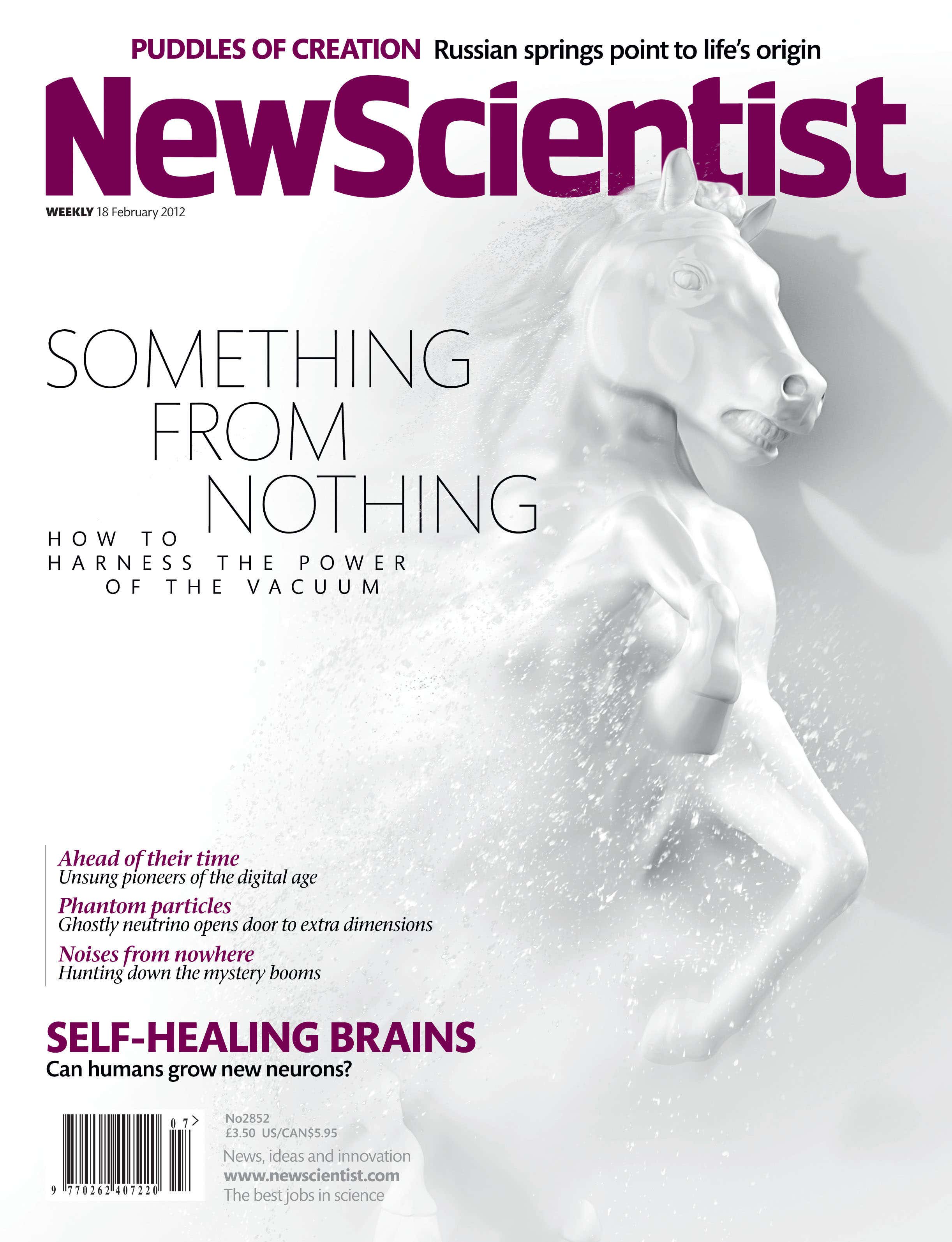
Issue no. 2852 published 18 February 2012

Sign up to our weekly newsletter

Receive a weekly dose of discovery in your inbox. We'll also keep you up to date with New Scientist events and special offers.

Sign up
Piano Exit Overlay Banner Mobile Piano Exit Overlay Banner Desktop