Subscribe now

Letters archive

Join the conversation in New Scientist's Letters section, where readers can share their thoughts and opinions on articles and see responses from experts and enthusiasts across a range of science topics. To submit a letter, please see our terms and email letters@newscientist.com


28 March 2012

Museum on the moon

From Peter Stockill

Looking into the next 100,000 years of humanity, Bob Holmes asks what our descendants will know about us (3 March, p 48) . He points to natural processes such as tectonic plate movement, mountain-building and decay as factors in degrading and diminishing our legacy to those in the remote future. However, if objects and artefacts …

28 March 2012

Fonnetik fyoocher

From Loren Byrne

A complementary question to your future-gazing article "What will we speak?" (3 March, p 39) is "How will we write?" If current trends in student writing are a reliable indication, future humans will write phonetically and with text-speak words. For example, in recent student papers I have seen "come pair" for compare and "suddle" for …

28 March 2012

Year zero

From Stuart Leslie

Your special on "The deep future" (3 March, p 34) is accompanied by a timeline featuring the year zero. When Christians superimposed their BC-AD count on the Romans' Julian calendar, they began with year 1 of Our Lord and declared the year before as 1 BC. The concept of zero was rejected by the Ancient …

28 March 2012

Eruption odds

From Martin Ratcliffe

I greatly enjoyed your deep future special, but was surprised to read that the chance of a supervolcano erupting in the next 100,000 years is between 10 and 20 per cent (3 March, p 36) . The same article, "Why we'll still be here", states one such eruption occurs every 50,000 years or so. Assuming …

28 March 2012

Collateral damage

From David Hirst

Your editorial statement that the Fukushima Daiichi nuclear meltdown has "so far killed no one" is undoubtedly untrue (10 March, p 3) . Some 200,000 people have been moved suddenly from their homes to emergency accommodation. Many will have been ill or infirm, and it is inconceivable that no deaths occurred among them. We may …

28 March 2012

Teach science

From Byron Rigby

You rightly inveigh against the polluting of science teaching with falsehoods such as climate scepticism, intelligent design and creationism (25 February, p 3) . But isn't the problem that schools often teach belief, doctrine and dogma where they should be teaching the scientific method? Science should be taught as a core of method, with a …

28 March 2012

Underground nukes

From Bry Lynas

Fred Pearce brings home the sheer complexity of decommissioning nuclear reactors (10 March, p 46) . With 138 shut down and many more to come, it is quite a legacy. Yet there is a solution for future generations of nuclear plants: build all reactors and their primary cooling circuits underground. Decommissioning would then involve little …

28 March 2012

Seeds of doom

From Rex Newsome

You report that visitors to the Antarctic carry, on average, 10 plant seeds (10 March, p 5) . Do all tourists do the same to wilderness areas around the world? Ultimately, what damage could such seeds do to, say, the Australian outback? Should all tourists' luggage and clothes be fumigated before they are allowed into …

28 March 2012

The beauty of books

From Pete Sohi

I make my living from the digital industry, but nothing angers me more than the berating of paper as an outmoded medium. David Weinberger lent voice to the fundamentally flawed arguments of digital evangelists everywhere (11 February, p 30) . Among the things he overlooks is the "serenity principle": when one is immersed in a …

28 March 2012

Wolf diet

From John and Mary Theberge

Sharon Levy wrote that before 2001, wolves in Algonquin Provincial Park in Ontario, Canada, "would seldom take down a moose", using this statement to support her central premise that before 2001, young wolves in exploited populations lacked learning opportunities for packs to be efficient predators (12 June 2010, p 40) . The switch to moose …

28 March 2012

I, rapper robot

From Clarissa Daisy Huntsman

I recently wrote to argue that a robot is capable of creativity (4 February, p 31) . So it is possible that cognitive dissonance is deterring me from criticising the YossarianLives "metaphorical search engine" (25 February, p 24). But I want to get annoyed. I want to say that no search engine for metaphors could …
28 March 2012

Polar p-p-p-pick up

From Carl Zetie

Neil Padley suggests relocating polar bears to Antarctica, and wonders how many penguins a bear could eat (18 February, p 33) . The answer, as any British child knows, is none. Their paws are too clumsy to get the wrappers off. The editor writes: • For non-UK readers, a Penguin is a chocolate-coated biscuit bar.

28 March 2012

For the record

• We should have said there is no chance of electrocution by the "Splash Controller" because "just 5 volts drive current through the water" (10 March, p 26) . Volts do not "pass through" a conductor, as we said. • Stefan Rahmstorf was aware that in Bermuda 400,000 years ago there was a high local …

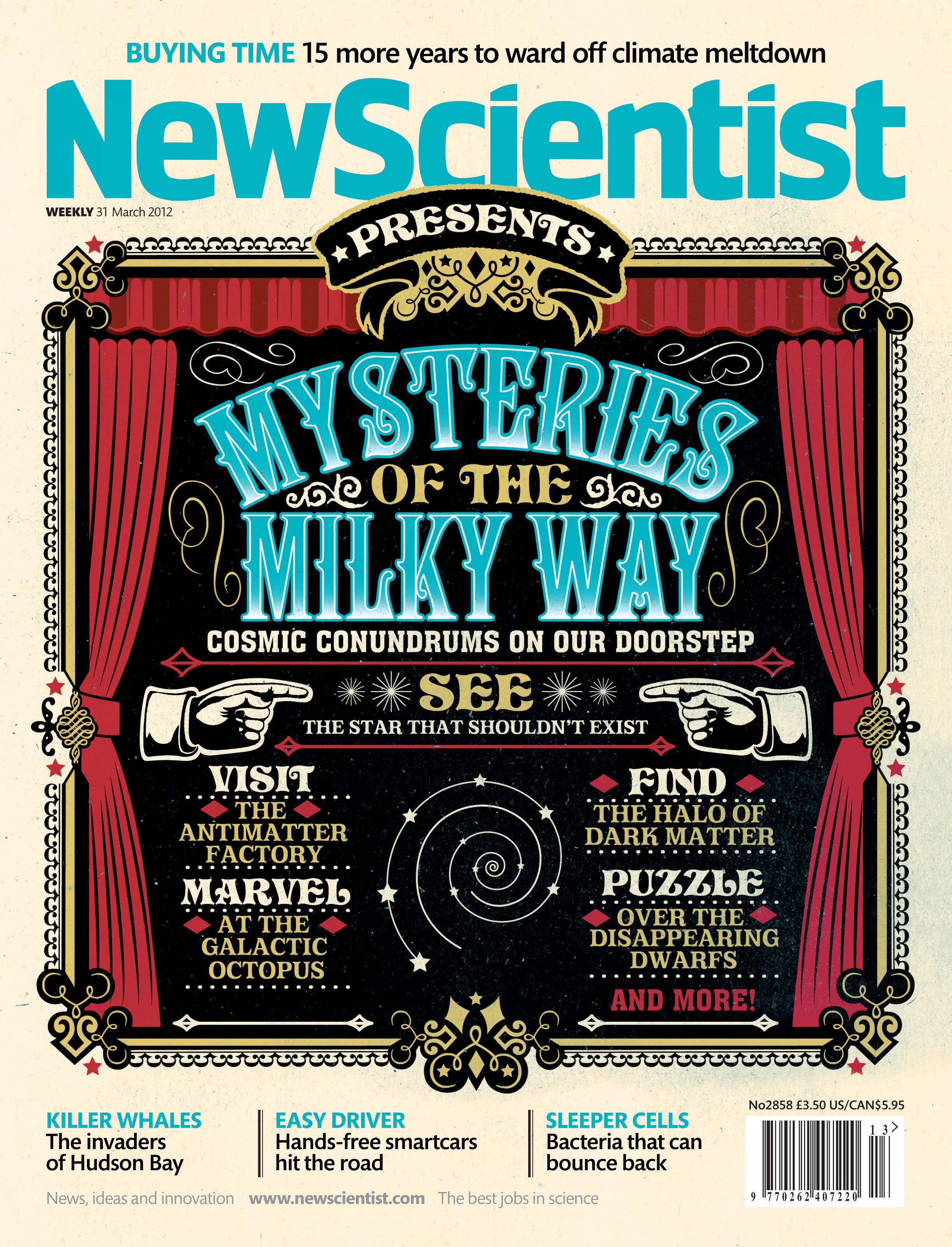
Issue no. 2858 published 31 March 2012

Sign up to our weekly newsletter

Receive a weekly dose of discovery in your inbox. We'll also keep you up to date with New Scientist events and special offers.

Sign up
Piano Exit Overlay Banner Mobile Piano Exit Overlay Banner Desktop