Subscribe now

Letters archive

Join the conversation in New Scientist's Letters section, where readers can share their thoughts and opinions on articles and see responses from experts and enthusiasts across a range of science topics. To submit a letter, please see our terms and email letters@newscientist.com


9 May 2012

Overly optimistic

From Elizabeth Young

E.O. Wilson picks up on our urge to group (21 April, p 34) , which is leaving us with innumerable paradoxical, overlapping loyalties. Kinships and religions, the ones that he recognises, are only two: think local, think country, think race, think culture, think football team, think enemies and rivals. But Wilson is surely engaging in …

9 May 2012

Born to die

From Graham Thomas

Further to Geoffrey Shephard's letter suggesting stem-cell research could enable lifespans of centuries through the manufacture of replacement body parts (21 April, p 37) . I cannot think of a better recipe for the intellectual and cultural stagnation of our species. Death, as Steve Jobs observed, "is very likely the single best invention of life. …

9 May 2012

Snuff said

From Byron Rigby

In CultureLab's look at Immortality (7 April, p 47) , both reviewer S. Jay Olshansky and author Stephen Cave appear to consider that the unit of survival is the individual. The battle against death is then the fight for individual survival, whether through health measures, life after death, immortality of the soul, or legacy. What …

9 May 2012

Hard problem

From Martin Baker

As a physicist, I'm intrigued by Christof Koch's article on consciousness (14 April, p 24) . His description of an approach to a generic theory of consciousness that involves linking physical neuronal firing patterns in the brain to an abstract, multidimensional space is strongly reminiscent of the phase space model of statistical physics. Physicists have …

9 May 2012

Moon economics

From Ian Chapple

I couldn't help feeling that mining minerals on Earth's mini-moons would not be viable (21 April , p 48). If a 2-kilometre-wide asteroid is worth $25 trillion ($25×1012), surely a mini-moon one-thousandth of the diameter of such an asteroid (and therefore one-billionth of the volume) would only be worth $25,000 ($25×1012×10-9). There does not appear …

9 May 2012

Power talk

From Chris Goulden, Joseph Rowntree Foundation

Michael Bond's article on wealth and the research of Dacher Keltner and Michael Kraus throw up some interesting hypotheses regarding the impact of class, status and money on the way we interact with each other (21 April, p 52) . Teasing apart those three concepts is often hard and there are a host of assumptions …

9 May 2012

Glut from fracking

From William Hughes-Games

The real danger from fracking is not the small earthquakes it can cause or even the disposal of the chemicals used in the process (28 January, p 8) . It is that we may discover a glut of gas that will drive down the price of all fossil fuels. Natural gas will not replace coal, …
9 May 2012

Mammals, after all

From Silke Bishop

The article on immunity correctly states that "breastfeeding reduces infection rates, particularly in the developing world" (7 April, p 34) . Absence of breastfeeding is especially disastrous in developing countries and anywhere in the world where there is a war, crisis or other disaster. But, contrary to popular opinion that breastfeeding is a mere bonus …

9 May 2012

No choice?

From Andrew Lefton

Helen Knight claims that our smartphones are subtly removing our ability to choose, or even to make a decision (14 April, p 36) . I'm not sure that the notion of free will has been settled, but the idea that clever marketing algorithms can deprive us of our ability to choose seems specious. No doubt …

9 May 2012

Political divide

From Bryn Glover

I would not wish to contradict the conclusions of John Hibbing and Chris Mooney on the biological basis for differences in political belief (7 April, p 28) . Yet when Mooney speaks of US liberals and conservatives as personality types, his terminology confuses. He goes on to talk about political left versus political right – …

9 May 2012

Off is off

From Tom Worthington

Feedback talked about devices consuming power when supposedly turned off and suggested a requirement that "off really means off" (31 March) . But this is already the case. There are two international standard symbols for a power switch. The one for a true on/off switch has an unbroken circle with a vertical stroke within it. …

9 May 2012

Pays to play

From Tim Stevenson

In Feedback, Terry Devlin is puzzled that an Irish lottery "compiles a STATS section to improve your chances of winning" (21 April) . It's obvious! Fools who study such a section in the hope of winning are likely to spend more. This will indeed increase their chance of winning.

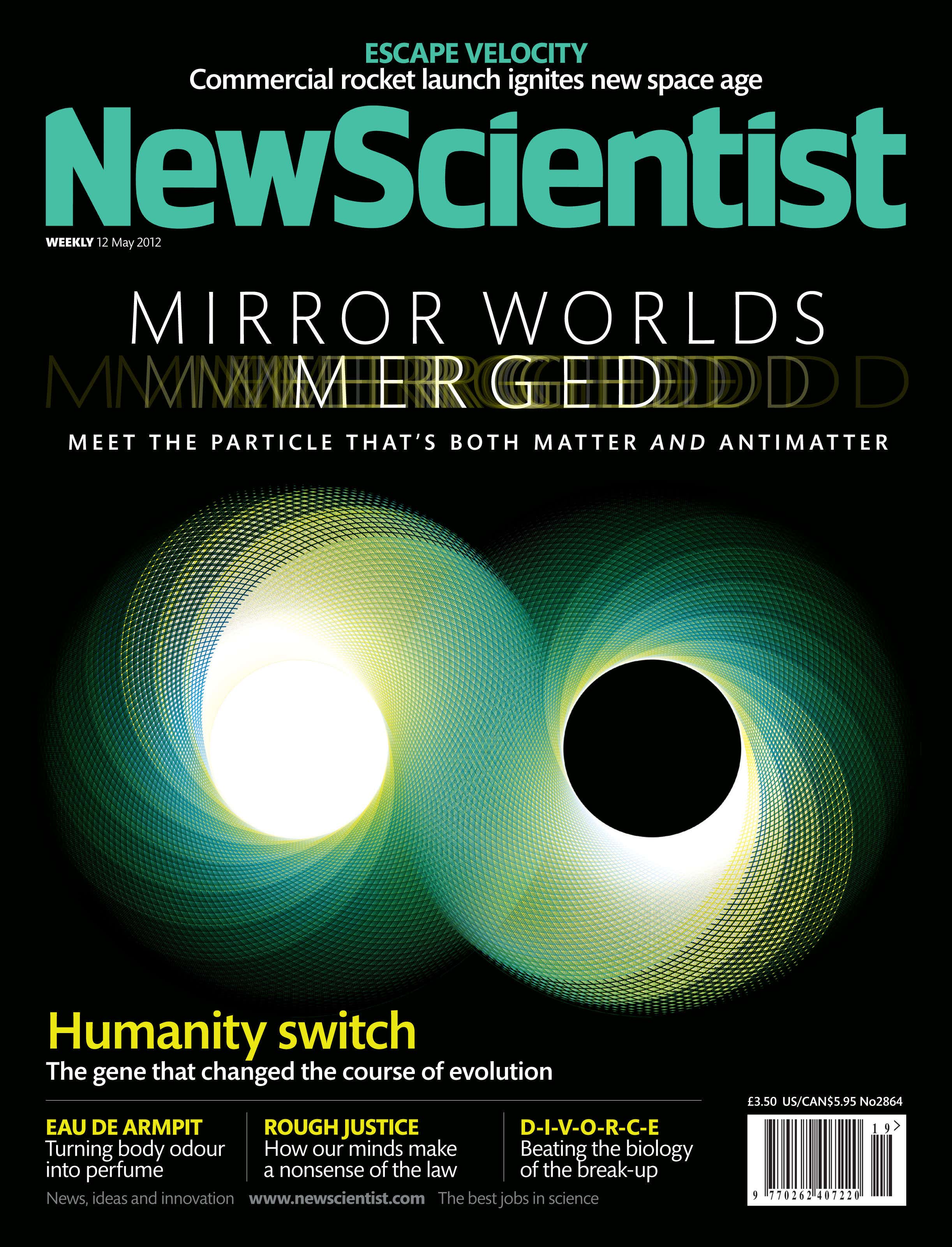
Issue no. 2864 published 12 May 2012

Sign up to our weekly newsletter

Receive a weekly dose of discovery in your inbox. We'll also keep you up to date with New Scientist events and special offers.

Sign up
Piano Exit Overlay Banner Mobile Piano Exit Overlay Banner Desktop