Subscribe now

Letters archive

Join the conversation in New Scientist's Letters section, where readers can share their thoughts and opinions on articles and see responses from experts and enthusiasts across a range of science topics. To submit a letter, please see our terms and email letters@newscientist.com


23 May 2012

Many shades of grey

From Tim Smit, Chief executive and co-founder, Eden Project

I'd like to join the conversation on the testing of genetically modified (GM) wheat at Rothamsted Research in Harpenden, UK, and threats by activists to destroy the crop (12 May, p 5) . In my experience of addressing large audiences where the subject of genetic modification is brought up, I find that the vast majority …
23 May 2012

Two brains

From Roman Chigirinsky

While reading your article on bilingual brains (5 May, p 31) , I felt that a lot of what it describes applies to me. I speak three languages. My English is not as fluent as my mother tongue, Russian, nor my second language, Ukrainian, but still good enough to "switch personality". Sometimes when speaking or …

23 May 2012

Starlite's flaw?

From Basil Watkins

Regarding Maurice Ward and his wonder material Starlite (12 May, p 40) . The television demonstration you mentioned shows an egg coated in Starlite resisting a blowtorch, but the outer surface developed a slight char. More tellingly, the presenter could then break the egg apart using the fingers of one hand. The suspicion is that …

23 May 2012

On self-esteem

From Amy Jeal

I disagree that my generation gets its high self-esteem, or "vanity", from uncritical parenting (28 April, p 44) . If there is a cause, I think it lies more in the increased charitable volunteering of this group that psychologist Jeffrey Arnett highlighted. Maybe my generation's thought and care for others is the cause of our …

23 May 2012

Love is the drug

From Bill Cockerill

In "Engineering love", Julian Savulescu and Anders Sandberg describe how manipulating the hormones oxytocin and vasopressin in voles can radically alter mating behaviour (12 May, p 28) . They suggest humans could manipulate themselves in defiance of evolution as long as these "love drugs" are "in a regulated, professional environment". This is exactly the environment …

23 May 2012

Mini burnout

From Tony Holkham

You introduced what may be a new measurement of volume: a "minivan-sized" meteor (28 April, p 4) . I had an original Mini van, and it burned up eventually, just like a meteor.

23 May 2012

Antisocial view

From Stuart Leslie

Jim Giles imagines he is a curmudgeon because he withholds information from Facebook (28 April, p 40) . I go further and do without social media. I just see the obsession with them as wholly trivial and time-wasting, and based mostly on a need to conform and not feel left out of something. In many …

23 May 2012

Toxic soup

From Michele Foster

Probably the only way to curb some of the growth in the popularity of shark fin soup that you discussed (28 April, p 36) is to advertise data on the likely toxicity of shark fins and the soup they go into. After all, with sharks at the top of the ocean predator chain, they may …

23 May 2012

Growing divide

From David Gilbert

Your editorial points out that inequality has been growing within countries belonging to the Organisation for Economic Co-operation and Development (OECD) (21 April, p 5) . On the other hand, hundreds of millions of people, mostly in India and China, have been lifted out of poverty to a modest standard of living by economic growth. …

23 May 2012

For the record

• In our story on energy supply in Japan (28 April, p 5) we should have said that nuclear power made up a third of the country's electricity generating capacity.

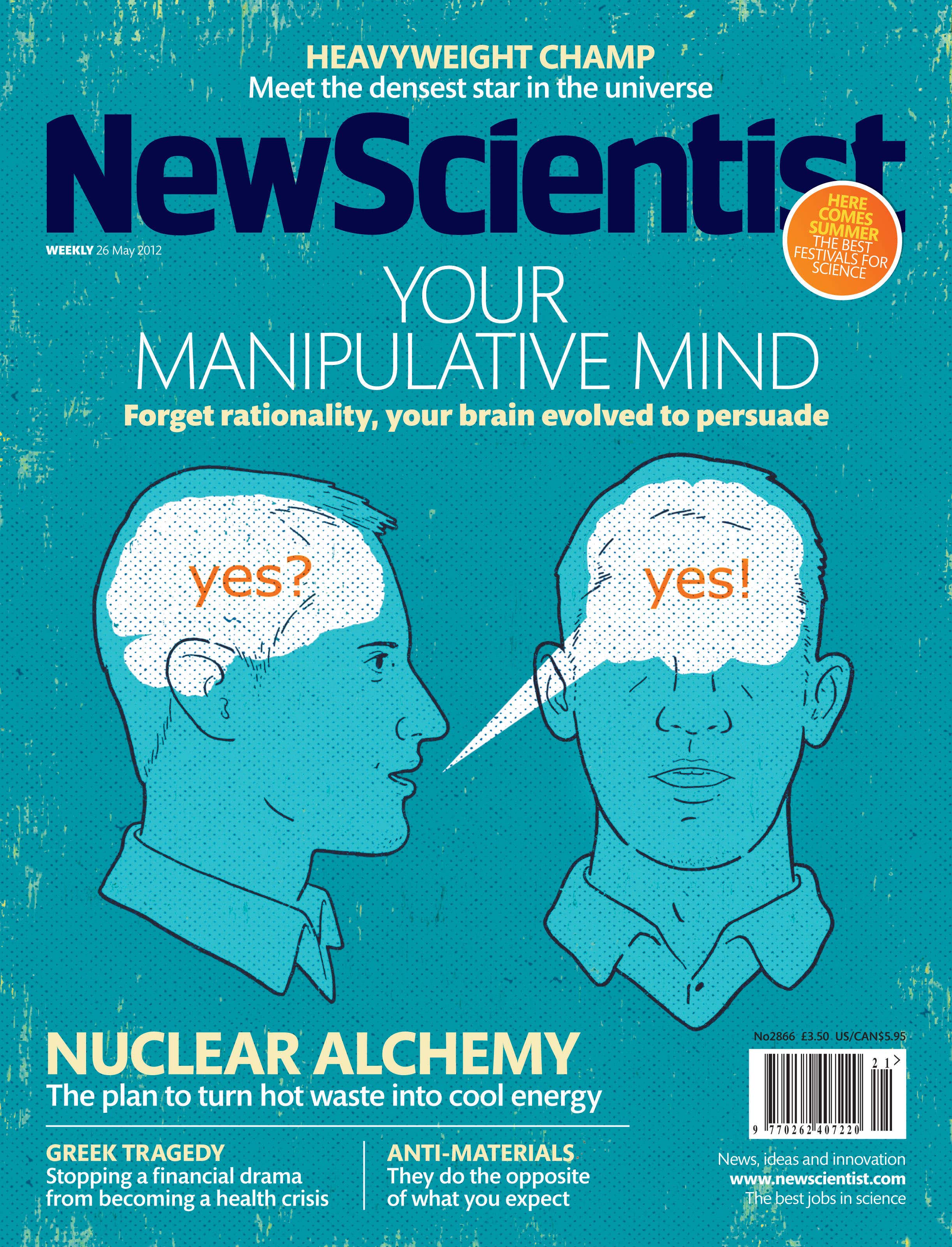
Issue no. 2866 published 26 May 2012

Sign up to our weekly newsletter

Receive a weekly dose of discovery in your inbox. We'll also keep you up to date with New Scientist events and special offers.

Sign up
Piano Exit Overlay Banner Mobile Piano Exit Overlay Banner Desktop