Subscribe now

Letters archive

Join the conversation in New Scientist's Letters section, where readers can share their thoughts and opinions on articles and see responses from experts and enthusiasts across a range of science topics. To submit a letter, please see our terms and email letters@newscientist.com


30 May 2012

Digs in space

From Henry Melosh, Professor of earth, atmospheric and planetary sciences, Purdue University

A group of space entrepreneurs has announced a plan to mine small asteroids for minerals and water, the latter to fuel further space exploration (28 April, p 4) . Reactions mostly of wonder and scepticism, if not ridicule, followed. I, too, am doubtful they can make this pay, especially as soon as the end of …

30 May 2012

Flight of fancy

From Gregory S. Paul

Contrary to Alan Feduccia's article on the evolution of birds (28 April, p 28) , the meticulous, detailed anatomical evidence that they descended from theropod dinosaurs – both developing and frequently losing flight in the process – is overwhelming. That many small dinosaurs bore early feathers is also abundantly documented. Birds evolving from small running …

30 May 2012

Peak oil?

From Michael Jefferson, London Metropolitan Business School

While asking if we can avoid the spectre of oil running out (19 May, p 34) , you say many predict "peak oil" – the point of global maximum production – by the end of the decade. In fact, many researchers reckon the peak has been and gone. You are right that exploitation of the …

30 May 2012

Stick together

From Karl Beattie

Your article "Engineering love" brought some very interesting scientific evidence to your readership's notice (12 May, p 28) . However, I was slightly disturbed by the assertion that we ought to "liberate ourselves from evolution" by the use of chemical stimulants, in the hope of finding happiness. Our main happiness problem is that while we …

30 May 2012

Big not better

From Janine Blaeloch, Western Lands Project

In your look at the advance of industrial-scale solar generation across public land in the south-west US, you focused on the desert tortoise as the central obstacle to its progress (5 May, p 8) . Of course, our biologically rich deserts are home to more than tortoises. But what is slowing down the spread of …

30 May 2012

Escaping justice

From Ken Pease

Your article "Justice will be done" ( 12 May, p 44 ) deals effectively, but exclusively, with how to minimise wrongful convictions by making procedural changes. The avoidance of wrongful convictions is not sufficient to ensure that justice will be done. An internet search on "miscarriages of justice" shows the phrase is, perversely, almost universally …

30 May 2012

Taming toxins

From Jack Stewart, Soricimed Biopharma

I read, with fascination, your article on venoms as drug candidates ( 5 May, p 34 ). Your readers might be interested in a little-known venom from a mammal. A shrew in eastern North America, Blarina brevicauda , has the peptide soricidin in its saliva. It causes paralysis and is used to immobilise prey. The …
30 May 2012

Talking cures

From John Vincent

In his article on the protests against the American Psychiatric Association, James Davies mentions calls for reform of the US mental health system to provide alternatives to medication (19 May, p 7) . UK mental health services could also do with reform because of their overemphasis on medication. Peer support was mentioned as an alternative. …

30 May 2012

Half-man, half-phone

From Paul B. Harris

I was not surprised by your article "The gadget inside" (12 May, p 22) as I have thought for some time that it is inevitable that phones and other electronic devices will be implanted under the skin. You touched on cost and reliability, that phones are fault-prone and a reliable device is likely to be …

30 May 2012

Brain growth

From Naomi Schrecker

In your fascinating article, Evan Eichler states that duplications of the SRGAP2 gene, which helps drive development of the neocortex, would have changed early human brain development immediately and dramatically (12 May, p 10) . The possible existence of a group containing those with and without the duplications poses interesting questions. Could there have been …

30 May 2012

First transit

From Roger Horrocks

Marcus Chown, reviewing two books on the transit of Venus (12 May, p 48) , says that in 1716 Edmond Halley was the first to realise the transit "had the potential to reveal the scale of the solar system". In fact British astronomer Jeremiah Horrocks – who is in my family tree – had the …

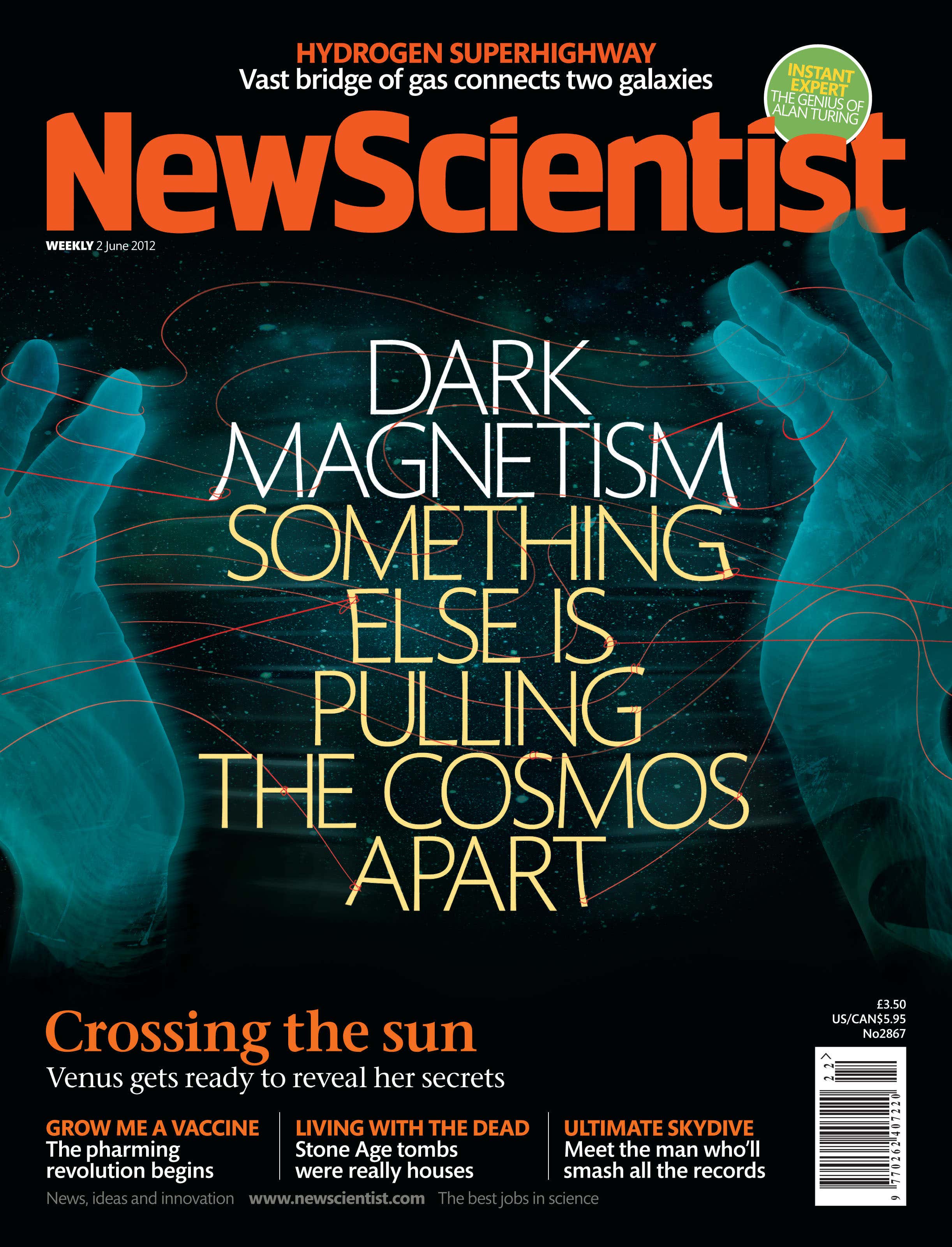
Issue no. 2867 published 2 June 2012

Sign up to our weekly newsletter

Receive a weekly dose of discovery in your inbox. We'll also keep you up to date with New Scientist events and special offers.

Sign up
Piano Exit Overlay Banner Mobile Piano Exit Overlay Banner Desktop