Subscribe now

Letters archive

Join the conversation in New Scientist's Letters section, where readers can share their thoughts and opinions on articles and see responses from experts and enthusiasts across a range of science topics. To submit a letter, please see our terms and email letters@newscientist.com


6 June 2012

Who's biased now?

From Brian Josephson, 1973 Nobel prizewinner in physics

Your article on human rationality (26 May, p 32) asks: "Have you ever, against your better judgement, nurtured a belief in the paranormal?" It continues: "If you buy into any of these beliefs, you are probably suffering from confirmation bias – the mind's tendency to pick and choose information to support our preconceptions, while ignoring...evidence …

6 June 2012

Alert for aliens

From Alessandro De Angelis, Physics coordinator of the MAGIC telescope

Astronomer Geoff Marcy assumes that extraterrestrials might try to communicate with us by pointing lasers at Earth (31 March, p 28) . This possibility has been studied. If they know about our civilisation, such beings would point at the telescope dish with the largest reflecting surface. If our mutual position in the Milky Way allows …

6 June 2012

Squid wrap

From Abigail Newis

Ron O'Dor's conundrum of how to stop captive squid flying into tank walls at night is a concern (19 May, p 39) . Has he considered lining the tanks with bubble wrap? Not only is it widely available, cheap, waterproof and malleable, it could even be an effective way of recording the animals' night-time activity, …

6 June 2012

Earlier spin

From Timothy Johnson, Heriot-Watt University

In your story "Roulette beater spills his secrets" you wrote that in the 1970s, Doyne Farmer, then a graduate student, used the world's first wearable computer to beat roulette tables in Nevada's casinos (12 May, p 12) . I believe the first wearable computer was conceived in 1955 and deployed in 1961 by Edward Thorp …

6 June 2012

Curious prizes

From Marc Abrahams, Founder of the Ig Nobel prize ceremony

Your review of Philip Ball's book Curiosity (19 May, p 50) ends: "Yet for all its erudition, his book does not quite succeed in capturing the difference between Nobel and Ig Nobel prizewinning curiosity." Nobel prizes recognise (in theory and usually in fact) curiosity that led to extremely good things. Ig Nobel prizes recognise curiosity …

6 June 2012

Electric extras

From Roy Harrison

In your look at alternatives to oil (19 May, p 34) , the statement that "as electricity generation becomes cleaner, the emissions of electric vehicles will fall further still" is open to challenge. It is normal policy to allow all non-fossil fuel power stations to produce all the power they can all the time. Fossil …

6 June 2012

Not in the family way

From Merlin Reader

Your article, "Engineering love" (12 May, p 28) , is predicated on the basis that the family – presumably two adults in a long-term monogamous relationship – is the best place to bring up children. It is ironic that the researchers used prairie voles to research increasing relationship length. Perhaps this is partly because none …

6 June 2012

Language barrier

From Claudio Gino

My daughters were raised as multilingual and had no speaking problems as a result, contrary to the fears of some educators that you touched on in your look at bilingualism (5 May, p 30) . But I have known of at least three cases of children exposed to two languages in early childhood who had …

6 June 2012

Psychiatric view

From Dr Richard Symonds, Consultant psychiatrist

The article by James Davies, "Label jars, not people" (19 May, p 7) about protesters lobbying the American Psychiatric Association's meeting is relevant, but there are a few points to make. Psychiatrists do not label people. They label disorders of mental health. And the protesters highlight that the Diagsnostic and Statistical Manual of Mental Disorders …
6 June 2012

Rocketing riches

From Neil Craig

The first true commercial spaceship has successfully resupplied the International Space Station after its launch from Cape Canaveral (26 May, p 4) . With the shuttle programme over, it was embarrassing that NASA, with its $18 billion-a-year budget, was expecting to have to rely on the Russians to get Americans there for many years. But …

6 June 2012

Fake self-esteem

From Julie Ellender

Here's my take on your exploration of excessive self-esteem among young people (28 April, p 44) . Fake self-esteem is narcissistic, lacks empathy, relies on extrinsic rewards and lacks self-insight. It is based on fantasy. It is easy to see. Real self-esteem is empathic, provides insight into our strengths and weaknesses – allowing us to …

6 June 2012

Jumbled sell

From Jamie White

The idea of using artificial intelligence to help invent brand names is an interesting concept but, as the unfortunate results of combining "sweet" and "eat" to produce "sweat" shows, we are a long way from giving AI any kind of autonomy in this regard (5 May, p 19) . It seems the system described is, …

6 June 2012

For the record

• In our look at science art in Russia (19 May, p 51) , we should have said Sergey Kasich was the sound artist for Julia Borovaya's Liquid~Do artwork. • Brian Cox will be co-presenting a special edition of the UK's Radio 4 show The Infinite Monkey Cage at Latitude on 14 July, not MC-ing …

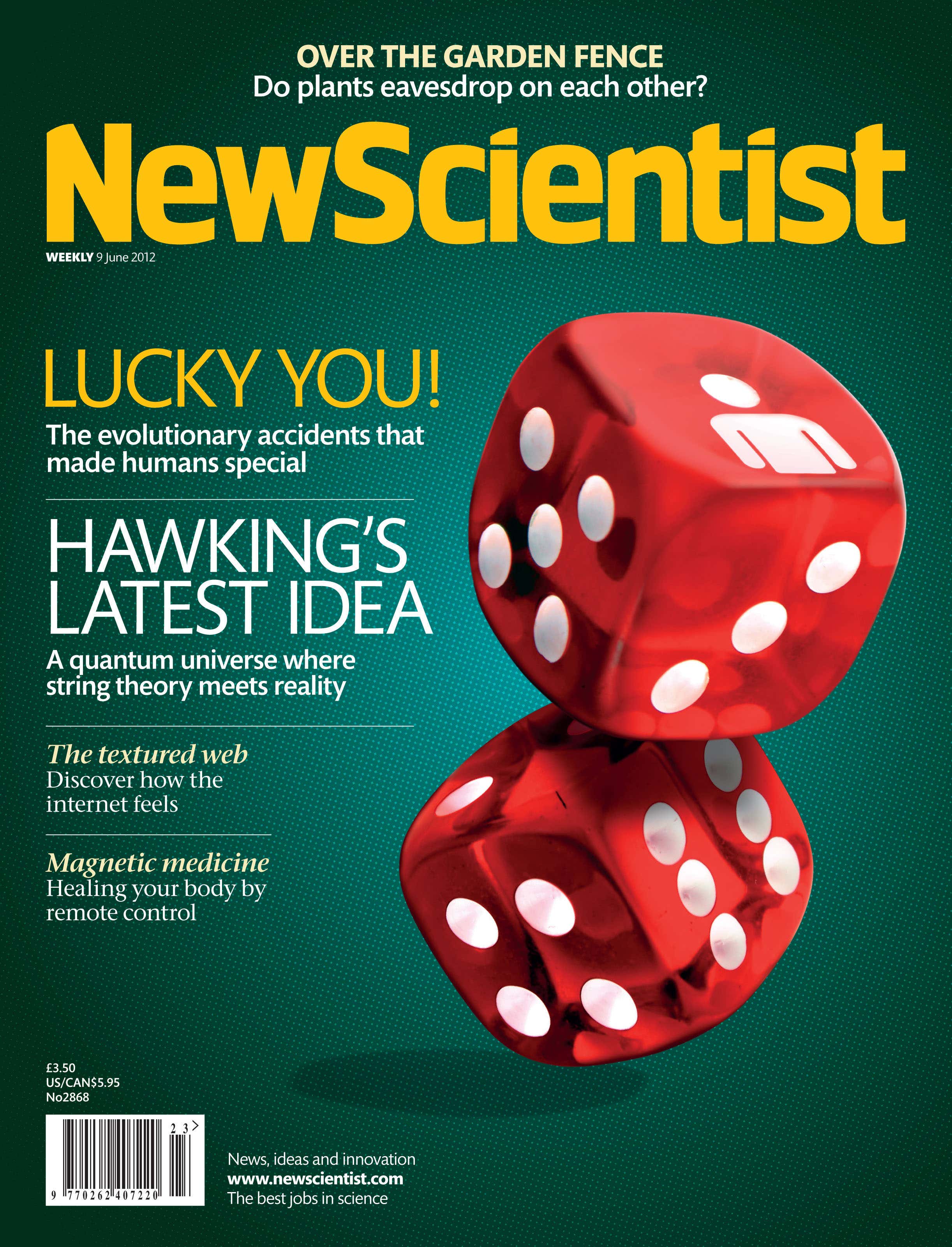
Issue no. 2868 published 9 June 2012

Sign up to our weekly newsletter

Receive a weekly dose of discovery in your inbox. We'll also keep you up to date with New Scientist events and special offers.

Sign up
Piano Exit Overlay Banner Mobile Piano Exit Overlay Banner Desktop