Subscribe now

Letters archive

Join the conversation in New Scientist's Letters section, where readers can share their thoughts and opinions on articles and see responses from experts and enthusiasts across a range of science topics. To submit a letter, please see our terms and email letters@newscientist.com


13 June 2012

Meaning of life

From Keith Milham

Cosmologist Charley Lineweaver is trying to redraw the definition of life based on physical criteria that could take in hurricanes and stars (19 May, p 29) . Can you better define a life form by its waste? A hurricane does not produce waste, just "chewed up" material that comes out a different shape. I'm not …
13 June 2012

Love letter

From Christine Dann

In reifying evolution as a force or power that is separate from and even inimical to human beings and their values, Julian Savulescu and Anders Sandberg are talking as much nonsense as any fundamentalist theist who believes God created us as sinners and we must struggle to be good (12 May, p 28) . It …

13 June 2012

Argue to the end

From Charles Rainey

I read with interest the article exploring the evolutionary benefits to the group of being argumentative (26 May, p 32) , but must confess I wondered why it needed stating. As someone with Asperger's, it seems obvious to me that the vast majority of face-to-face communication is adversarial rather than inquisitorial. However, having worked with …

13 June 2012

Seeds of controversy

From Pete Riley, Campaign director, GM Freeze

A key issue for the trial of genetically modified wheat at Rothamsted in the UK (12 May, p 5) is whether or not the modification will work. When we objected to the application for the trial, we pointed to evidence that aphids could quickly become habituated to the alarm pheromone engineered into the wheat to …

13 June 2012

Seagrass solution

From Glyn Williams

Might one way to protect threatened seagrass meadows (26 May, p 16) be to encourage commercial farming of them? Seagrass is used in artisan crafts, most familiarly twisted into cords to be woven into chair seats. It could be used in other, similar crafts, and its long fibres should make it a good substitute for …

13 June 2012

Fossil feud

From Ann Altman

Further to the row over the legality of auctioning a dinosaur skeleton in the US (26 May, p 4) , one international convention of no small import is the 1970 UNESCO Convention on the Means of Prohibiting and Preventing the Illicit Import, Export and Transfer of Ownership of Cultural Property . It states that "cultural …

13 June 2012

Transporting energy

From Anthony Battersby

I read with interest Peter Aldhous's article on using spare energy from phone masts to power vaccine storage, in which he attributed to me the concern that hi-tech refrigerators might fail (26 May, p 22) . This possibility should not be overlooked, but the more important point is that it is better to move the …

13 June 2012

Modern morality

From Ullrich Fischer

I don't think morality has much to do with disgust, as suggested in your look at opposition to gay marriage (19 May, p 28) . Disgust probably evolved from the advantage gained from avoiding sources of disease and toxins. Morality probably evolved by group selection, which gave a survival advantage to groups of pre-humans who …

13 June 2012

Booze cruisers

From Paul Bennett

I can bear witness to your report on drunken waxwings (2 June, p 17) . Where I live, every year in late winter, when food is scarce, Bohemian waxwings ( Bombycilla garrulus ) fall out of trees. These birds flock in groups of 500 or more and cruise the city in search of fruit on …

13 June 2012

Spill the secret

From Alan Thurley

I would like to suggest an alternative approach to the search for Starlite's formula (12 May, p 40) . It seems to me that listing the ingredients easily available to inventor Maurice Ward in the five to 10 years before his appearance on the TV show Tomorrrow's World in March 1990 is essential. I would …

13 June 2012

In the dark?

From Malcolm Shute

There is a possibility that you do not consider in your report on suggestions that our cosmic neighbourhood may be dark matter-free (28 April, p 6) . If most matter is in fact dark matter, organisms on Earth must be able to tolerate it continually passing through their bodies, and hence it must be made …

13 June 2012

For the record

• In our look at creativity (26 May, p 37) , we should have said that a majority of mathematicians have a single-digit Erdös number.

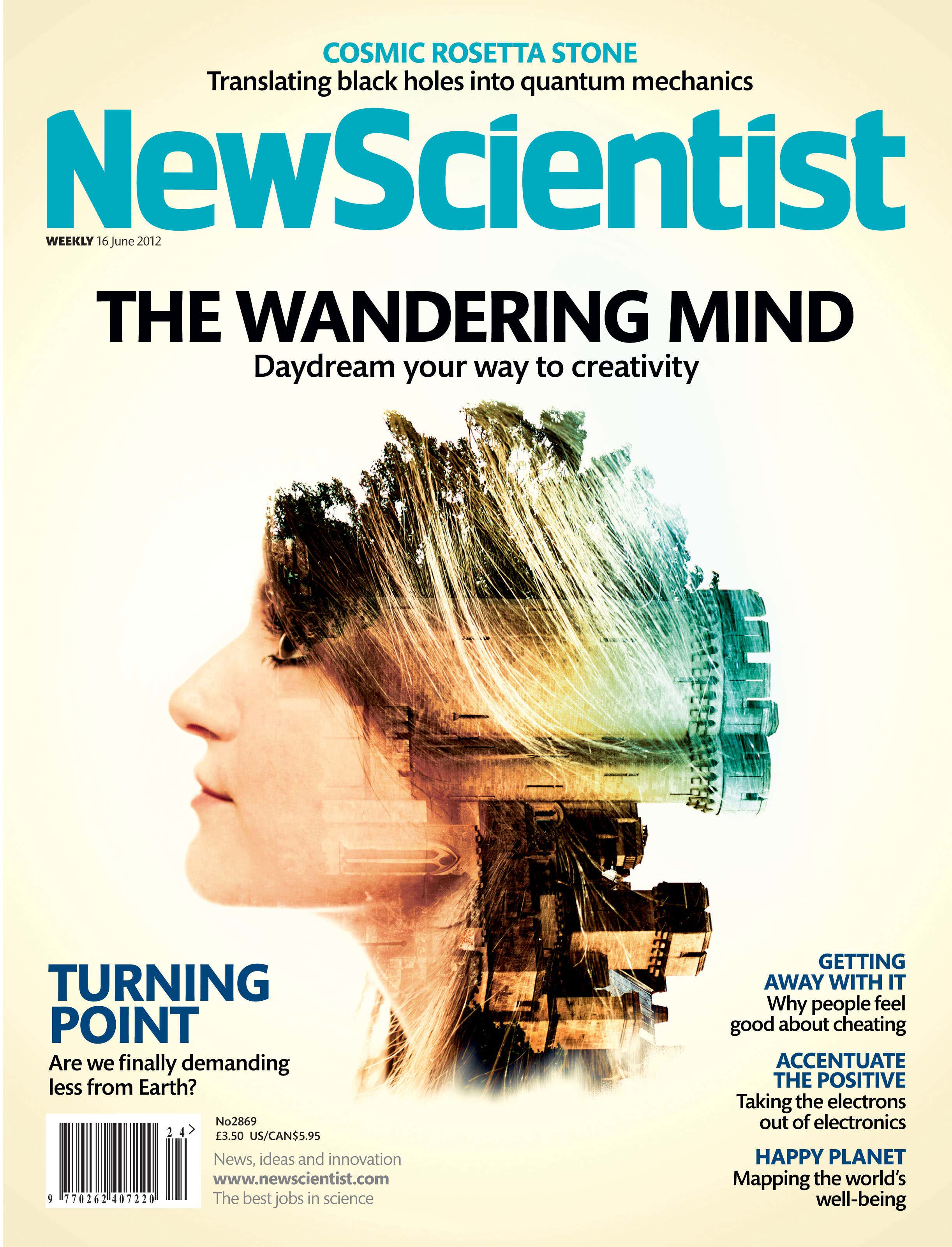
Issue no. 2869 published 16 June 2012

Sign up to our weekly newsletter

Receive a weekly dose of discovery in your inbox. We'll also keep you up to date with New Scientist events and special offers.

Sign up
Piano Exit Overlay Banner Mobile Piano Exit Overlay Banner Desktop