Subscribe now

Letters archive

Join the conversation in New Scientist's Letters section, where readers can share their thoughts and opinions on articles and see responses from experts and enthusiasts across a range of science topics. To submit a letter, please see our terms and email letters@newscientist.com


22 August 2012

Fall and rise

From Barry White

Along with the downsides of climate variation for ancient civilisations (4 August, p 32) , could there have been some upsides? Bigger monuments and new gods for new odds could well be one, as could the demise of shamans too reliant on the previously predictable march of the seasons. Although not evident in the research …
22 August 2012

Keeping track

From Mary Carless

Your look at those who use technology to closely monitor key aspects of their lives, such as health and activity (4 August, p 40) , was of interest to me, as my partner is an obsessive self-tracker. He reasons, quite rightly, that it enables him to identify patterns and thereby deal with problems such as …

22 August 2012

Reality of maths

From Peter Tchamitch

In his recent look at the Schrödinger wave function, Marcus Chown states that "most physicists... believe the wave function to be merely a probability distribution" (28 July, p 28) , as if this purely mathematical entity were removed from any correspondence to physical reality. But the equations it underpins seem to work brilliantly, so it …

22 August 2012

Avatars on trial

From John Rowlands

Copyright concerns over digital doppelgängers are one thing (11 August, p 38) , but who will people choose to sue when your electronic double issues something defamatory? You, or the company that enabled the creation of the avatar? Or will it be such a saintly avatar that it avoids this eventuality, and so will never …

22 August 2012

Tweet store

From Christopher Woodford

Further to Feedback's look at Higgs boson humour (21 July) , in which you stated: "We preserve this joke for posterity, since as far as we know no national libraries have Twitter on the shelves." You might be interested to know that the US Library of Congress has digitally stored Twitter's archive material.

22 August 2012

Free fall contender

From Malcolm Clark

In the history of extreme parachuting (21 July, p 36) , Charles Bruce is worth a footnote. His book Freefall (Little, Brown, 1998) written under the pseudonym Tom Read, covers his abandoned attempt to be the first to free-fall more than 37 kilometres and to break the sound barrier unassisted. Sadly, he died in January …

22 August 2012

An app for that

From Simon Dicker

Having just returned from a holiday where I had no cellphone or email access, and feeling very relaxed as a result, I read your article on a smartphone that feels your strain (11 August, p 20). If the constant access to work emails through my phone is stressing me out, maybe this app could let …

22 August 2012

Illusion of choice

From Dudley Miles

Your editorial on research that examines whether we have free will understates the paradox (11 August, p 3) . It is impossible to live as an automaton even if you believe that free will is an illusion. The last sentence: "We may not have the ability to choose, but we choose to think we do", …

22 August 2012

Handling venom

From Grover Larkins

Your discussion of the use of venoms as drug candidates ( 5 May, p 34 ) reminds me of the time I spent in the early 1950s detoxifying cobra venom for a project at the University of Miami that was having some success using it to treat polio. The development of the Salk vaccine for …

22 August 2012

My life-saver

From David Kirby

Having had aggressive prostate cancer picked up by yearly screening for prostate specific antigen (PSA), I can speak for the usefulness of this blood test (4 August, p 12) . My prostate was small and had no irregularities. At 59 years of age, I did occasionally have to get up in the night to urinate, …

22 August 2012

Curiosity's appeal

From John Steffens

We should not be surprised at the global jubilation and interest surrounding the touchdown of NASA's Mars rover, Curiosity, mentioned in your editorial (11 August, p 3) . Could anyone familiar with the incredible sequence of automated manoeuvres programmed into this craft to ensure a safe landing fail to be impressed? Our anthropomorphic treatment of …

22 August 2012

Historical units

From Jeff Whittle

Feedback's ongoing discussion of alternative systems of units (4 August) rekindled a memory from the 1950s. While working with physicists at Harwell in Oxfordshire, UK, we decided that both the metre-kilogram-second and centimetre-gram-second systems were rather sterile, lacking both culture and history. So we searched for something more suitable. The result was the furlong-pennyweight-fortnight system, …

22 August 2012

Seeds of life?

From Ernest Ager

You reported research showing an excess of left-handed amino acids in meteorites found in Canada (4 August, p 17) . Surely this could be used as evidence for panspermia, the theory that life on Earth was seeded from space, as proposed by astronomers Fred Hoyle and Chandra Wickramasinghe. If some process in space produces an …

22 August 2012

Armed struggle

From David Limond

Interesting as her analysis of the origins of inequality might be, do the comments by anthropologist Deborah Rogers (28 July, p 38) amount to anything more than an endorsement of 17th-century English political activist Gerrard Winstanley? He stated that: "The power of enclosing land and owning property was brought into creation by the sword."

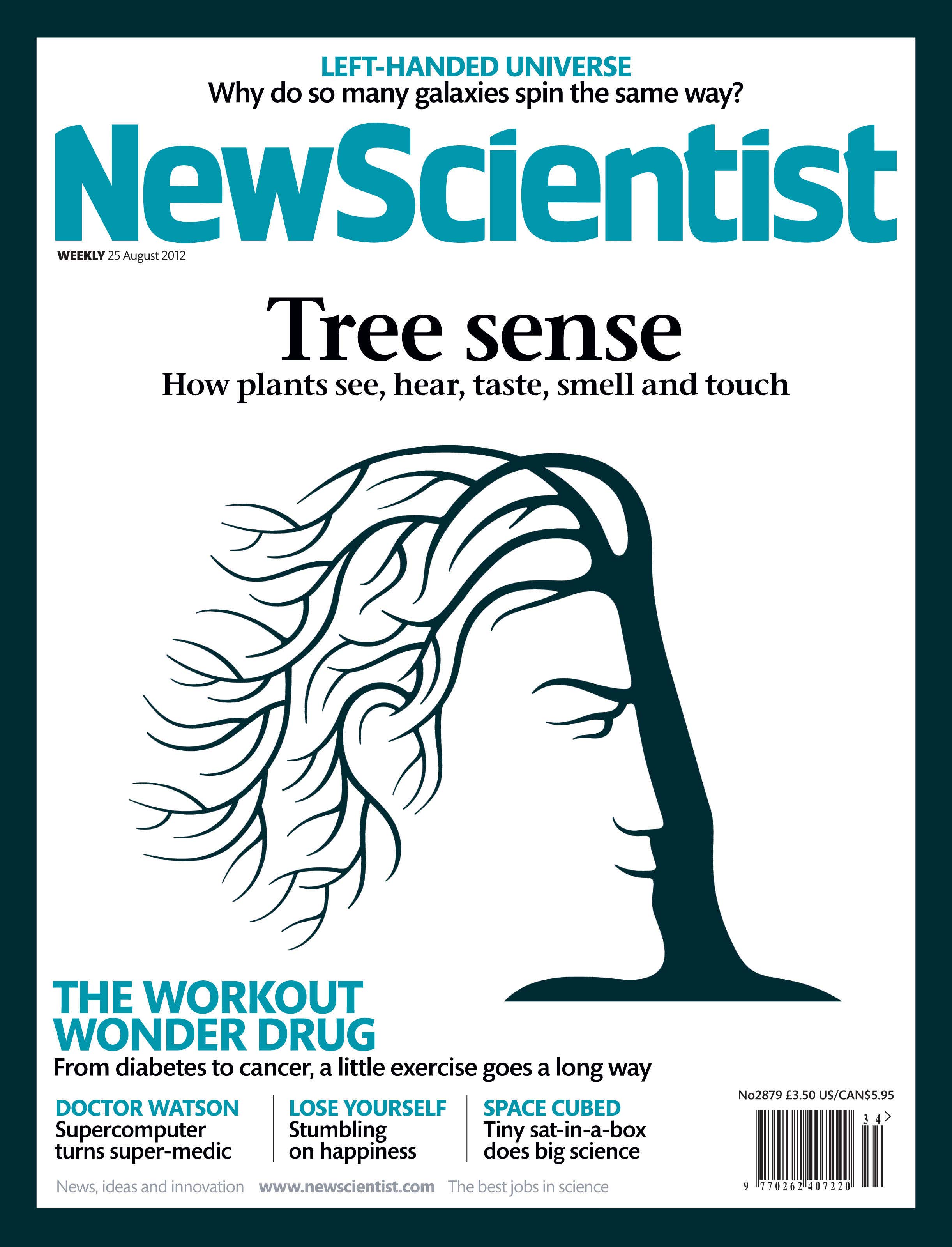
Issue no. 2879 published 25 August 2012

Sign up to our weekly newsletter

Receive a weekly dose of discovery in your inbox. We'll also keep you up to date with New Scientist events and special offers.

Sign up
Piano Exit Overlay Banner Mobile Piano Exit Overlay Banner Desktop