Subscribe now

Letters archive

Join the conversation in New Scientist's Letters section, where readers can share their thoughts and opinions on articles and see responses from experts and enthusiasts across a range of science topics. To submit a letter, please see our terms and email letters@newscientist.com


7 November 2012

No traveller returns

From Jean Dorricott

Shelly Kagan takes the Stoic view of death, epitomised by Shakespeare's Caesar: "cowards die many times before their deaths, the valiant never taste of death but once... death, a necessary end, will come when it will come" (20 October, p 42) . But unlike Shakespeare, he ignores the fear of bereavement. From his perspective, logically …
7 November 2012

Force against Caesar

From Stuart Leslie

Laura Spinney quotes theorists' idea that since our closest relatives are chimpanzees, early humans probably had similar strength-based hierarchical social organisation and practices (13 October, p 46) . This is a fallacy in more than one way. Bonobos and chimps are genetically almost identical to, and equidistant from, humans. Yet the social behaviour of bonobos …

7 November 2012

Evolving morals

From Adrian Sharman

I share Susan Hall's irritation with assertions that because infidelity is normal in humans it must be acceptable (13 October, p 31) . But I feel that she, like many others, nevertheless accepts the central tenet of such arguments, which portrays moral behaviour as an unhelpful side-effect of human intelligence rather than something which is …

7 November 2012

So much food

From Alistair McCaskill

In his review of One Billion Hungry , Fred Pearce says: "Of course, everyone should put their shoulder to the wheel to double global food production by 2050" (13 October, p 50) . I am curious as to why. Today's population stands at 7 billion and is forecast to rise to 9 billion by 2050. …

7 November 2012

Not perpetual fuel

From Peter Urben

Unless someone has repealed the second law of thermodynamics, there is no prospect whatsoever of producing fuel from air without using more energy than that fuel delivers (27 October, p 20) . But that is not the economic question: you do not reject your laptop or mobile telephone just because the battery requires more energy …

7 November 2012

A toxin's toll

From Ann Wills

Jessica Hamzelou reports that 80 per cent of older people's brain cells are vulnerable to developing DNA damage (29 September, p 6) . Could this be due to an external toxic agent, such as aluminium, to which older brains have been exposed for longer? In 1988, for example, 20 tonnes of aluminium sulphate got into …

7 November 2012

Eat your words

From Bernard Cooke

Feedback hints at the problem faced by those with toilet systems that clog easily in phrasing delicately what may be placed in the pan (20 October) . The captain of a cruise ship on which I recently travelled advised passengers succinctly that, other than toilet paper, if "you haven't eaten it, don't put it in …

7 November 2012

For the record

• It would have been better if we had mentioned that the photo of Kelly Richardson's video installation Mariner 9 (25 August, p 50) was taken at its debut at Spanish City in Whitley Bay, UK, and that it was commissioned by Newcastle's Tyneside Cinema , which worked with Richardson to develop the piece.

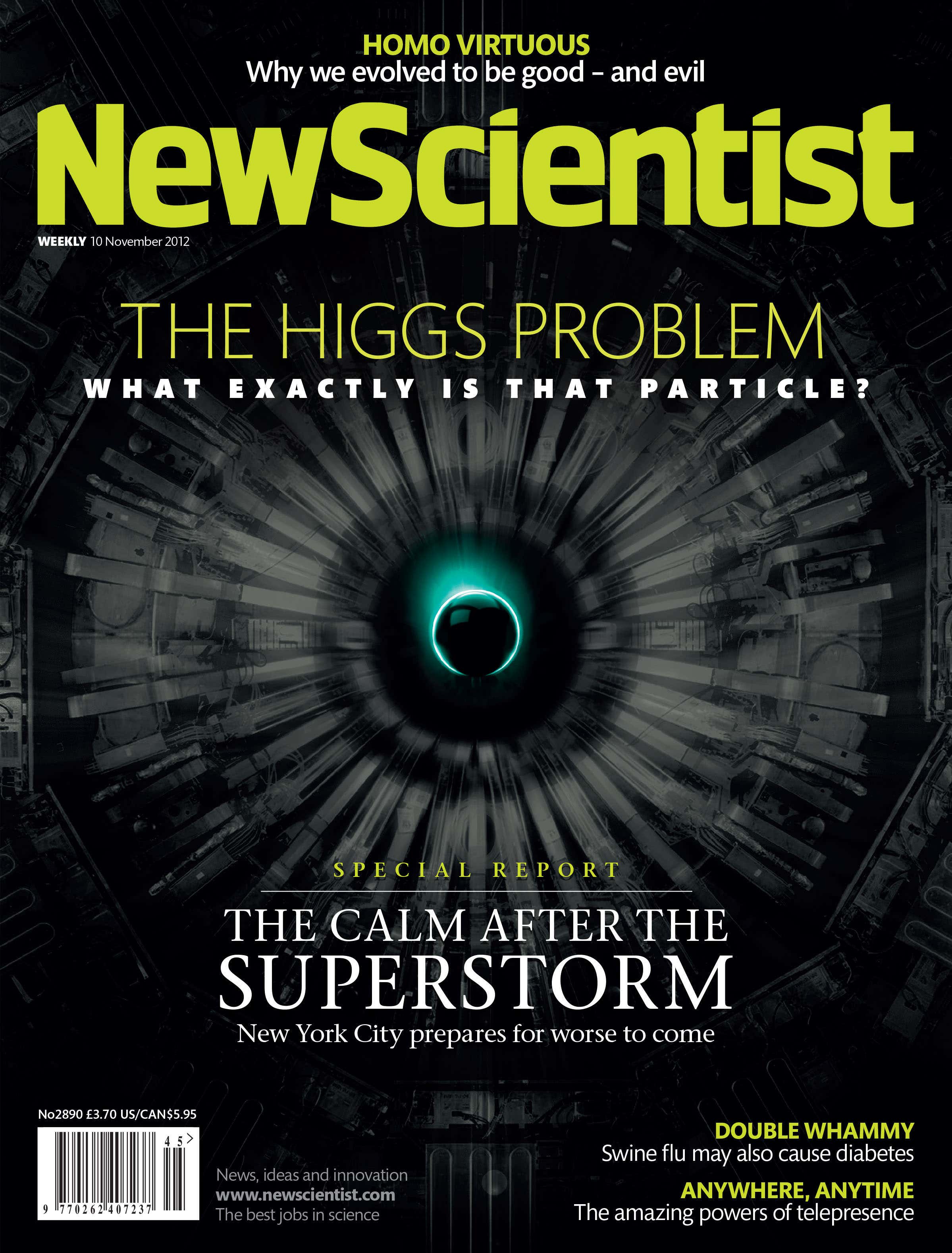
Issue no. 2890 published 10 November 2012

Sign up to our weekly newsletter

Receive a weekly dose of discovery in your inbox. We'll also keep you up to date with New Scientist events and special offers.

Sign up
Piano Exit Overlay Banner Mobile Piano Exit Overlay Banner Desktop