Subscribe now

Letters archive

Join the conversation in New Scientist's Letters section, where readers can share their thoughts and opinions on articles and see responses from experts and enthusiasts across a range of science topics. To submit a letter, please see our terms and email letters@newscientist.com


14 November 2012

Extreme weather

From Constance Lever-Tracy, Flinders University

Climate change was the largest elephant in the room during the three US presidential debates – an evasion made all the more culpable by the devastation of New York City by superstorm Sandy soon after. Politicians and the media have been blamed for its absence from public debate, but the excessive caution of most scientists, …
14 November 2012

Shaky ground

From Caroline Herzenberg

Thank you for pointing out that the recent conviction of the Italian seismologists was not about the failure to predict the L'Aquila earthquake in 2009, but rather about poor risk communication, and was built on an accusation of giving out "inexact, incomplete and contradictory information" (27 October, p 3) . It does seem unfortunate that …

14 November 2012

Life and death

From Ted Webber

I agree with Shelly Kagan that fear of being dead is irrational (20 October, p 42) . But there is more to the fear of the process of dying than he admits to. Will I die alone? With dignity? The law will not allow me to make arrangements with my carers (if any) to help …

14 November 2012

Political landslide

From Charles Sawyer

The goal of gathering data on landslides is to reduce deaths, says Dave Petley (20 October, p 26) . While mountaineering in Peru in 1962, I saw a massive vertical slab of rock being undermined by Glacier 511. It could have fallen at any moment, causing a landslide that would obliterate a village. Our report …

14 November 2012

How much is time?

From Alan Fowler

In Vlatko Vedral's excellent essay suggesting that an ultimate theory might emerge from thermodynamics (13 October, p 32) , he recalls Max Planck describing his idea that energy comes in discrete chunks as an "act of desperation". Planck also anticipated Vedral's argument. In a 1909 lecture entitled "The Atomic Theory of Matter", Planck discussed reconciling …

14 November 2012

Tape care

From Tony Clarke

People handling tapes and cassettes tend to place them down flat. In my experience, data stored in this way is unreadable after just six weeks as the lower edge of the tape becomes deformed. If huge amounts of data are to be accumulated on tape (20 October, p 20) there must be a strict protocol …

14 November 2012

Light fantastic

From Lucy Roberts

We all know that wind farms benefit the environment, but it is less well known that they can produce a nocebo effect: people predisposed to dislike them experience adverse health effects due to their proximity. Kay Siddell (27 October, p 28) finds their motion so disturbing that she keeps her curtains closed and takes vitamin …

14 November 2012

Bucolic agribot

From Richard Reeves

James Mitchell Crowe reports that agricultural weeding robots will be able to reduce chemical use by up to 80 per cent, by identifying the leaves of weeds and applying microdots of weedkiller to them (27 October, p 42) . He also tells us that other options are applying flame guns and lasers to burn the …

14 November 2012

Demon-slaying

From Bernard Liengme

I am sure that US physicist Charles Bennett had a very sophisticated way of dismissing Maxwell's Demon (13 October, p 32) . But I still enjoy the rationale given by my professor, F.C. Tompkins of Imperial College London: "The demon must eat to do the work, eating is essentially converting glucose to CO 2 and …

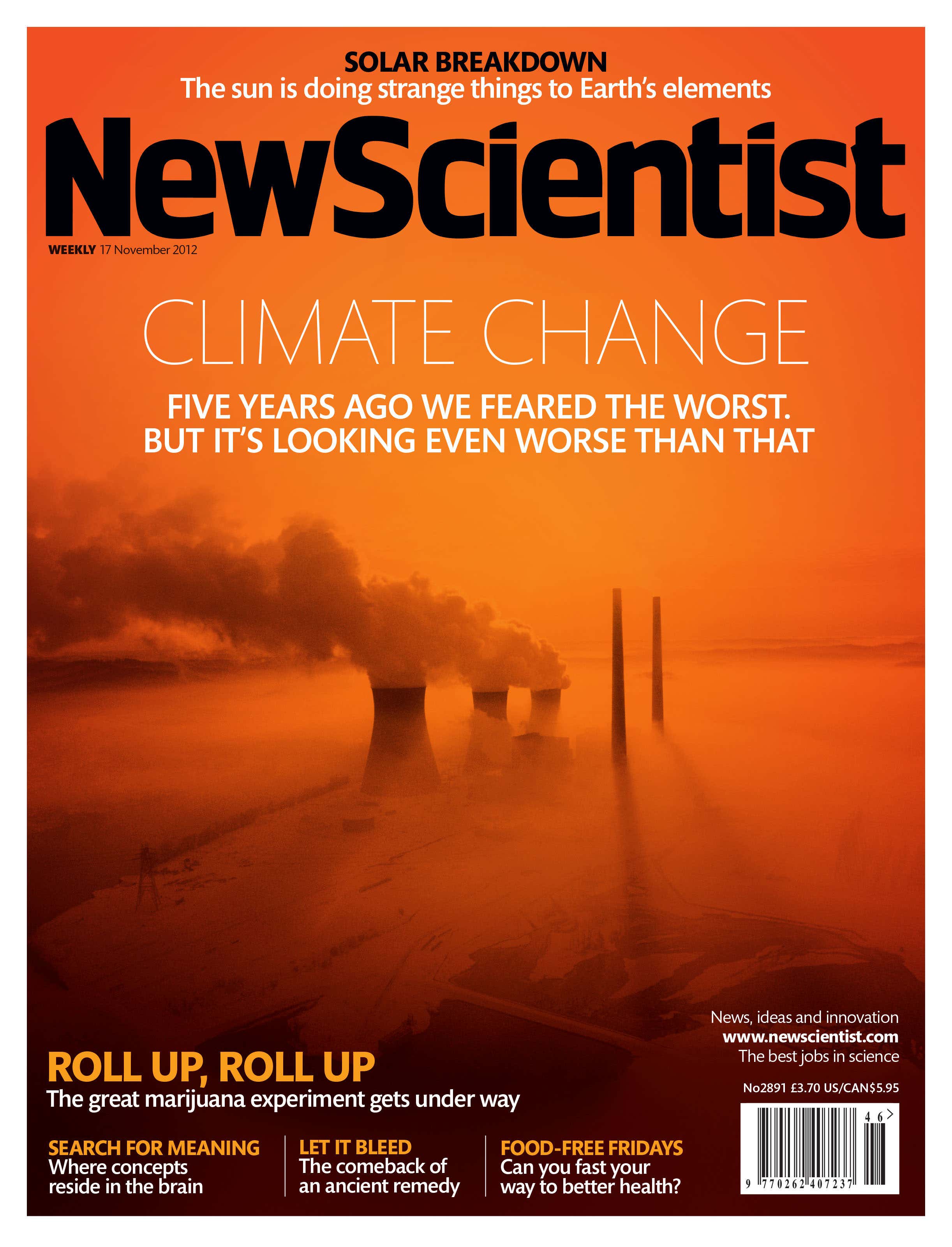
Issue no. 2891 published 17 November 2012

Sign up to our weekly newsletter

Receive a weekly dose of discovery in your inbox. We'll also keep you up to date with New Scientist events and special offers.

Sign up
Piano Exit Overlay Banner Mobile Piano Exit Overlay Banner Desktop