Subscribe now

Letters archive

Join the conversation in New Scientist's Letters section, where readers can share their thoughts and opinions on articles and see responses from experts and enthusiasts across a range of science topics. To submit a letter, please see our terms and email letters@newscientist.com


13 February 2013

Progs rocked

From Chris Smaje

Alex Berezow and Hank Campbell are correct to claim that progressives can be selective in their use of science (2 February, p 24) , but in making a muddled distinction between science and ideology, they fall into the trap they criticise in others. Take their example of genetically modified crops. Scientific hypotheses about GM crops …

13 February 2013

Greener opposition

From Martin Ternouth

Given talk of Republican resistance to tackling climate change, it is ironic that a large proportion of the emissions cuts President Obama has pledged to make (2 February, p 10) will be met by private-sector fracking initiatives, opposed by a caucus of Democrats, and California state policies initiated under a Republican governor, Arnold Schwarzenegger. As …

13 February 2013

Cirrus omission

From Joseph Ulanowski

You report a proposal to reverse global warming by seeding the atmosphere to reduce cirrus cloud cover (26 January, p 14) , but you do not address the assumption that cirrus has a warming effect . Whether or not it does may depend on the shape and size of the ice crystals in these clouds. …

13 February 2013

Bullet points

From Martin Islam

Your editorial rightly decried the National Rifle Association's "strangling of research" on US gun violence as "utterly reprehensible" (26 January, p 3) . As recognised in a 2005 US National Research Council report, there is a need for better firearms data and deeper investigation of the causal relationships underlying gun violence. But there is already …

13 February 2013

Caustic reflections

From Chris Tindall

My memory was jogged by the reference to Chinese magic mirrors in Philip Ball's article on how the optical phenomena known as caustics can be used to create intricate images (2 February, p 40) . The Magic Casket , by R. Austin Freeman, includes a description of how the mirrors were made. Freeman wrote detective …

13 February 2013

Division of labour

From Thomas McCauley

Jared Diamond states that "in our complex society, 2 per cent of the people can produce all the food" and that traditional tribes, in which every member has to help obtain food, would regard the rest of us as "freeloaders" and "parasites" (12 January, p 26) . Thankfully, in our complex society we have highly …

13 February 2013

I dreamed a dream?

From John F. Davenport

Your special report on sleep looked at dreams (2 February, p 31) . To what extent does describing dreams to a researcher modify your dreaming on subsequent nights?

13 February 2013

Cushioned impact

From Gwydion M. Williams

Nigel Henbest's feature "Close call" looked at averting the threat to Earth from asteroid strikes (26 January, p 42) . I wonder if deploying a large number of balloons might work, in the manner of a bouncy castle.

13 February 2013

Uncanny idea

From David Taub

I would like to suggest a few follow-up experiments that might shed more light on the "uncanny valley" – the feeling of unease when faced with a humanoid robot (12 January, p 35) . If part of the reason for the discomfort is that it is impossible to pin down the emotional state of such …

13 February 2013

Subsidised pollution

From David R. Allen

Fred Pearce wrote about the upcoming decision on the proposed Keystone XL pipeline to bring tar sands oil from Canada to the US (26 January, p 26) . One has to ask: why are we mining tar sands? We don't need to. The problem is that carbon burners pay nothing for their pollution. Yet if …

13 February 2013

Sparing chimps

From John Pippin, Physicians Committee for Responsible Medicine

I am pleased that the National Institutes of Health is leading the way towards the phasing out of US medical research using chimpanzees (2 February, p 4) . However, I don't accept the suggestion in your report that the move will slow research on a hepatitis C vaccine. Our emphasis should be on existing research …

13 February 2013

You did watt?

From Niall Oswald

The commissioning of the Notrees battery facility in Texas to store surplus electricity from wind is interesting, but your story confuses energy and power (2 February, p 20) . It makes no sense to speak of storing megawatts of power: it is energy, denoted in joules or (mega)watt-hours, which is stored.

13 February 2013

Heated issue

From Cedric Griffiths, Darlington Volunteer Bushfire Brigade

The recommendation by the royal commission in Victoria, Australia, for a "retreat and resettlement" strategy for homeowners in areas of "unacceptable" bushfire risk was a knee-jerk reaction (19 January, p 12) . Many factors behind increased vulnerability to bushfires remain to be properly addressed. These include reluctance to replace native fire-prone vegetation with more resistant …
13 February 2013

Poor compensation

From Colin Watters

Letter writer Brian Farrington is mistaken if he thinks free electricity will persuade people to accept a wind farm near their house (2 February, p 28) . I know of people unable to sell property at any price because of a nearby wind farm. So the idea of offering a few hundred pounds of free …

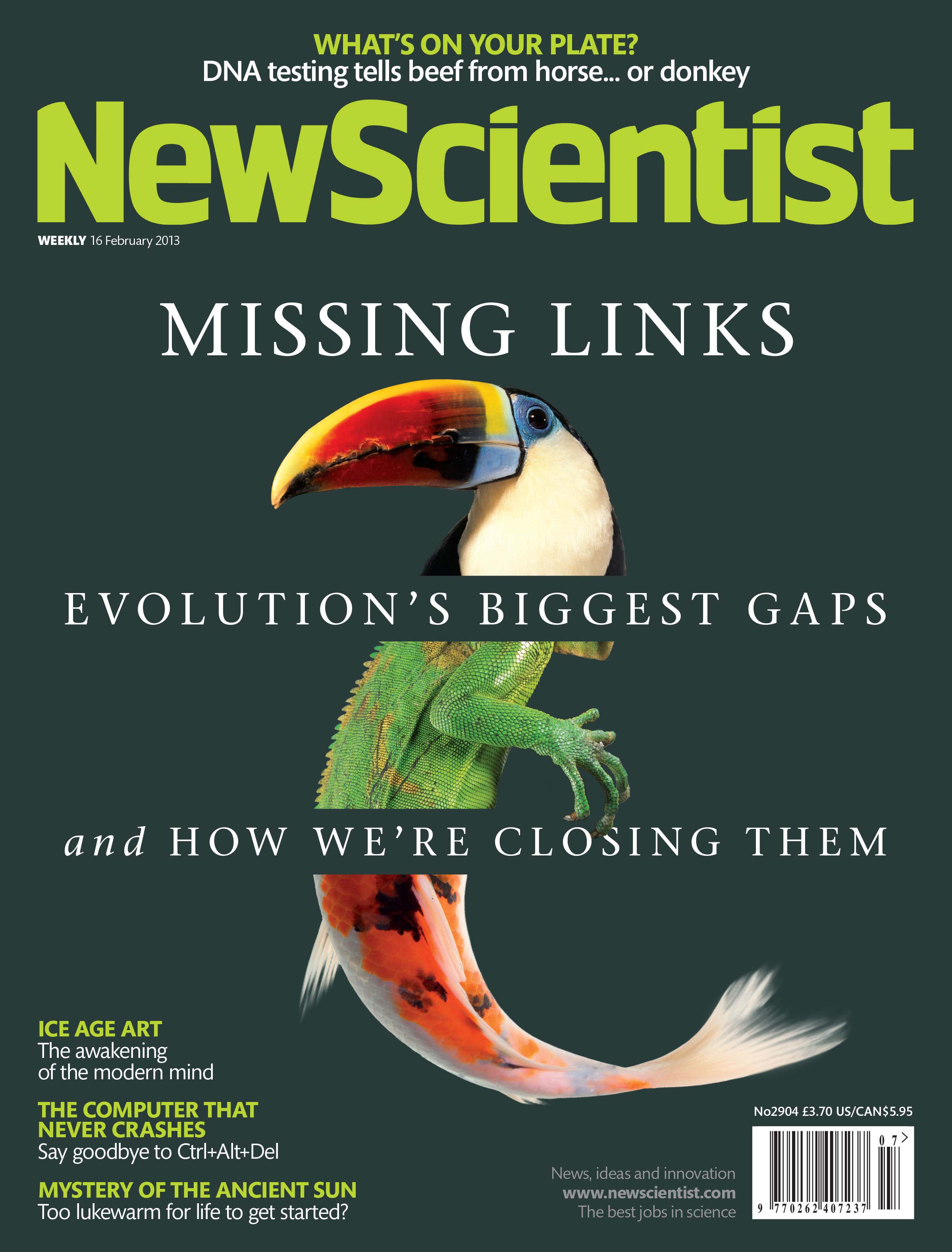
Issue no. 2904 published 16 February 2013

Sign up to our weekly newsletter

Receive a weekly dose of discovery in your inbox. We'll also keep you up to date with New Scientist events and special offers.

Sign up
Piano Exit Overlay Banner Mobile Piano Exit Overlay Banner Desktop