Subscribe now

Letters archive

Join the conversation in New Scientist's Letters section, where readers can share their thoughts and opinions on articles and see responses from experts and enthusiasts across a range of science topics. To submit a letter, please see our terms and email letters@newscientist.com


7 August 2013

Gas windfall?

From Paul Dear

So, the thinning East Siberian Arctic ice shelf is sitting on top of billions of tonnes of trapped methane, which it may release at any time with catastrophic results (27 July, p 16) . At the same time, campaigners want to prevent fracking for shale gas in the UK. I have an idea that would …
7 August 2013

Smarter route

From Martin van Raay

Smart cars that need no driver could be the solution to human fallibilities behind the wheel (20 July, p 3) . But a robot car with four or five seats, only one of which is occupied most of the time, is still a waste of space and fuel. Would it not be better to create …

7 August 2013

Smarter route

From Harold Caplan

Jeff Hecht's warnings about increased automation and the proliferation of gadgets in cars are apt and timely (20 July, p 24) . Cars hurl stupendous amounts of kinetic energy up and down our roads, and are managed by people of average abilities. It is no surprise that carnage occasionally results. Contrast this with the safety …

7 August 2013

Operation Mar

From Ted Webber

In his look at hopes for a human colony on Mars, Nigel Henbest writes that "mission planners have even considered removing potentially troublesome organs" from crew members (13 July, p 42) . The idea may sound radical, but there are precedents. My wife and her first husband, a medical doctor, went to New Guinea in …

7 August 2013

Operation Mar

From Bryn Glover

I was struck by a curious coincidence. In a recent editorial, you say that "globalisation, deregulation and unfettered movement of capital have made a lot of people rich, but have come at a terrible cost: environmental destruction and widening inequality" (13 July, p 5) . In the very same issue, the options for sending humans …

7 August 2013

Evolution of war

From Brian Horton

Douglas Fry and Patrik Soderberg claim that in hunter-gatherer societies, the great majority of deaths due to violence happened as a result of events within a group rather than "wars" between groups (27 July, p 18) . The researchers suggest that cooperation for intergroup fighting therefore played only a minor role in human evolution. However, …

7 August 2013

Brown is green

From Gerald Legg

Brownfield sites – disused industrial land – are all too often viewed as ecological deserts. Fred Pearce brings home the truth that they can be amazingly biodiverse (13 July, p 16) . Such areas are similar to "naturally" barren sites, such as rock falls and volcanic debris fields, in that they represent a clean slate …

7 August 2013

Seeking to recruit...

From Andrew Gilbey

You report that employers are now actively recruiting people with autism spectrum disorder (ASD) (1 June, p 8) . The thinking is that they may make more rational decisions – possibly because they are less likely to fall prey to heuristics and bias – and may also excel in areas such as recall, spatial awareness …

7 August 2013

For your ears only

From Ed Prior

You report that, for security reasons, the Kremlin is thinking of using typewriters instead of computers (20 July, p 19) . Ironically, in the 1970s, the Soviets developed a highly sensitive optical instrument that they used to monitor the vibrations of certain windows in Washington DC. As secretaries typed government memos, each key struck caused …

7 August 2013

Population brake

Tony Richardson Andy Robinson's letter suggesting that population growth will inevitably continue presents only one aspect of what is a very complex issue, involving much more than a genetic imperative to breed (20 July, p 28) . One thing that makes us human is the potential to use our intelligence to find ways to transcend …

7 August 2013

Efficient or what?

From Barry Manor

I would like to assure Steve Elliott that heat pumps can "operate at 300 to 400 per cent efficiency" (Feedback, 20 July) . A heat pump uses an electric motor to drive refrigerant around a sealed circuit. When this liquid becomes a gas, it absorbs heat from the environment. The gas is then compressed into …

7 August 2013

Blown away

From Steve Johns

I was dismayed by the report on the wind turbine explosion in Scotland that happened because high winds forced it to turn against the brakes (13 July, p 7) . What dismayed me was not the incident itself or the ammunition it provided to the anti-wind lobby, but the engineering solutions recommended to prevent it …

7 August 2013

Thought power

From Crad Allerton

Your article on how thinking good thoughts can strengthen the activity of the vagus nerve, with many health benefits, definitely worked for me (13 July, p 46) . The good thoughts had a measured reduction in my resting pulse rate and blood pressure. My previous attempts to meditate have been unsuccessful, so thank god for …

7 August 2013

Dizzied and confused

From Colin Clemett

Like Alfred Hitchcock, you seem to believe that "vertigo" means a fear of heights (20 July, p 8) . According to the Oxford English Dictionary, it actually means "a condition with a sensation of whirling and a tendency to lose balance, dizziness, giddiness" and it comes from the Latin vertere , meaning "to turn". Although …

7 August 2013

It's good to talk

From Stephen Newton

There is almost certainly a role for well-targeted drugs to offer symptomatic relief from depression (27 July, p 34) , but drugs are not right for everybody. We know that those who suffer trauma, for example, are at risk of depression. Your report quotes a 2007 study that showed people with depression often have elevated …

7 August 2013

Too big for our boots

From Richard Hemingway

We are inundated with news and commentaries on the causes and effects of global warming (newscientist.com/article/dn23950) and on the inexorable increase in obesity (newscientist.com/article/dn23869) . Surely there is a connection. Humans of large proportions consume more food, wear larger clothes and shoes, buy larger vehicles and furniture, use more fuel to transport themselves, and as …

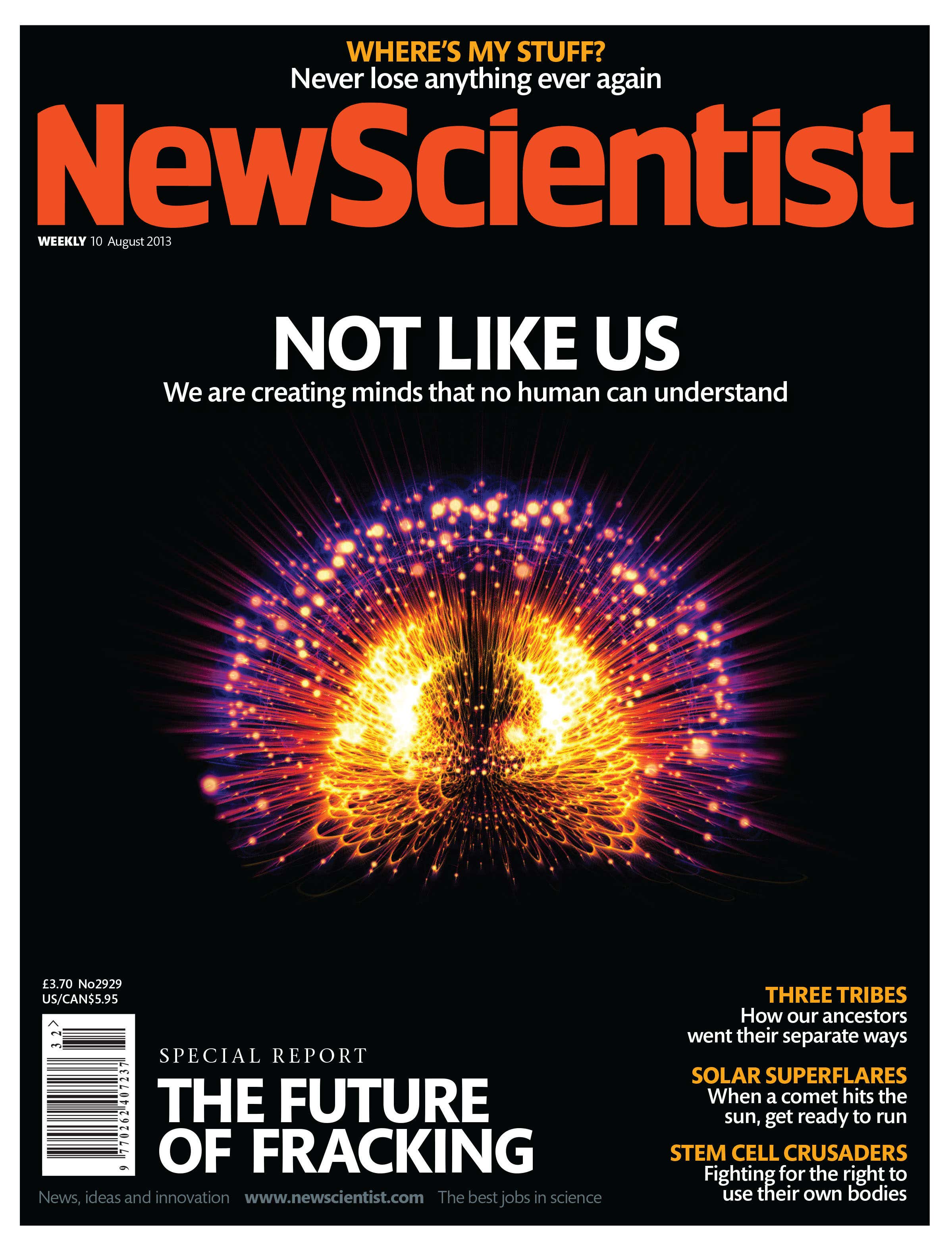
Issue no. 2929 published 10 August 2013

Sign up to our weekly newsletter

Receive a weekly dose of discovery in your inbox. We'll also keep you up to date with New Scientist events and special offers.

Sign up
Piano Exit Overlay Banner Mobile Piano Exit Overlay Banner Desktop