Subscribe now

Letters archive

Join the conversation in New Scientist's Letters section, where readers can share their thoughts and opinions on articles and see responses from experts and enthusiasts across a range of science topics. To submit a letter, please see our terms and email letters@newscientist.com


6 November 2013

Chemistry gone mad

From Martin Savage

In considering how life can influence its own evolutionary path (12 October, p 32) , Bob Holmes is overly conservative. If our understanding of evolution and organic chemistry is correct, then a complex molecule – DNA – has, by evolving the code necessary to make a human brain, become capable of looking down on itself …
6 November 2013

Neuro crisis

From Elizabeth Pollitzer

Your call for caution in the use of functional magnetic resonance imaging (fMRI) as a research tool for assessing and explaining brain function was timely (19 October, p 32) , particularly as it is widely used to pinpoint male-female differences in cognitive abilities and performance. Such work has raised a variety of ethical and research-quality …

6 November 2013

Neuro crisis

From Anil Seth

Neuroscience is not in crisis (p 3) . Neuroimaging, a small part of neuroscience, is a fast-evolving approach in which methodological practice is advancing in leaps and bounds. There are still many challenges, and it is true that ensuring sufficient statistical power to produce reliable results is one of them. Another challenge is confronting the …

6 November 2013

Atheist morality

From Chris Rogers

Quentin de la Bédoyère (19 October, p 30) wonders how atheists square moral obligation with a wholly materialistic universe. The answer from this atheist is: ethics, compassion and self-respect. London, UK

6 November 2013

A few dollars more

From James Ferguson

Talk of the end of dollar supremacy is about a century too soon, despite the possibility of US government debt default and financial crisis (19 October, p 4) . As your report pointed out, the British pound was only overtaken by the dollar as the world's reserve currency in the 1970s. What was not mentioned …

6 November 2013

Chronic theitis?

From Ken Pettett

It was witty to print Albert Lightfoot's letter disputing the conjecture that observatories were built for religious reasons, – and then follow it with one from Steve Blyth suggesting that agriculture may also have been the result of religious congregations (12 October, p 30) . Raymond Tallis uses the term "Darwinitis" for the misuse of …

6 November 2013

Learning by numbers

From Brian Horton

Biologist Steven Rose highlights a recent genome-wide association study seeking genes associated with educational attainment ( Science , vol 340, p 1467). He says the genes found accounted for a mere 0.02 per cent of the difference (26 October, p 28) . That figure applies only to the single most significant gene located by the …

6 November 2013

Military emissions

From Brian Robinson

The good news in the article on reducing airline greenhouse gas emissions (12 October, p 6) relates exclusively to commercial air transport. Unless its impact is negligible, which I doubt, military air transport must be included in the equation. NATO usage is heavy, and war zones must also be causing damage. Brentwood, Essex, UK

6 November 2013

Healthy disbelief

From Dominic Kirkham

What is paradoxical, if not contradictory, in Derek Suchard's hypothesis – that socialised healthcare undermines belief (19 October, p 30) – is that the history of social care has religious roots, yet seems to encourage the very secularisation that corrodes those roots. Manchester, UK

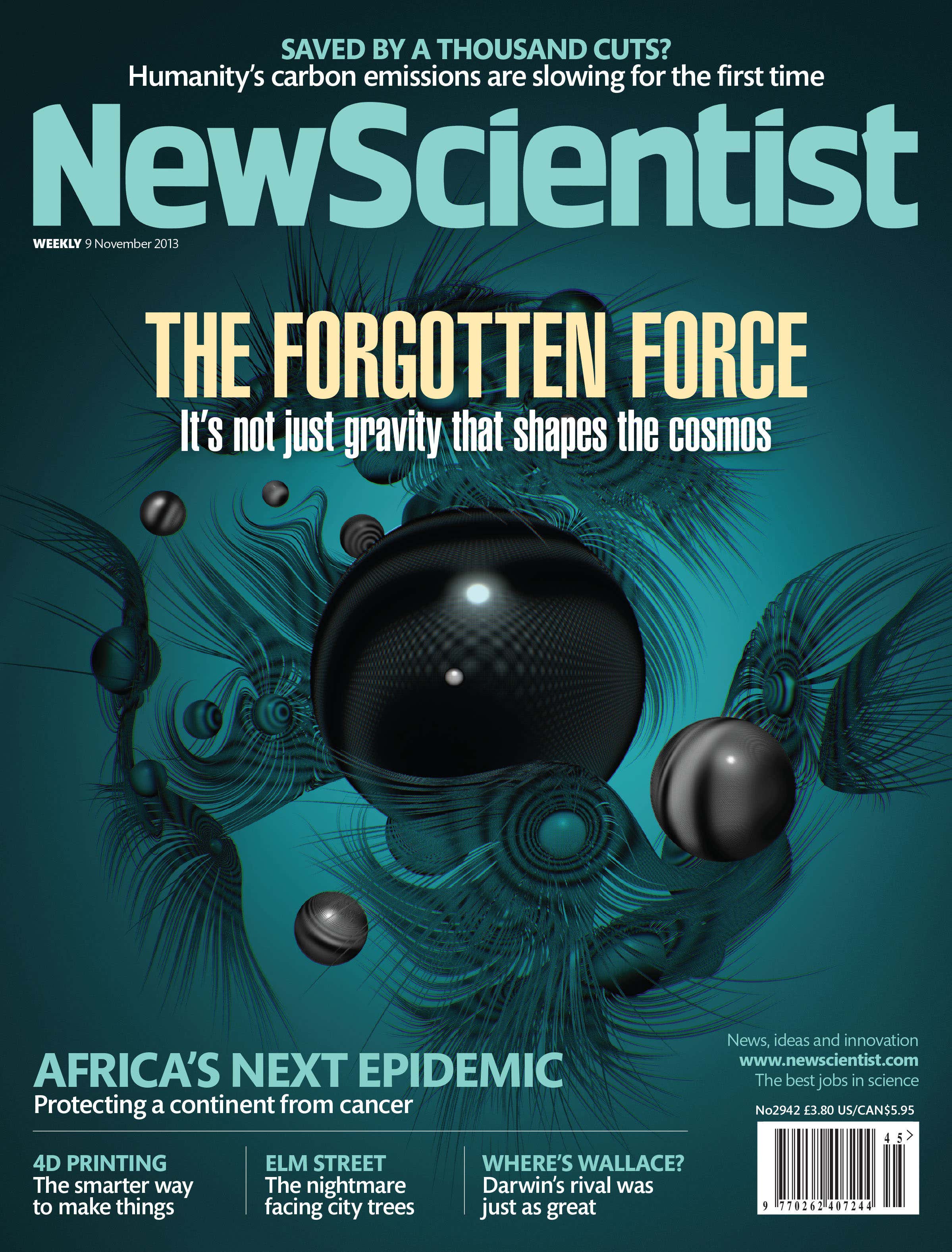
Issue no. 2942 published 9 November 2013

Sign up to our weekly newsletter

Receive a weekly dose of discovery in your inbox. We'll also keep you up to date with New Scientist events and special offers.

Sign up
Piano Exit Overlay Banner Mobile Piano Exit Overlay Banner Desktop